
Marialva
"Marialva isn't a ruin you visit — it's a ruin you're briefly allowed to live inside."
A crumbling schist village wrapped inside a ruined castle on a granite spur, so thinly populated that goats seem to outnumber people among the roofless houses.
I got lost trying to find Marialva, which felt appropriate once I arrived, because the village itself seems designed to be half-lost. The road climbs through scrubby, boulder-strewn hills in the Côa valley and then just stops at a cluster of schist houses stacked below a castle wall, most of them roofless, some with trees growing straight up through where a kitchen used to be. I parked next to a single working café and stood there a moment just listening — to nothing. No traffic, no music, just wind moving through empty window frames.
A Village That Died and Didn’t
Marialva is one of Portugal’s twelve historic villages, but unlike Óbidos or Monsaraz it never got prettified into a postcard. The population collapsed over the twentieth century as people left for the coast or for France and Germany, and what remains is genuinely, unapologetically abandoned in parts — you can walk through doorless houses with intact fireplaces and collapsed second floors, past a pillory in the old square, up to a castle that dates to Moorish times and was refortified after the Christian Reconquista. The keep still stands, along with a stretch of wall you can climb for a view over the whole Côa valley, granite outcrops rolling to the horizon like something left over from an older, harder Portugal.
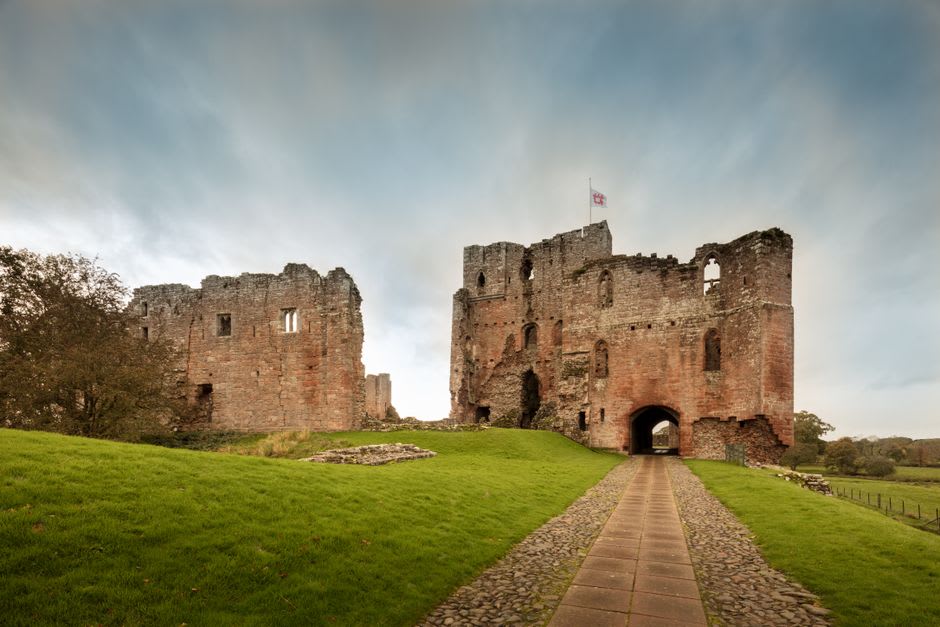
What surprised me was that Marialva isn’t entirely dead — a handful of families still live here, and a slow, deliberate restoration project has turned a few of the old houses into a small hotel built directly into the ruins, stone walls and modern glass side by side. I had a coffee at the one café run by an elderly man who told me his grandchildren had all left for Guarda or beyond, the way everyone’s grandchildren seem to have left everywhere in this part of Portugal, and that he stayed because someone had to keep the lights on.
Walking the Walls at Dusk
I came back at the end of the day specifically to walk the castle walls when the light went low and orange, and it was worth the detour alone. The shadows stretch across the ruined rooftops, swallows cut through the empty window frames, and for twenty minutes I didn’t see another person.
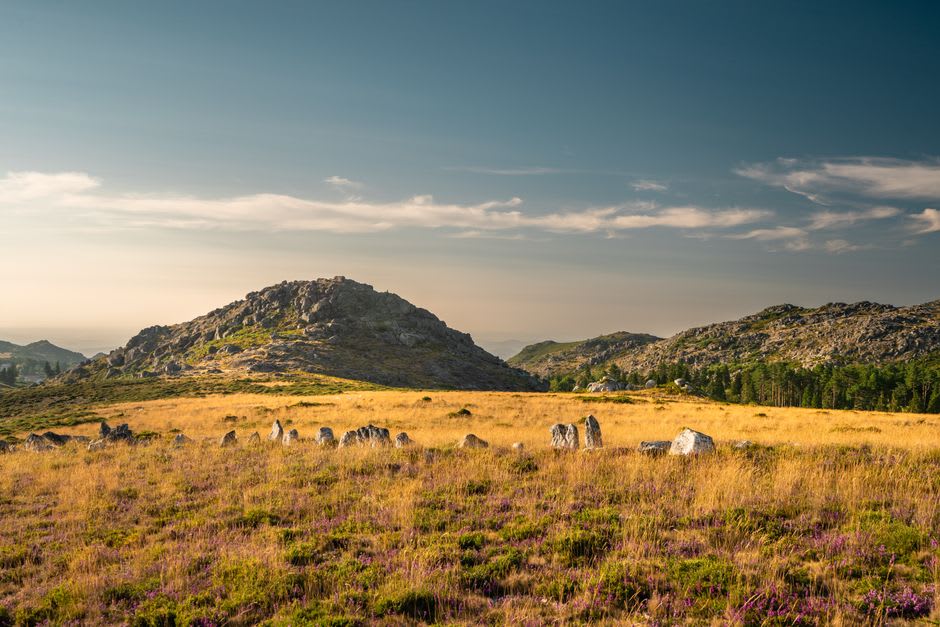
When to go: Late afternoon, any season — the low sun on the schist and granite is the whole point, and you’ll want the ruins mostly to yourself, which isn’t hard to arrange here.