
Mafra
"Mafra is what happens when a king has more Brazilian gold than sense — and honestly, I'm grateful he did."
A staggering Baroque palace-convent built on gold from Brazil, whose library keeps its rarest books safe with a very unusual security system: a resident colony of bats.
Nothing prepares you for the sheer footprint of Mafra. I’d read the numbers beforehand — over a thousand rooms, hundreds of meters of facade, two enormous bell towers with dozens of bells each — and still felt genuinely small walking across the plaza toward it, the way the building seems to stretch the entire width of the town behind it. King João V commissioned it in 1717 after a vow to build a monastery if his wife bore him an heir, and then, flush with Brazilian gold pouring into the treasury at the time, simply kept expanding the project until it became one of the largest Baroque buildings on the planet, built by tens of thousands of workers over more than a decade.
A Library Guarded by Bats
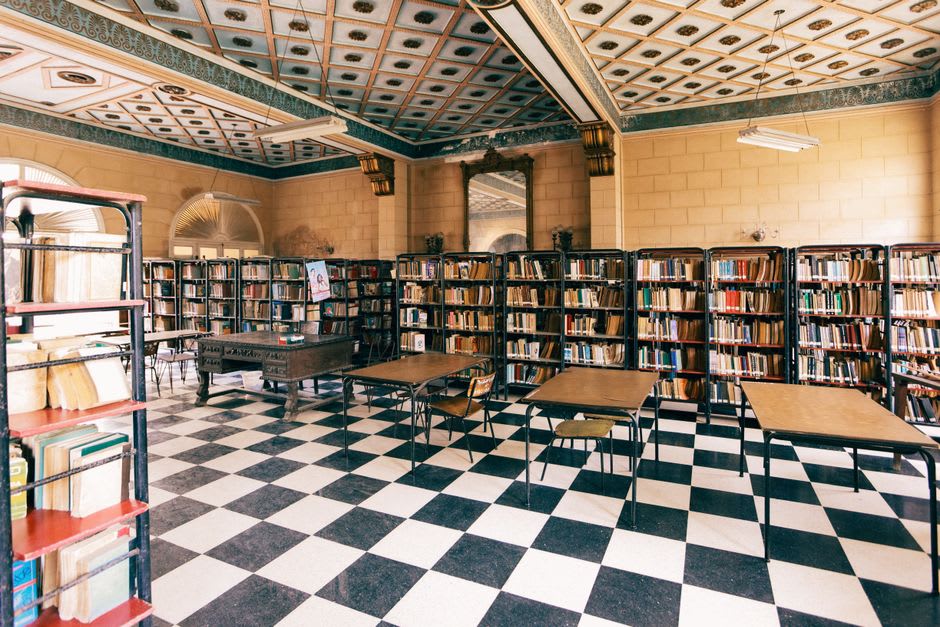
The Rococo library is the single most extraordinary room I’ve stood in on this trip — an eighty-eight-meter barrel-vaulted hall holding around 36,000 leather-bound volumes on wooden shelves so ornate they look almost edible, floors of inlaid pink and grey marble laid out like a chessboard. And then the guide told us, almost as an aside, about the bats: a small colony of pipistrelles lives behind the shelving and is deliberately left undisturbed, because they eat the insects that would otherwise chew through centuries-old bindings, meaning the library’s real preventive conservation system is a handful of nocturnal mammals rather than any modern climate control. Every night, staff cover the reading tables with sheets to protect them from droppings and take them off again each morning. I found something quietly wonderful about a solution that old and that low-tech still doing the job.
Royal Excess, Room After Room
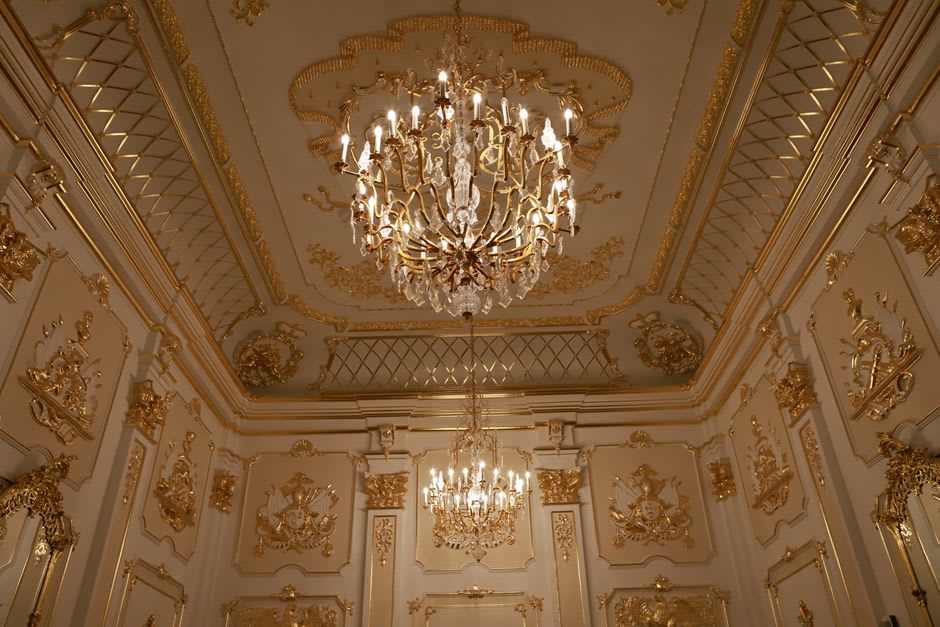
Beyond the library, the palace unspools into an almost absurd sequence of rooms — a basilica with six historic organs, a pair of throne rooms facing each other across the length of the building so the king and queen could theoretically each hold court without ever crossing paths, a hunting trophy room lined floor to ceiling with antlers that made me genuinely laugh out loud at the scale of it. Outside, the adjoining Tapada Nacional de Mafra, a walled royal hunting ground the size of a small town, still holds deer and wild boar within its perimeter, a green buffer between the palace and the ordinary streets of Mafra itself.
I left slightly dazed by the scale of it, the way you do after seeing a monument built less out of necessity than out of a king simply being able to, and unable to shake the image of those bats doing quiet, essential work in the dark above all those books.
When to go: Weekday mornings, when the library and throne rooms are least crowded, and any season works since almost everything worth seeing here is indoors.