
Furnas
"Furnas is the only place I've ever eaten a meal that spent the morning cooking inside an active volcano."
A volcanic valley on São Miguel where the earth hisses and steams in public gardens, and lunch is a stew buried in the ground at dawn and dug up, still smoking, seven hours later.
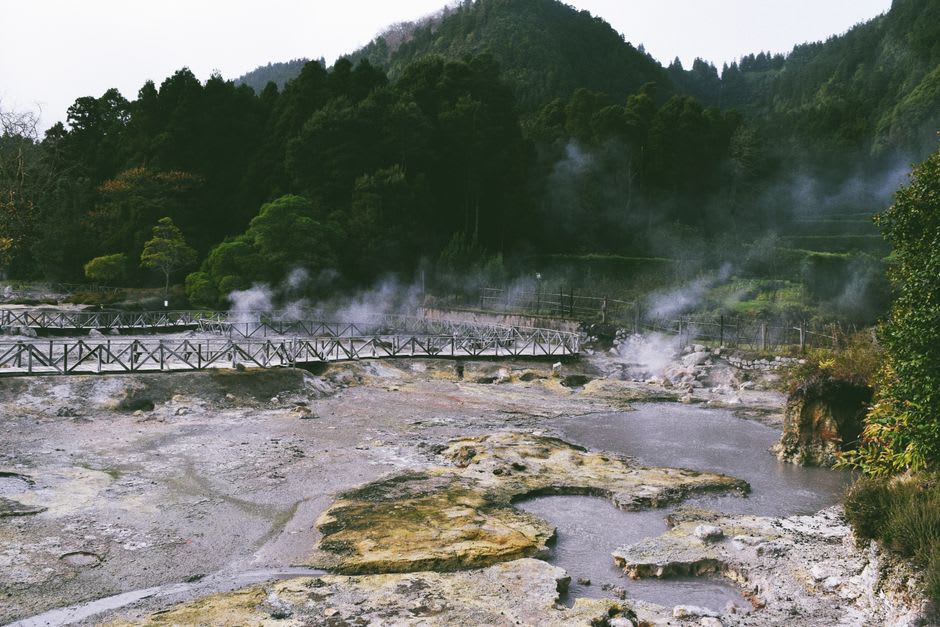
You smell Furnas before you arrive — a faint sulfur tang that drifts across the valley and that I’m told locals stop noticing after a few weeks, though I never quite managed it in my three days there. The valley sits inside another collapsed caldera, this one lower and greener than Sete Cidades, dotted with fumaroles that vent steam straight out of the ground in the middle of what otherwise looks like an ordinary village park. I stood at the Caldeiras da Lagoa das Furnas watching grey mud pools bubble and pop like something simmering on a stove, roped off with the same casual, low-key barriers you’d find around a flowerbed, as if boiling volcanic mud were just another municipal feature to be tidied and labeled.
Lunch, Buried and Dug Up
The dish everyone comes for is cozido das Furnas, and I made the mistake of assuming it was a gimmick before I actually watched it happen. Restaurants along the lake send out large metal pots each morning packed with beef, pork, chicken, black pudding, cabbage, carrots, and sweet potato, and a man on a moped drives them to a roped-off patch of ground by the lakeshore where holes have been dug straight down into the volcanically heated earth. The pots go in, get covered with soil, and cook there — no fire, no gas, just geothermal heat rising from below — for six or seven hours before the same pots come back out, mud-streaked and impossibly heavy, to be served at lunch. I watched a cook lever one out with a hook and iron bar, steam pouring off it into the cold morning air, and thought it looked less like cooking and more like an exhumation.
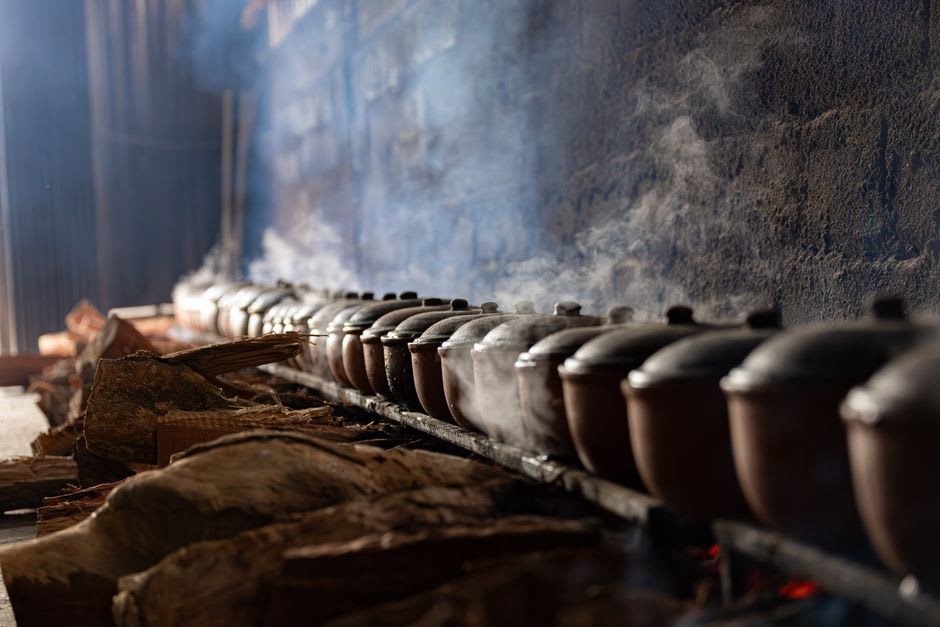
The stew itself, eaten at a lakeside restaurant an hour later, tasted smoky and slow-cooked in a way that no oven quite replicates — the sweet potato in particular had gone almost caramelized, and the cabbage had taken on a faint mineral edge I can only assume came from the earth it was buried in. Afterward I soaked in the Terra Nostra park’s iron-orange thermal pool, the water hot and cloudy with dissolved minerals, staining my white t-shirt a permanent rust color I’ve never quite forgiven the valley for.
When to go: Any season works since the geothermal activity doesn’t care about weather, but book a cozido lunch a day ahead in summer, when demand for the lakeside restaurants outpaces the number of pots they can bury each morning.