
Funchal
"Funchal is the only capital I know where the ride down the hill is a tourist attraction in itself."
Madeira's capital tumbles down a volcanic amphitheater to the harbor, a city of wicker toboggans, fortified wine, and a market loud enough to hear from the street.
Funchal announces itself before you land — the plane banks hard over the ocean because the runway is famously short, extended out on stilts over the water, and for a few seconds you’re staring straight down at whitewashed houses stacked up a volcanic slope like they’re trying to escape the sea. The city has been Madeira’s capital since the fifteenth century, named for the wild fennel (funcho) the first settlers found growing along the shore, and it still feels shaped entirely by that geography: everything either climbs or descends, and there’s no such thing as a flat walk to dinner.
Toboggans, Market Noise, and New Year’s Fire
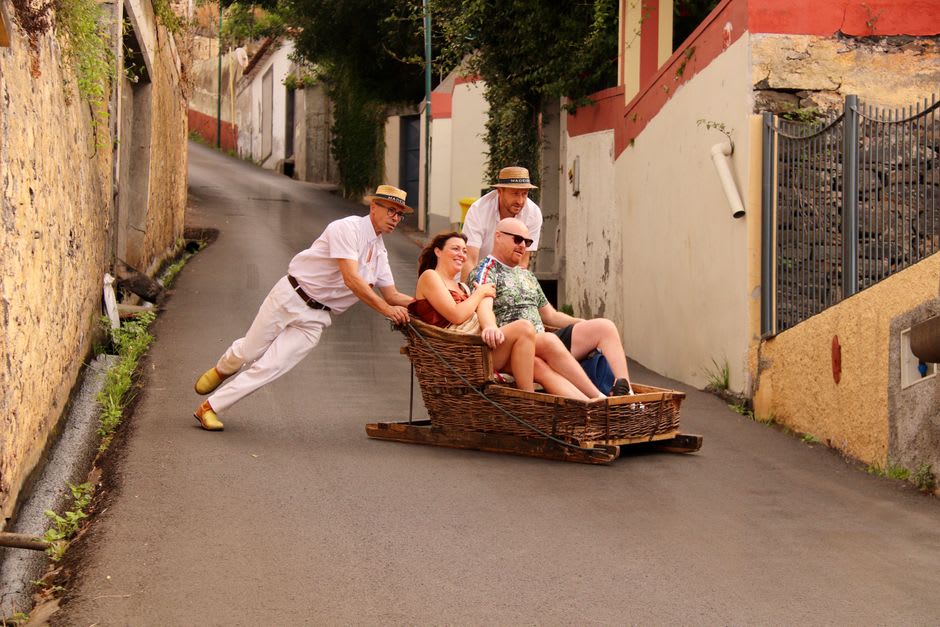
I did the carreiros do Monte because you’re supposed to, and because skepticism didn’t survive contact with the actual experience. Two men in white linen and straw boater hats stand behind a wicker sled with wooden runners, and half-run, half-steer it down a steep cobblestone street from the Monte hilltop into the Funchal suburbs below, using their rubber-soled boots as brakes. It started in the 1850s as a genuinely practical way for Monte residents to get downhill quickly and became, somewhere along the way, one of the world’s odder tourist rides. Mine went faster than I expected on the tight corners, and the runner nearest me was laughing the whole way, clearly enjoying it more than I was managing to.
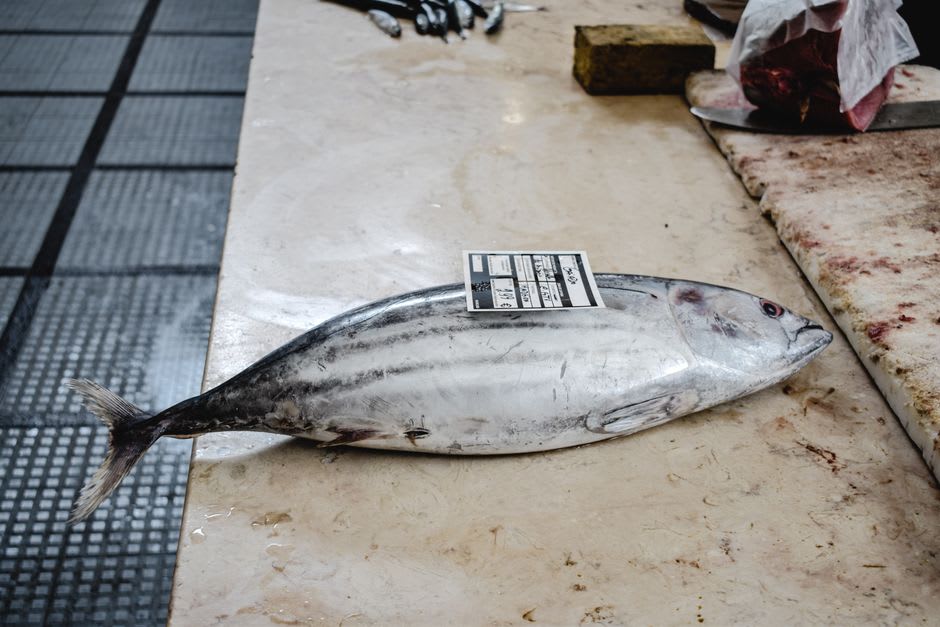
The Mercado dos Lavradores, the farmers’ market, is where I went to recover, and it’s the loudest, most alive place in the city — fishmongers slapping down whole black scabbardfish (peixe-espada), their eyes bulging from the deep water they’re hauled up from, next to stalls piled with passion fruit, custard apples, and tiny finger bananas grown on the terraces above town. A vendor talked me into a fruit I couldn’t name and still can’t, sweet and slightly resinous, and charged me a fair price without being asked twice, which felt like a small act of honesty in a market built for tourists.
I also spent an evening at one of the old wine lodges near the harbor, tasting Madeira wine the way it’s meant to be drunk — slowly, in small glasses, the sweeter Malmsey against the drier Sercial — while the guide explained how eighteenth-century barrels sent on tropical sea voyages came back tasting better, an accident the island turned into an entire industry. Funchal saves its biggest trick for New Year’s Eve, when the harbor hosts one of the largest fireworks displays anywhere, watched from the hillsides by residents and from the water by a fleet of cruise ships that time their arrival for exactly this night.
When to go: Late December for the New Year’s fireworks if you can stand the crowds, otherwise April for the Flower Festival, when the city’s steep streets fill with floats and flower carpets.