
Faro
"Everyone flies into Faro and drives straight past it, which is exactly why I liked it."
The Algarve's overlooked capital, where storks nest on cathedral rooftops and a hidden lagoon does more to define daily life than any beach.
Most people treat Faro as a formality — the airport you land at before racing off to Albufeira or Lagos — and I nearly did the same until my flight home got delayed by a day and I had no choice but to actually look at the place. What I found was a walled old town, Cidade Velha, entered through the Arco da Vila with its own resident stork colony nesting on the arch itself, and a cathedral whose bell tower has become such prime real estate for the birds that the church seems to have simply accepted them as co-tenants. I climbed that tower for the view and spent most of my time up there watching a stork rearrange twigs a few meters away, entirely unbothered by tourists.
A City Defined by Water, Not Sand
What makes Faro different from the rest of the Algarve is that its coastline isn’t coastline at all in the conventional sense — it’s fronted by the Ria Formosa, a sprawling lagoon system of sandbar islands, salt marshes, and tidal channels that stretches sixty kilometers along the coast and functions as one of Portugal’s most important wetlands. There’s no dramatic cliff or golden beach right in town; instead there are boat docks, and from them, tours out to Ilha Deserta and Ilha da Culatra, barrier islands with some of the emptiest beaches in the entire Algarve precisely because you can only reach them by boat. I took the ferry to Ilha da Culatra one afternoon, ate grilled clams at a shack run by a fisherman’s family, and had a stretch of white sand essentially to myself on a July afternoon — something close to impossible fifteen minutes away by car in Albufeira.
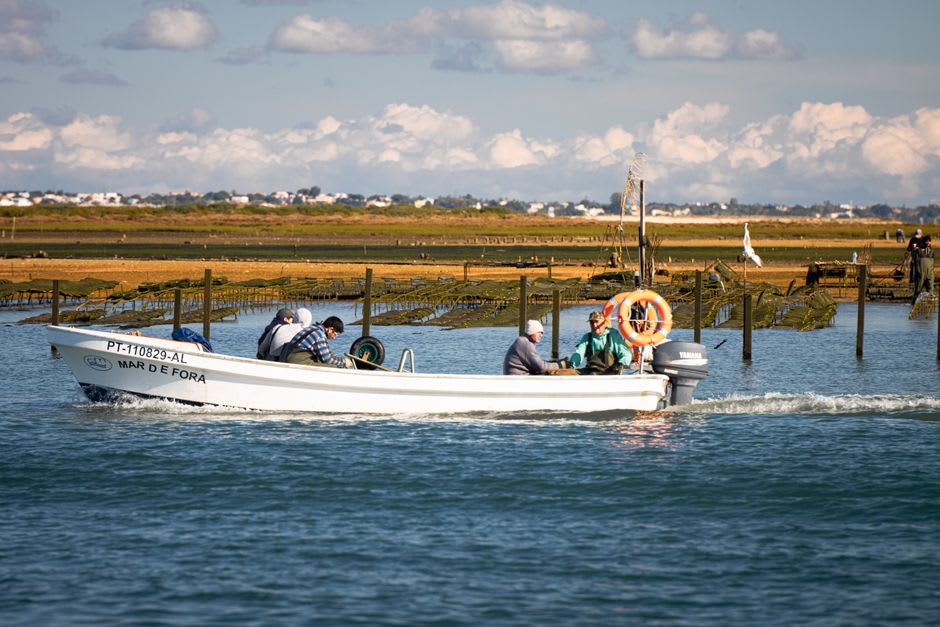
Back in the old town at dusk, the light does something particular to the limestone buildings, turning them the color of weak tea, and the storks — there are dozens of nests around town, on the cathedral, on old chimneys, on defunct telephone poles — settle in for the night with a clattering of beaks that’s become the unofficial soundtrack of Faro’s evenings. I ate dinner at a tasca just inside the old walls, grilled sardines and a jug of house vinho verde, and realized the meal cost half what the same fish would in Albufeira’s tourist strip.
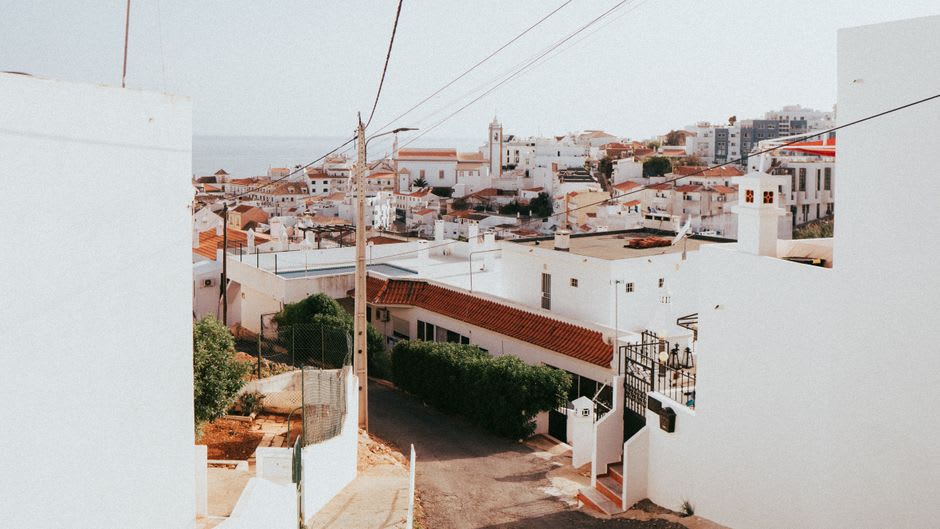
When to go: May and late September are ideal — warm enough for the barrier island beaches, cool enough to actually enjoy walking the old town, and before or after the July–August Algarve crowds descend.