
Estremoz
"In Estremoz they build curbstones out of marble, because when it's the local stone, why would you use anything else."
An Alentejo town built almost entirely from the marble quarried around it, where a Saturday market has run in the same square for centuries and a medieval keep now hides a pousada.
I noticed it before I could name it — something about the light in Estremoz, bouncing differently off doorsteps and window ledges than anywhere else I’d been in the Alentejo. It took a shopkeeper pointing it out for me to realize: half the town is built from marble, quarried from pits just outside the walls that have been worked since Roman times, so common here that it gets used for curbstones and stair treads the way other towns would use plain concrete. Walking the upper town’s cobbled streets, doorframes and window surrounds gleamed faintly white even in overcast light, an entire town casually dressed in a stone that would be a luxury import almost anywhere else.
A Saturday Market Centuries Deep
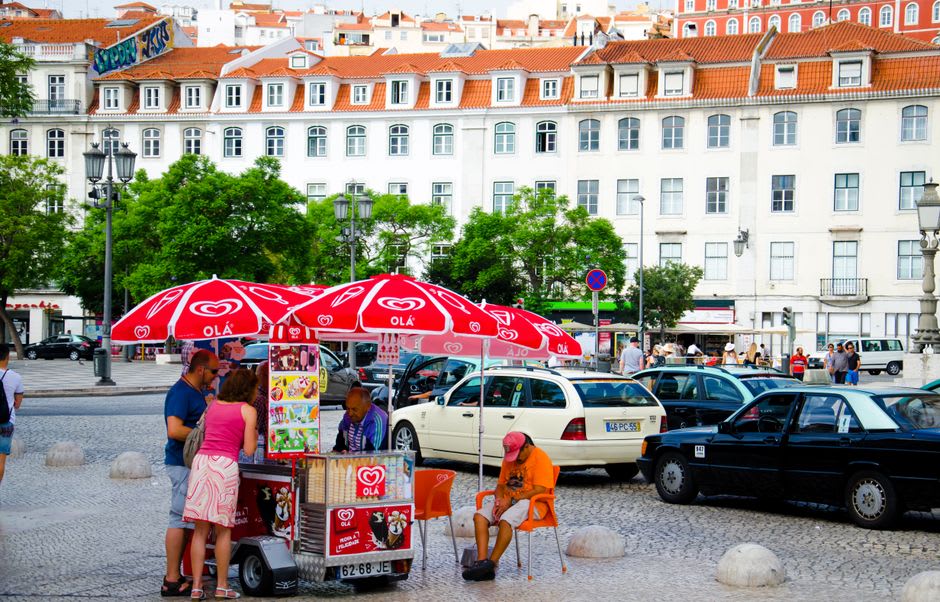
I timed my visit for a Saturday, when the Rossio, the town’s long lower square, fills with one of the Alentejo’s oldest and largest weekly markets — stalls of cheese, cured pork, olives, hand-painted pottery, and live chickens crowded in next to tables of secondhand tools, a market that locals told me has run here in some form since the Middle Ages. I wandered for an hour without buying much, mostly just watching an elderly farmer negotiate hard over a wheel of cheese and a group of women comparing bolts of fabric with the seriousness of people who’d been coming to this exact spot every week for decades.
Sleeping Inside a Medieval Keep
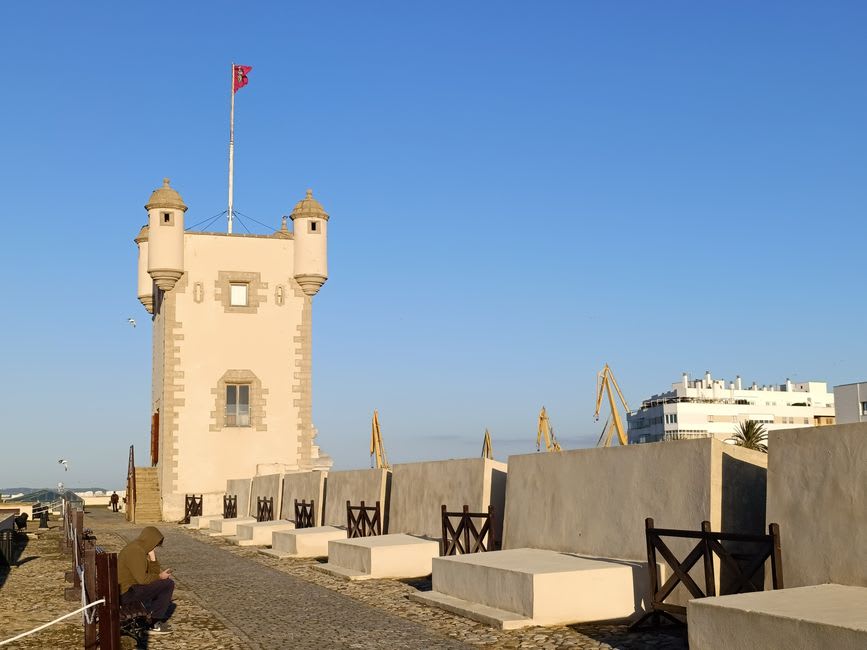
Above the market town, the upper walled city holds the Torre das Três Coroas, a marble keep from the thirteenth century that now forms part of a pousada — Portugal’s network of hotels installed in castles and monasteries — meaning you can, if you’re willing to pay for it, sleep inside a genuine medieval fortress. I couldn’t afford a room but talked my way in for a coffee in the lobby, all vaulted stone and suits of armor, and then climbed the public section of the tower for a view over the entire Alentejo plain, marble-white rooftops giving way to gold fields stretching toward the horizon in every direction. A guide up there told me the tower is linked to Queen Isabel, sanctified for her charity toward the poor, whose legend still gets recounted here every July at a local festival.
When to go: Saturday, without question, to catch the weekly market — pair it with a spring or autumn visit when the plain around town is at its most photogenic and the heat hasn’t yet made the upper town’s cobbles unbearable at midday.