
Costa Nova
"Costa Nova looks like a child's crayon box decided to become a fishing village."
A thin strip of beach town where every house wears bold candy stripes, a fishing tradition turned into the most photogenic architecture on Portugal's Atlantic coast.
I took the bus out from Aveiro not knowing quite what to expect, and the striped houses still managed to catch me off guard — a whole street of them, painted in thick horizontal bands of red and white, blue and white, green and yellow, standing shoulder to shoulder like they’d agreed on a uniform but not a color. These are palheiros, originally simple wooden huts fishermen built to store their gear and dry their nets, painted in loud stripes so a man coming back in from the lagoon fog could spot his own house from the water. Function became a whole aesthetic identity, and now it’s the reason half of Aveiro’s visitors make the twenty-minute trip out here.
A Beach Town With Two Faces
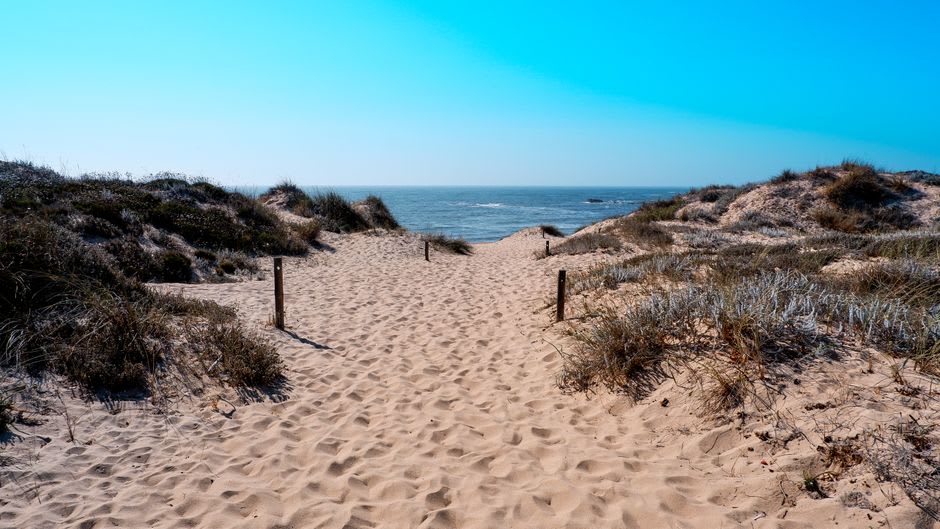
Costa Nova has a split personality that took me a morning to understand. On the lagoon side, facing the Ria de Aveiro, it’s calm — the striped houses, a boardwalk, boats tied up, retirees fishing off a low pier with the patience of people who aren’t expecting to catch anything in particular. Cross the narrow spit of land, maybe a ten-minute walk, and you hit the open Atlantic side: a wide, wild beach with real surf, dunes held together by marram grass, and a wind that never fully lets up. I stood at that midpoint once, lagoon on one side, ocean pounding on the other, and it’s a strange, specific kind of geography I hadn’t quite experienced before.
I ate lunch at a small place just off the striped-house street, grilled sardines with boiled potatoes and a glass of vinho verde, the fish so fresh the char on the skin still smelled faintly of woodsmoke from the grill outside. The owner, noticing my accent, asked where I was from and then spent five minutes insisting his sardines were better than any I’d had in Lisbon — he wasn’t wrong.
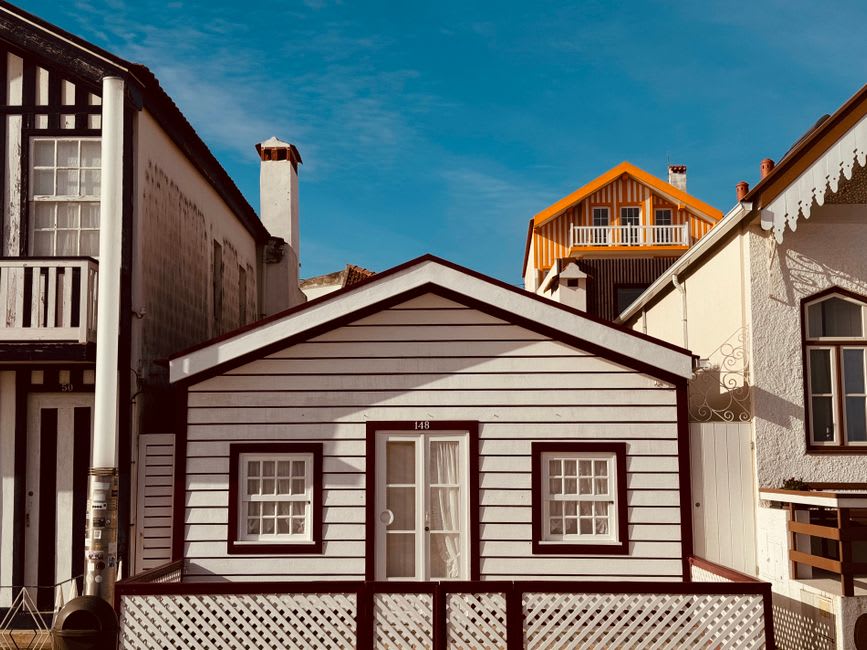
By late afternoon the light hit the stripes at an angle that made the whole street look almost artificial, too saturated to be real, and I understood why every photo of this place ends up looking edited even when it isn’t.
When to go: June or early September, when the beach is warm enough for the Atlantic side without the peak-August crowds that pack the striped-house street shoulder to shoulder.