
Costa da Caparica
"Lisbon has a beach twenty minutes away and somehow still isn't sick of the fact that most tourists never find it."
A long, wild Atlantic beach strip a short ferry ride from Lisbon, where surf schools crowd the northern end and a rattling wooden train carries you south to empty sand.
I got off the bus from Almada expecting a beach town and got, instead, an almost absurd amount of coastline — Costa da Caparica runs for something like thirty kilometers of near-continuous sand, and the crowd thins out fast the further south you go. Near the main strip, the water was full of surfers in wetsuits catching Atlantic swell that rolls in unbroken from open ocean, and the boardwalk behind them was lined with beach bars playing music too loud for eleven in the morning, in the best possible way. I’d expected a smaller version of Cascais; what I got instead felt rawer, windier, more like a proper surf coast than a resort.
The Little Train South
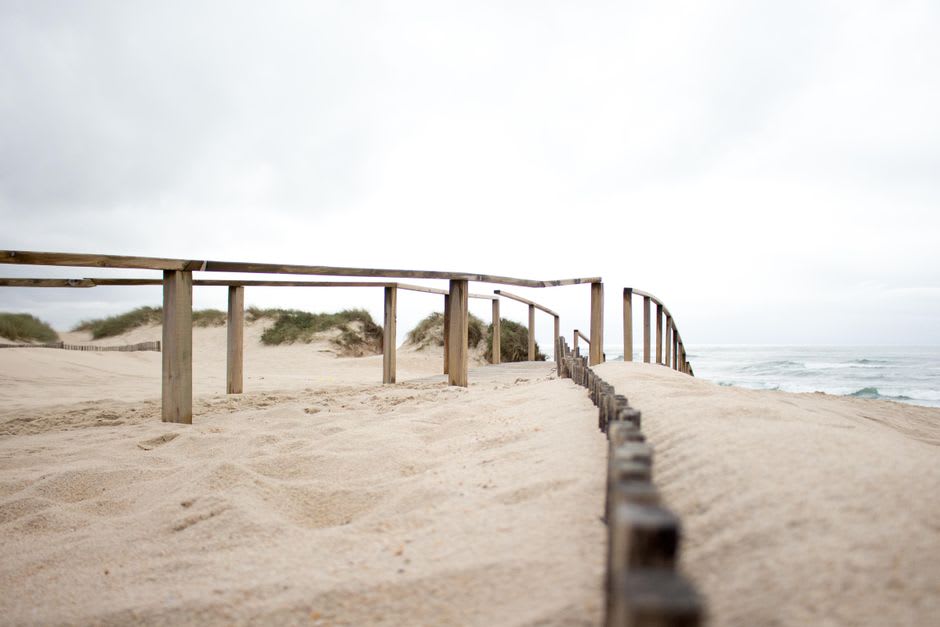
The real trick of Costa da Caparica is the Transpraia, a narrow-gauge train that’s really just a string of open carriages pulled slowly along the dunes, built decades ago to move beachgoers past the crowded northern beaches to the quieter stretches south. I bought a ticket from a man in a booth that looked unchanged since the seventies and rattled along at walking pace, wind in my face, past beach after beach getting progressively emptier — families with umbrellas gave way to a scattering of sunbathers, then to nothing but gulls and dune grass. I got off at one of the last stops, walked down through soft sand still warm from the day before, and had a stretch of Atlantic coastline more or less to myself on a Saturday in July, something that felt almost illegal so close to a European capital.
Learning to Fall Off a Surfboard
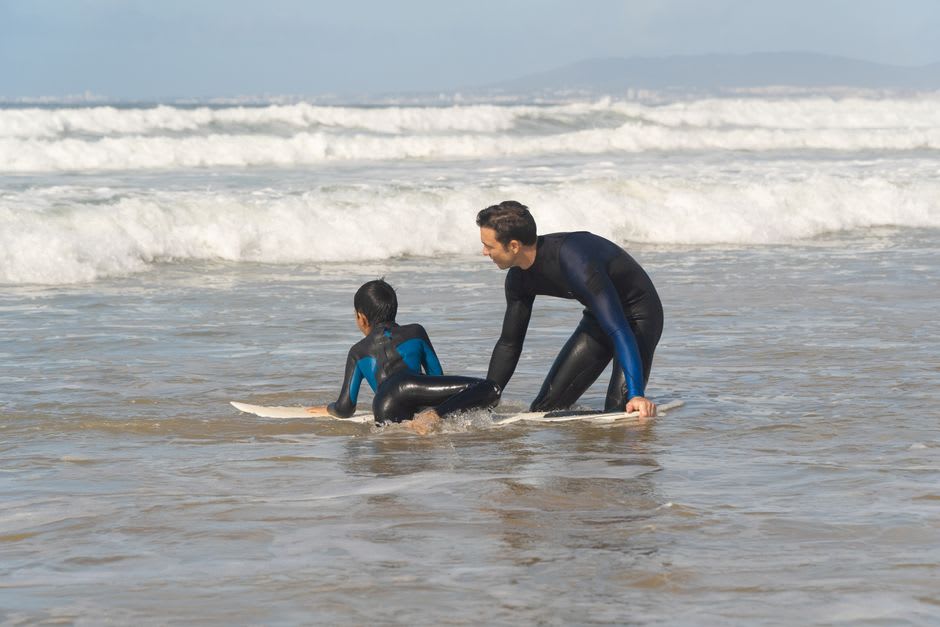
Back near the main strip the next morning, I gave in and booked an hour with one of the surf schools that line this end of the beach — instructors here are used to total beginners, patient in a way that suggested they’d seen every kind of disaster in the water. I caught exactly one wave in an hour of trying, stood up for maybe two seconds before pitching face-first into the whitewash, and came out of the water salted, bruised, and genuinely happy in the way only a beach that humbles you can manage. My instructor, a nineteen-year-old from a town further down the coast, told me the swell here is serious enough that it hosts real competitions, which explained why half the “beginners” around me were clearly not beginners at all.
When to go: September brings warm water, reliable surf, and far fewer crowds than the peak of July and August, when Lisbon empties out entirely onto this coast.