
Braga
"Braga is what Rome would look like if Rome had decided, at some point, to just relax a little."
Portugal's oldest city hides its age behind baroque exuberance, granite cathedrals, and a zigzag staircase up a forested hill that pilgrims have climbed on their knees for three centuries.
I got to Braga on a Sunday morning and immediately understood I’d made a scheduling mistake, because the entire city was in church, and by extension, on the street, dressed for it — men in ironed shirts, grandmothers in good coats, kids fidgeting in their Sunday shoes outside the Sé, the granite cathedral that anchors the old town and has been rebuilt and re-rebuilt since the twelfth century until it’s really several centuries of architecture wearing a trench coat. Braga calls itself Rome of Portugal, only half-jokingly, and there’s something to the comparison: this is a city of church bells and processions, older than the country itself, that somehow also has the loosest, most youthful energy of anywhere I went in the north, thanks to a university that keeps half the population under twenty-five.
The Staircase That Makes You Earn the View
Six kilometers outside town, up a forested hill, is Bom Jesus do Monte, and no photo prepares you for actually climbing it. The baroque staircase zigzags upward in dramatic switchbacks, each landing decorated with a fountain representing one of the five senses, or a chapel depicting a station of the Passion, so that by the time you reach the neoclassical church at the top — itself almost incidental to the journey — you’ve walked a piece of religious theater carved into granite and whitewash. I did it on foot, sweating through my shirt within the first two flights, while actual pilgrims beside me climbed the same steps on their knees, murmuring prayers, unbothered by tourists stepping around them with cameras.
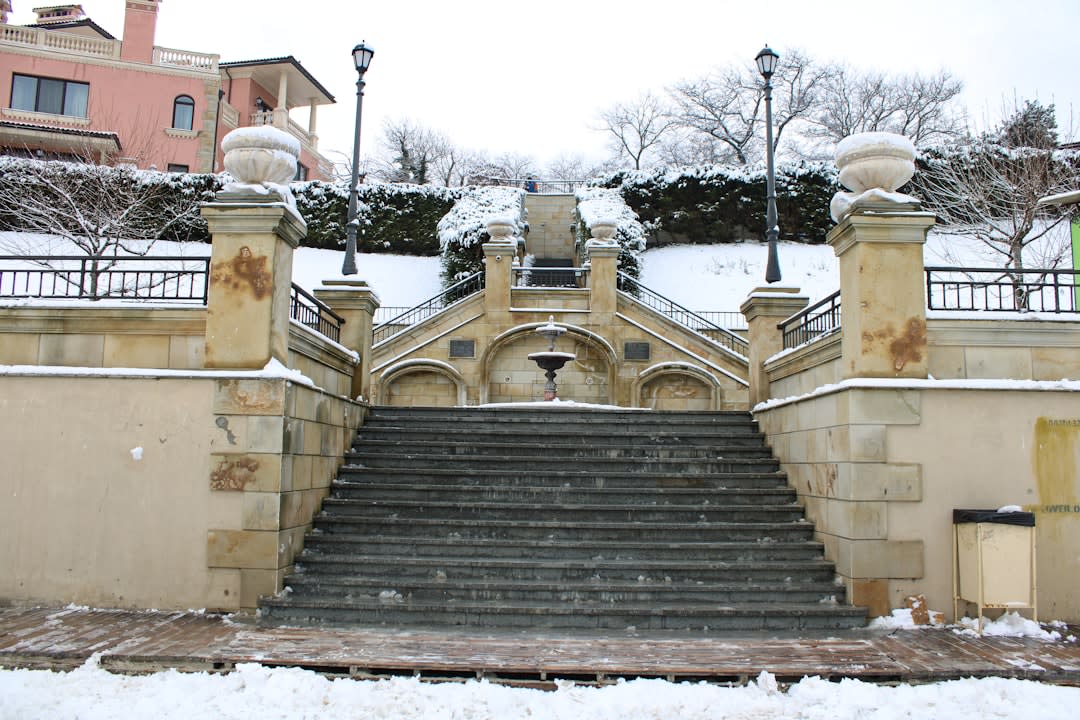
At the top, there’s a funicular for the descent, one of the oldest water-powered ones in the world, its two cars counterbalanced by tanks that fill and drain with water instead of running on electricity — a piece of nineteenth-century engineering so elegant I rode it twice just to watch how it worked. But it was the view from the top that stopped me: Braga’s rooftops and church towers scattered below through the pines, the kind of vista that makes the knee-scraped climb make sense.
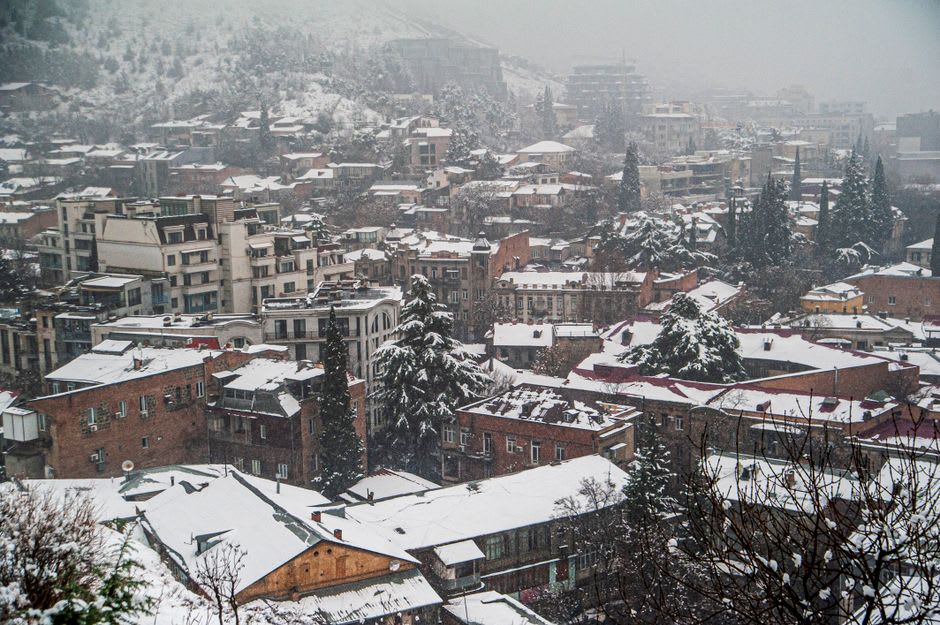
Back in the old town that evening, I found the real Braga in a tasca off the Arco da Porta Nova, eating bacalhau à Braga — salt cod baked with potatoes and onions in a style locals insist is the only correct one — while students from the university spilled out of a nearby bar into the plaza, laughing too loud, completely unconcerned with the fact that they were doing it in front of a two-thousand-year-old Roman arch.
When to go: Visit during Holy Week (Semana Santa), when Braga’s processions are the most elaborate in Portugal, or in early June for the São João festival, when the whole city fills with the smell of grilled sardines and the sound of plastic hammers.