
Beja
"Beja doesn't try to seduce you. It just waits, flat and golden, until you fall for it anyway."
The quiet capital of the Alentejo plains, where a medieval keep watches over wheat fields to the horizon and a convent guards one of literature's great, disputed love stories.
Everything around Beja is flat. That’s the first thing you register, driving in from Évora on a road that seems to run straight into a heat shimmer — wheat and cork oak stretching to a horizon that never breaks, the kind of landscape that makes you understand why the Romans called this province Pax, for peace, and why it took them so long to actually subdue it. Beja rises out of that flatness almost apologetically, a modest hilltop town whose castle keep, the Torre de Menagem, is visible for kilometers before you arrive, a pale marble finger against a sky that’s usually some shade of relentless blue.
The Nun Who May Never Have Existed
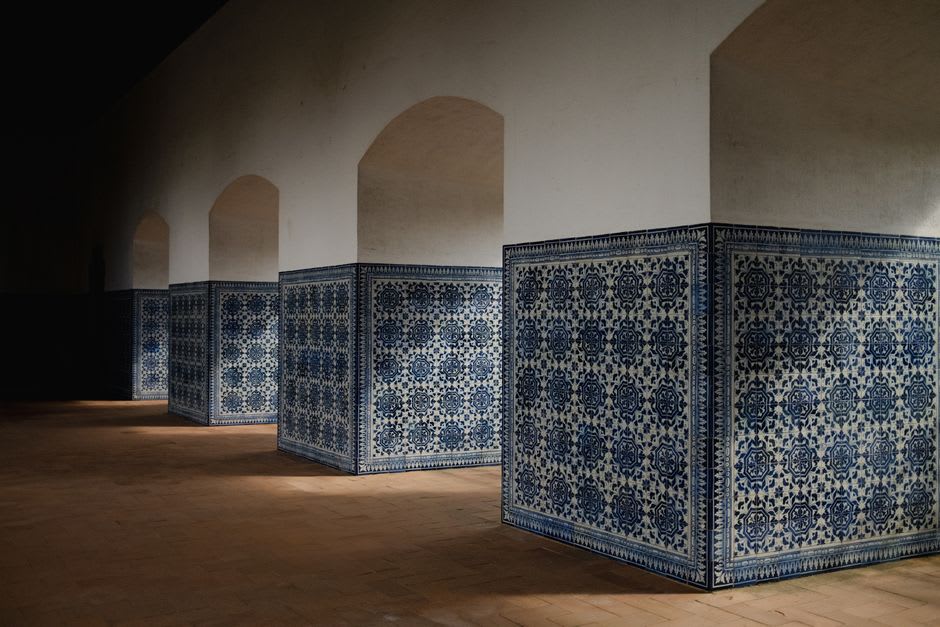
The reason most people have heard of Beja at all, if they’ve heard of it, is the Convento da Conceição and the so-called Lettres Portugaises — five love letters supposedly written in the 1660s by a cloistered nun named Mariana Alcoforado to a French officer who’d abandoned her after a wartime affair. Scholars now mostly agree the letters were a French literary invention, not real correspondence at all, but standing in the convent’s cloister, its Manueline windows looking out over a dusty courtyard, it’s hard not to want the story to be true. The building now houses the regional museum, all gilded talha dourada woodwork and blue-and-white azulejos, and I lingered longer than I meant to in a room of seventeenth-century tiles depicting hunting scenes.
Climbing the castle keep itself — one of the tallest in Portugal, built under King Dinis in the thirteenth century — gets you a view that makes the whole province legible at once: white farmhouses scattered like dice across a green-gold board, a landscape built for grain and cattle and not much else, which is exactly why the food here leans so hard into bread and pork and the black-hoofed pigs that graze the montado.
Migas, Wine, and an Empty Square
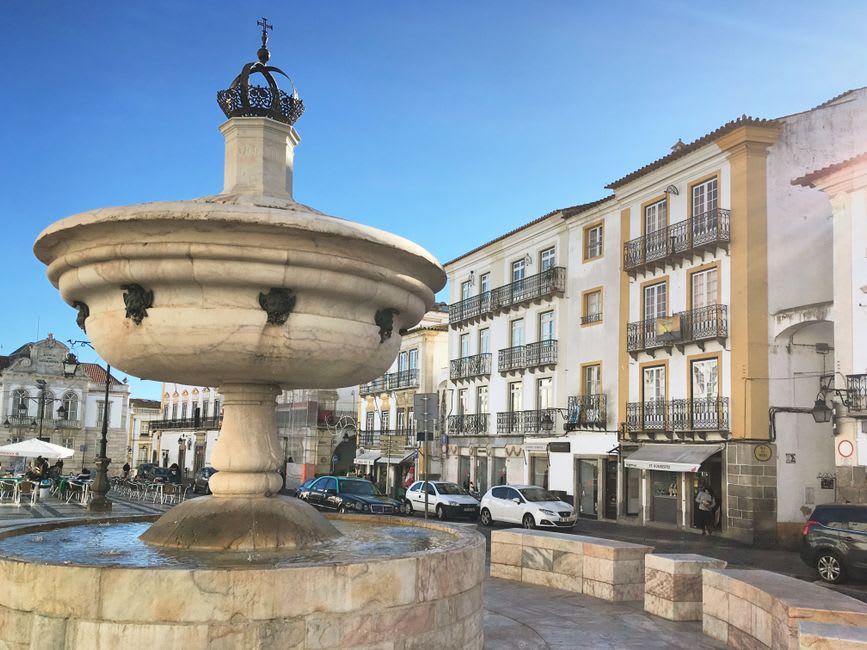
I ate lunch at a tasca off the Praça da República that had maybe six tables, all occupied by men who clearly ate there every day, and had migas — bread fried down with garlic and olive oil until it forms a dense, almost architectural mass — alongside a plate of grilled pork and a carafe of local red that cost less than the coffee after it. The square outside was near-empty at 2pm, everyone sensibly indoors avoiding the sun, and I understood the Alentejo’s famous slowness isn’t laziness. It’s just correct behavior in a place this hot.
When to go: Visit in spring, March through May, when the plains around town are still green and wildflower-studded before the summer bakes everything down to gold.