
Batalha
"Batalha is a monastery built out of pure relief, and eight hundred years later you can still feel it."
A limestone monastery built as a thank-you note to God for winning a battle that saved Portuguese independence, its unfinished chapels open to the sky as if the masons simply walked off one day.
I got to Batalha in the late afternoon, which turned out to be the right call by accident — the low sun hits the honey-colored limestone of the monastery’s facade and turns the whole thing gold, every pinnacle and finial throwing a long shadow across the plaza. The building is enormous and somehow still manages to look delicate, all that Late Gothic tracery carved into stone that should by rights look heavy and doesn’t. I’d read the name meant “battle” and expected something martial. What I found was closer to an act of gratitude frozen in stone.
Built to Say Thank You
King João I commissioned the monastery in 1386 to fulfill a vow made before the Battle of Aljubarrota, fought nearby that same year, where a badly outnumbered Portuguese army — with English longbowmen fighting alongside them — crushed a Castilian invasion and secured Portugal’s independence for the next two centuries. Walking through the founder’s chapel, where João I and his English wife Philippa of Lancaster lie side by side under a star-vaulted ceiling, I found it strange and moving that a monument to a medieval battle would feel less like triumphalism and more like relief, like a man who genuinely hadn’t expected to win saying thank you the only way he knew how.
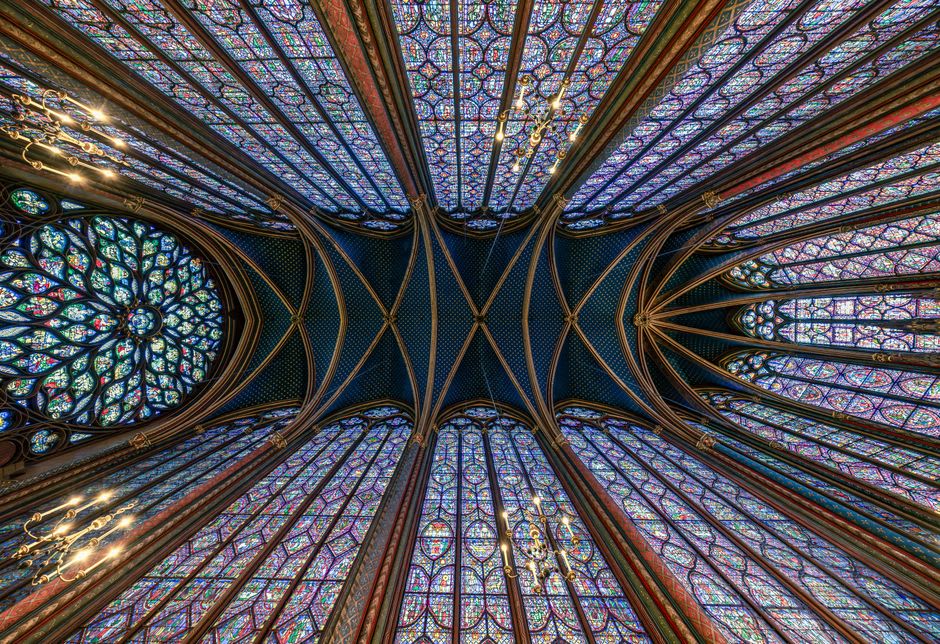
The Unfinished Chapels round the back are the detail that stuck with me longest — an octagonal mausoleum begun by King Duarte, roofless, open straight up to the sky, its half-completed Manueline portal a tangle of stone rope and vegetal carving that simply stops mid-motif. Nobody’s entirely sure why work halted; the going theory involves funds and attention diverted to the Age of Discoveries happening at the same time. Standing inside it, rain-streaked walls and grass growing between the flagstones, felt more honest than most finished monuments I’ve seen.
The Cloister at Golden Hour
The Royal Cloister next door is the one part of the complex that got finished exactly as intended, a masterpiece of Manueline tracery layered over older Gothic arches, and I lingered there until a guard started jangling his keys pointedly. Outside, in the square, a small group of locals were setting up folding chairs for what turned out to be a weekly outdoor cinema night against the monastery’s flank — a strange and wonderful juxtaposition, a UNESCO World Heritage site doubling as a backdrop for someone’s laptop and a projector.
When to go: Late afternoon, any season, for that low golden light on the facade — and early August if you want to catch the anniversary commemorations of the Battle of Aljubarrota.