
Angra do Heroísmo
"Angra do Heroísmo feels like a city that used to matter enormously and has made complete peace with mattering quietly instead."
Terceira's UNESCO-listed colonial capital, once the Atlantic's most important port between Europe and the Americas, where the streets fill each summer with garlanded arches for the Holy Spirit festivals.
Terceira’s capital sits inside a bay flanked by the volcanic headland of Monte Brasil, and from the fortress up there — a star-shaped seventeenth-century structure the Spanish built during the sixty years they controlled Portugal — you can see exactly why every transatlantic fleet used to stop here. For nearly three centuries, ships sailing between Europe, Africa, and the Americas put in at Angra to resupply, wait out storms, or simply because the harbor was the safest anchorage for a thousand miles in any direction. Walking down into the old town from the fort, past pastel façades in ochre and blue with elaborate stone doorways, it’s easy to picture the wealth that all that traffic left behind — this was, until an 1980 earthquake damaged much of it, one of the best-preserved colonial port cities in the Atlantic, which is exactly why UNESCO stepped in afterward to help restore it stone by stone.
Streets Built for the Holy Spirit
I happened to visit in early summer, which meant I kept stumbling into small chapels called impérios — squat, brightly painted buildings, often no bigger than a garden shed, that exist for exactly one purpose: hosting the Festas do Espírito Santo, the Holy Spirit festivals that define the Azorean religious calendar from Easter through summer. Each parish has its own império, repainted and decorated ahead of its turn to host, and I watched a group of neighbors in Angra hanging paper garlands and setting up long communal tables in the street outside one, preparing for a weekend where the whole parish would share free soup, bread, and wine as an act of charity rooted in medieval devotion to the Holy Spirit and to Queen Isabel, who reportedly sold her crown to feed the poor during a famine.
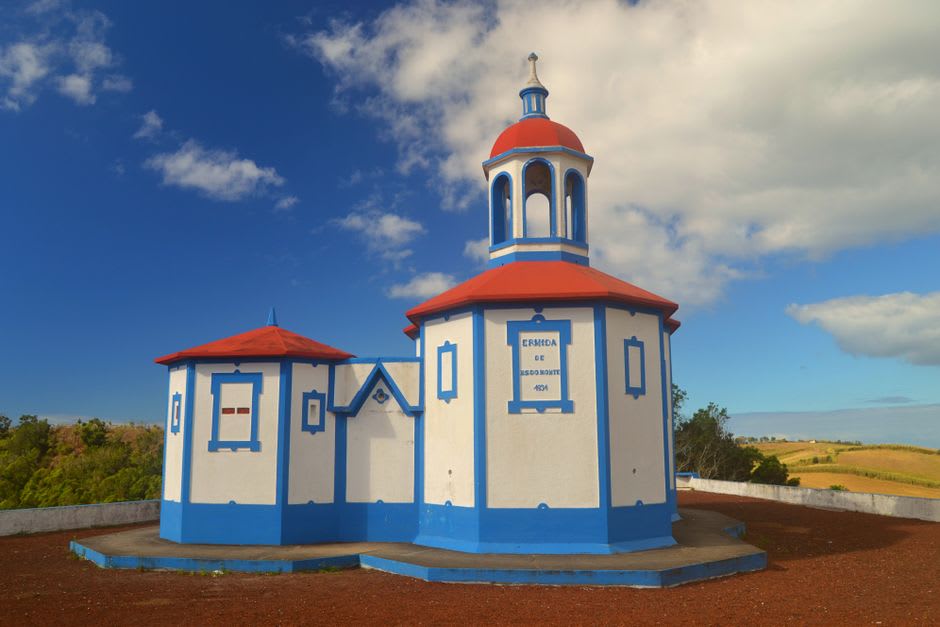
A woman stringing lights across the street told me, half-laughing, that the festivals are as much about neighborhood pride and rivalry as faith — whose império looks best, whose soup is better, whose brass band draws the bigger crowd — and that she’d been organizing hers since she was a teenager. I ended up sitting on a curb eating a bowl of sopas do Espírito Santo pressed on me by a stranger, bread soaked in beef broth with mint, and felt more like a guest at someone’s family gathering than a tourist at an event.
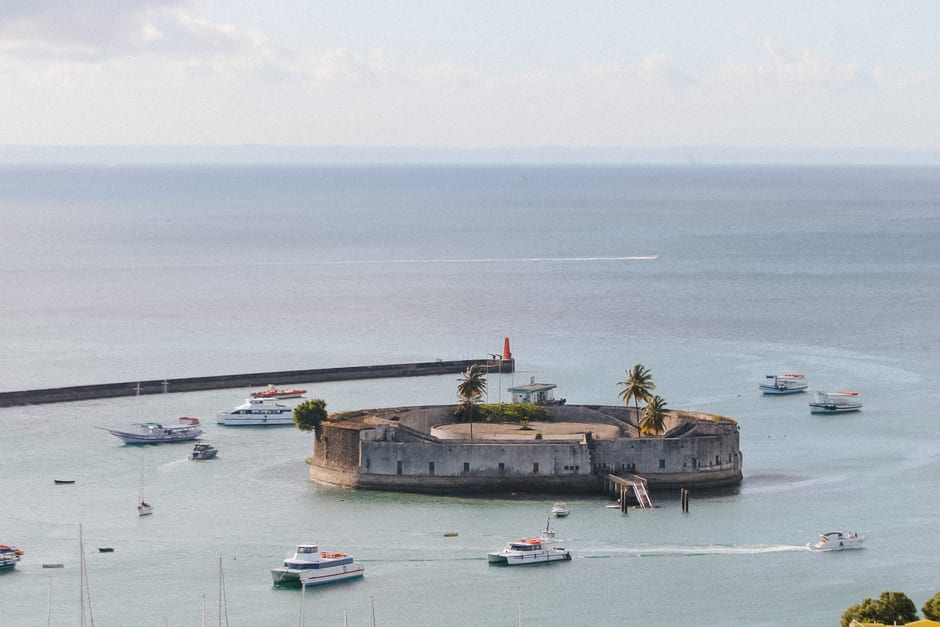
Later that evening, from the fortress walls, I watched the whole bay go gold and then grey, ships’ lights blinking on one by one where galleons used to anchor, and thought about how much history this small, calm harbor has quietly absorbed.
When to go: Come between late April and September to catch a Holy Spirit festival somewhere in town, though Angra’s mild volcanic climate makes it a pleasant walk almost any month of the year.