
Amarante
"Amarante is a town that takes its patron saint's matchmaking so seriously it bakes his blessing into a very suggestively shaped pastry."
A riverside town built around a saint famous for matchmaking, where a graceful stone bridge and a monastery of carved granite saints preside over pastries shaped, unmistakably, like something else entirely.
I came into Amarante across the São Gonçalo bridge, and it’s genuinely one of the prettiest river views in northern Portugal: pastel townhouses with wrought-iron balconies stacked along the Tâmega, the water calm enough to mirror the whole scene back at itself, and the twin-towered monastery rising just beside the bridge like it was placed there for the photograph. The original bridge dates to the sixteenth century, though what stands now is largely an eighteenth-century rebuild after Napoleon’s troops burned the town in 1809 during a fierce local resistance — a detail an old man fishing off the riverbank told me with more pride than grievance, as if the burning itself had become part of the town’s legend.
A Saint With a Very Specific Job Description
The monastery is dedicated to São Gonçalo, a thirteenth-century friar buried here who, according to local tradition, has one very specific specialty: helping unmarried people find spouses. Every June during the Festa de São Gonçalo, unmarried women in Amarante still touch or dance near his tomb hoping for a match within the year, and the town bakes doces fálicos — small sweet pastries shaped, without much subtlety, like phalluses — that get exchanged between hopeful singles as a wink at the saint’s reputation. I bought one from a bakery near the church, half-laughing about it with the woman behind the counter, who assured me, completely straight-faced, that she’d met her husband the year she ate three.

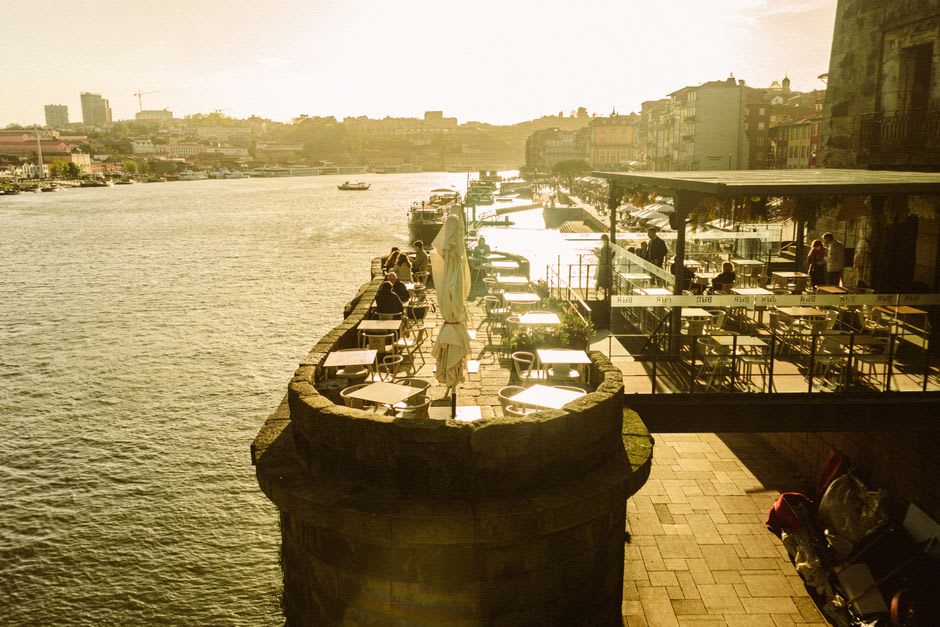
Inside the monastery cloister, carved granite saints line the facade in weathered rows, and the church itself holds Gonçalo’s tomb, worn smooth in places by centuries of hopeful hands. But Amarante’s real pull for me was simpler: sitting at a café table right on the riverbank as the evening light hit the bridge’s arches, eating a slice of the region’s other famous confection — the elaborate, egg-yolk-heavy conventual sweets the nuns and monks of northern Portugal perfected — while swifts cut low over the water chasing insects.
Amarante also sits at the edge of the Vinho Verde region proper, and the hills around town are stitched with vineyards that supply the crisp, slightly fizzy young wine the area is famous for — I had a glass with dinner that tasted like it had been bottled that same afternoon.
When to go: The first weekend of June, for the Festa de São Gonçalo, when the bridge fills with stalls, music, and a town-wide belief in second chances at love.