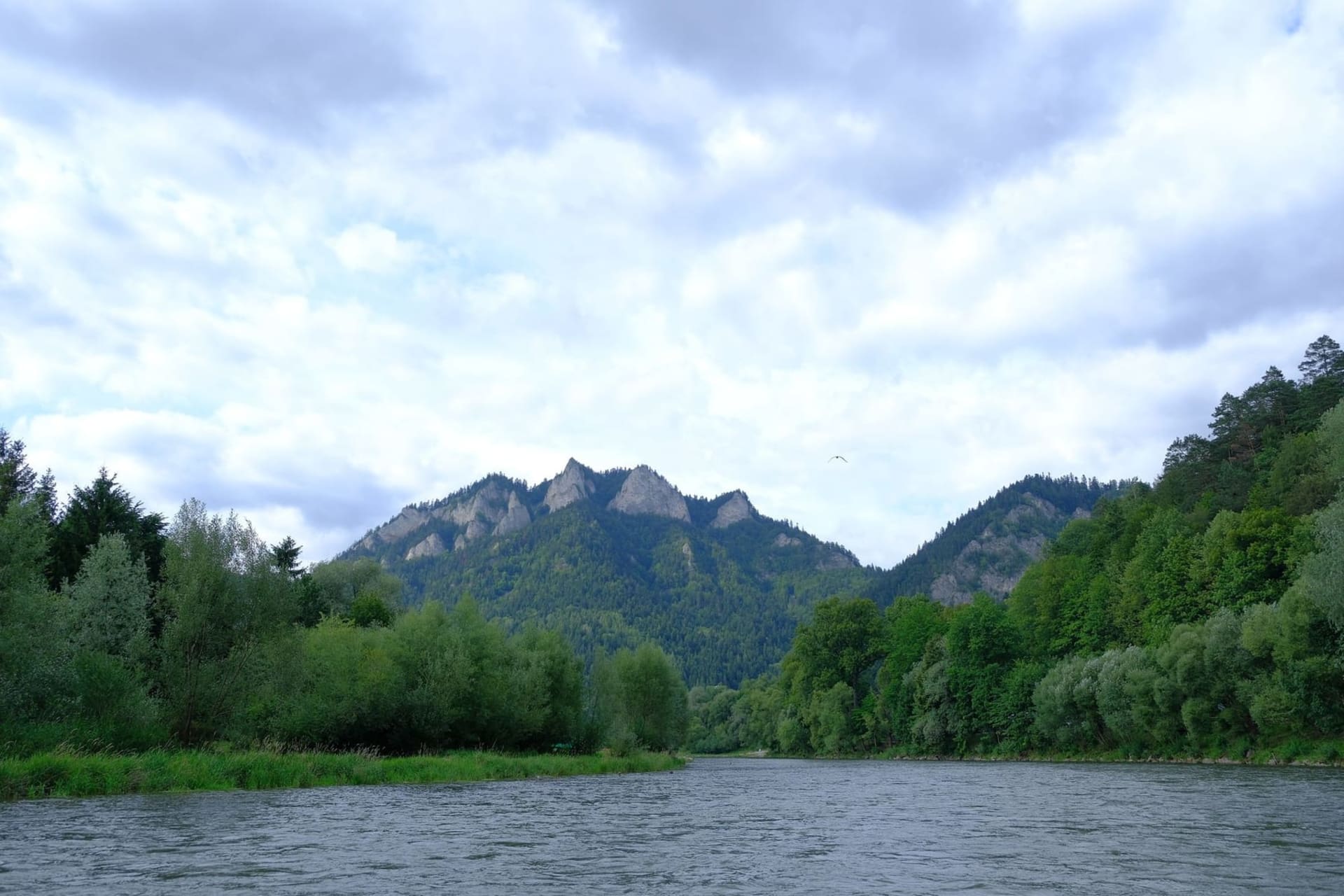
Pieniny National Park
"The rafts have carried passengers since the 18th century. The gorge since longer."
A gorge of white limestone peaks on the Polish-Slovak border navigated by traditional wooden rafts on the Dunajec River.
The map showed a thin blue line cutting through white. That was enough. We drove south from Kraków in the early morning, the Tatra foothills rising and flattening ahead of us in waves, until the road narrowed to a single lane threading through the village of Sromowce Niżne. By the time we reached the embarkation point at Kąty, the limestone walls of the Pieniny were already climbing above the tree line on both sides, pale as chalk, older than anything I could comfortably think about.
The Raft
The craft is called a tratwa. It is made of five or six pine logs lashed together, flat and low to the water, steered by two men standing at either end with long wooden poles. No engine. No fiberglass. No safety briefing beyond a laconic gesture toward the bench. We sat down and pushed off into the Dunajec.
The river runs cold even in June — it comes off the Tatras and it remembers where it’s been. The current pulled us into the gorge and the walls closed in: fifty, sixty, eighty meters of pale rock streaked with rust and green lichen, swallows threading the upper air. Lia leaned over the side and let her hand trail in the water for a moment, then pulled it back quickly and laughed. I understood. The river has a temperature that feels deliberate, like it is reminding you that you are a guest.
The gormen — flisakowie — wore the embroidered vests and wide-brimmed hats of the Górale, the mountain highlanders. They spoke to each other across the length of the raft in a dialect I couldn’t parse at all, even with my fractured Polish. One of them caught me watching and grinned. “Slovakia,” he said, pointing to the left bank. “Poland.” He pointed right. We were navigating two countries simultaneously, which seemed exactly right for a gorge that has never entirely belonged to either.
What Surprised Me
I had expected the scenery — the photographs prepare you for the walls and the water. What I had not expected was the silence inside the gorge itself. No birds called from within the canyon. The rock absorbed sound. The only noise was the pole scraping limestone and the low conversation between the two men, and even that felt muffled, held close by the walls. It was the quietest twenty kilometers I have spent in years.
Above the Water
After the float we climbed to the ruins of Czorsztyn Castle, which sits on a volcanic crag above the reservoir that now fills the lower valley. The view from the battlements takes in the Tatras in one direction and the Pieniny gorge in the other, and in the late afternoon light both ranges turn the same color: a warm, specific gold that belongs to late spring in the Polish mountains and nowhere else. We ate oscypek — the smoked sheep’s milk cheese of the region, salty and slightly rubbery — from a wooden stall near the castle gate. It tasted like altitude.
When to go: May and June offer the clearest light and manageable crowds before the summer school holidays peak; September brings lower water and the first color in the beech forests along the canyon walls, and the rafting continues through October.