
Vieng Xai Caves
"They built a city inside a mountain and ran a revolution from it. That's either mad or brilliant, and maybe both."
Vieng Xai is seven hours from Phonsavan by road through some of the most remote countryside in Southeast Asia, and people keep asking me whether the drive is worth it. The drive is worth it on its own terms — a full day of mountain road through Houaphan province, past villages with no names on any map I could find, past limestone karst formations that rise from the rice fields like half-submerged teeth, past a checkpoint where a soldier in fatigues waved us through without particular curiosity. But the caves at the end of the drive are worth it on entirely different terms.
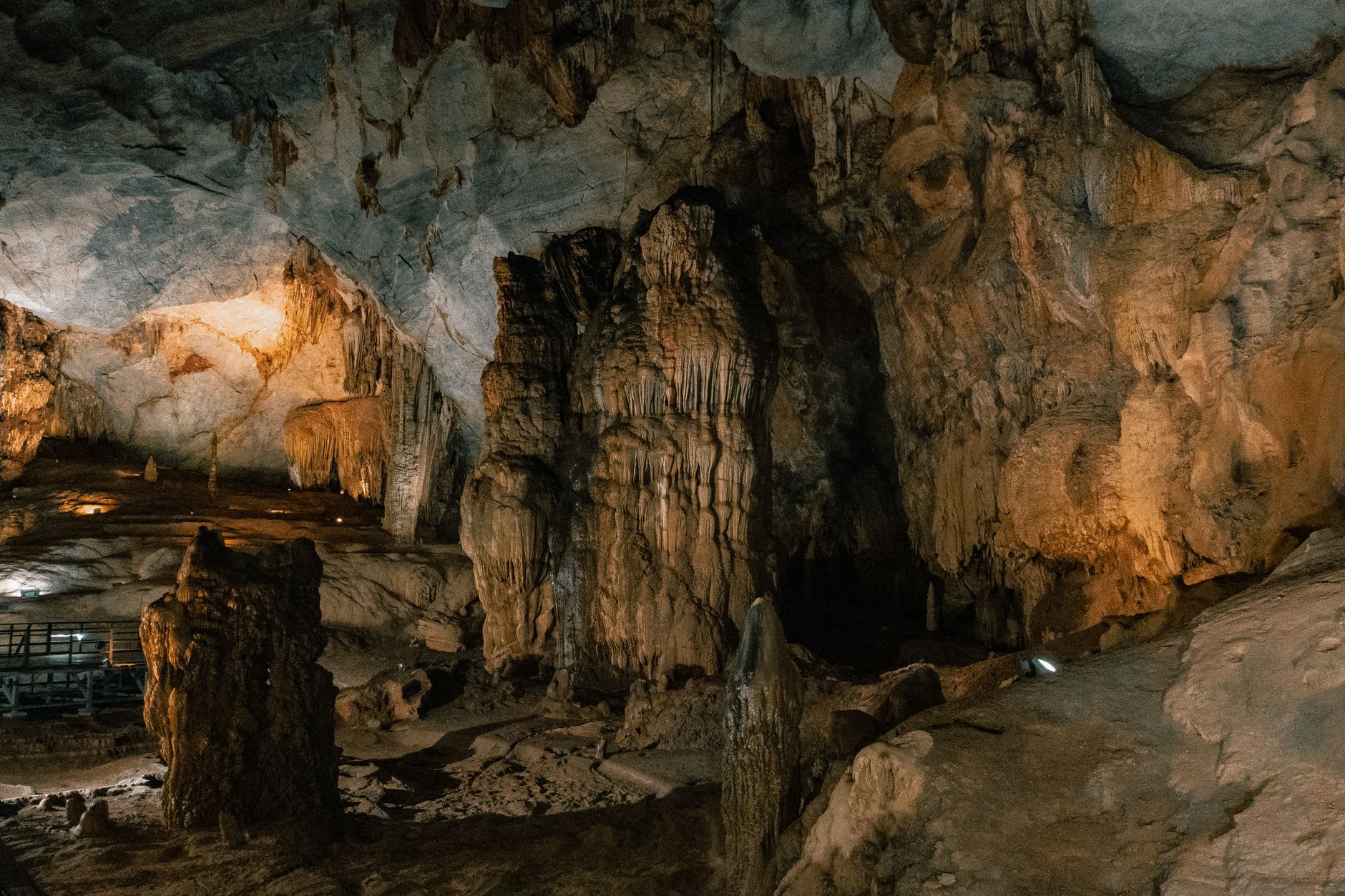
From 1964 to 1973, as American bombing campaigns pounded Laos — dropping more ordnance on this small country than was dropped in the entirety of the Second World War — the leadership of the Pathet Lao, Laos’s communist movement, lived in a network of limestone caves in this valley. Not camping, not temporarily sheltering: living. They built offices, meeting rooms, theatres, hospitals, schools, and printing presses inside the caves. Kaysone Phomvihane, who would become the founder of the Lao People’s Democratic Republic, worked here. Prince Souphanouvong, the “Red Prince” and half-brother of the royalist King, had his cave quarters here. They received foreign diplomats, ran a government-in-waiting, and emerged from their caves every morning to find the valley still standing.
The guided tour — an audio tour with high-quality recorded narration — takes you through six caves in sequence, each identified by the name of its former occupant or function. Kaysone’s cave has the original desk still in the main chamber, maps still pinned to walls, a blackboard with writing that was never erased. There is something in the persistence of these mundane objects — the desk, the blackboard, the mismatched chairs — that a formal museum could not manufacture. Prince Souphanouvong’s cave includes a garden he planted outside the entrance; the plants are still there, overgrown now, but unmistakably cared for at some point by someone who intended to return. The hospital cave is the one that makes you stop walking. It is a full operating theatre carved from rock, with instruments still in cases, in a mountain, in 1968.
The valley around the caves is extraordinary on its own: a tight bowl of karst limestone peaks rising from flat paddy fields and a river, with a small town at its centre that has the quiet self-possession of a place not frequently visited. There are one or two guesthouses, a morning market, and a quality of air in the valley that is different from the plateau — heavier, greener, the smell of wet stone and growing things. I stayed two nights, which was enough to walk the valley in the evening when the karst peaks turned gold, and not enough by half.
When to go: The audio tour runs twice daily — morning at nine and afternoon at one. The morning tour is better, with lower temperatures and the light on the cliff faces in the early hours. Give yourself two days if possible: one for the caves, one for the valley on foot. The road from Phonsavan is a full day’s journey; most travellers use Sam Neua town (thirty minutes from Vieng Xai) as a hub. November to March is ideal; the rainy season makes the mountain road significantly more challenging.