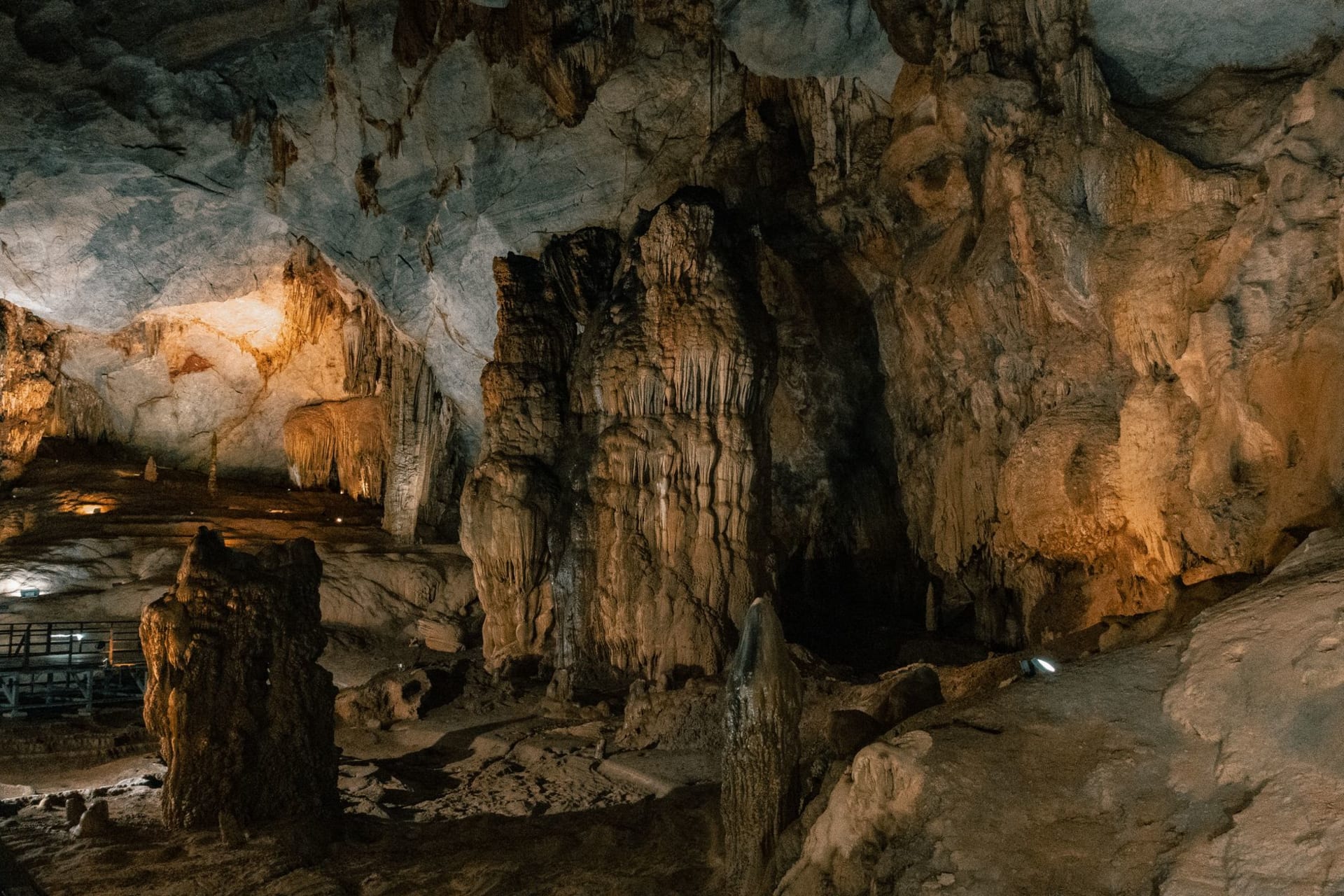
Tham Piu Cave
"You climb toward the cave mouth and realise, halfway up, that this is not a visit you can undo."
Tham Piu is twenty-five kilometres east of Phonsavan, and the tuk-tuk driver who took me there was quiet for most of the journey. Not uncomfortable quiet — Lao quiet, which is often a form of respect for what you’re approaching. The road passes through farming villages and then into a narrowing valley where a limestone cliff rises suddenly from the forest, dark grey against the morning sky, and in its face, about halfway up, a black opening: the cave.
On November 24, 1969, somewhere between 374 and 400 civilians — the exact number is disputed because the records were incomplete and many of the dead were never fully identified — were sheltering inside Tham Piu Cave from the ongoing American bombing campaign over Xieng Khouang province. They were farmers, teachers, schoolchildren, elderly people who couldn’t flee further. The cave was deep enough to provide shelter from most ordnance. Then a T-28 aircraft fired two rockets directly into the mouth of the cave. The explosion, amplified by the enclosed space, killed almost everyone inside.
You climb to the cave on a concrete staircase that was built decades after the war, and the climb takes about fifteen minutes. The staircase is steep and the forest on either side is thick and green and entirely indifferent to history. At the top, the cave opens wider than it appears from below — a high-ceilinged chamber that goes back maybe forty metres before narrowing. Inside, there are photographs, a monument, incense urns, and bundles of flowers in various states of decay. The photographs show the cave interior as it was found — evidence that was documented, though I will not describe it further here. A monk had left a string of white flags along the cave ceiling. They moved in the draught from the entrance.
I stayed in the cave for a long time. There is nothing to see that takes a long time to see, but there is something that takes time to be with. The weight of a place like this is not performed — there is no interpretive design, no carefully calibrated lighting. It is just a cave and what happened in it and the people who still come to leave flowers. When I came back down the stairs, my tuk-tuk driver was standing at the base looking at the cliff. He had been there before. He said, in French-accented English, that it was a good day to visit because there were not many tourists. I asked him if it was ever a good day. He considered that seriously and said, probably not, but some days are better than others.

When to go: Tham Piu can be visited year-round. The climb is manageable in the dry season; in the rainy season the stairs can be slippery, so wear shoes with grip. Go in the morning when the light hits the cliff face and the forest below is still cool. Give yourself at least two hours including the drive from Phonsavan.