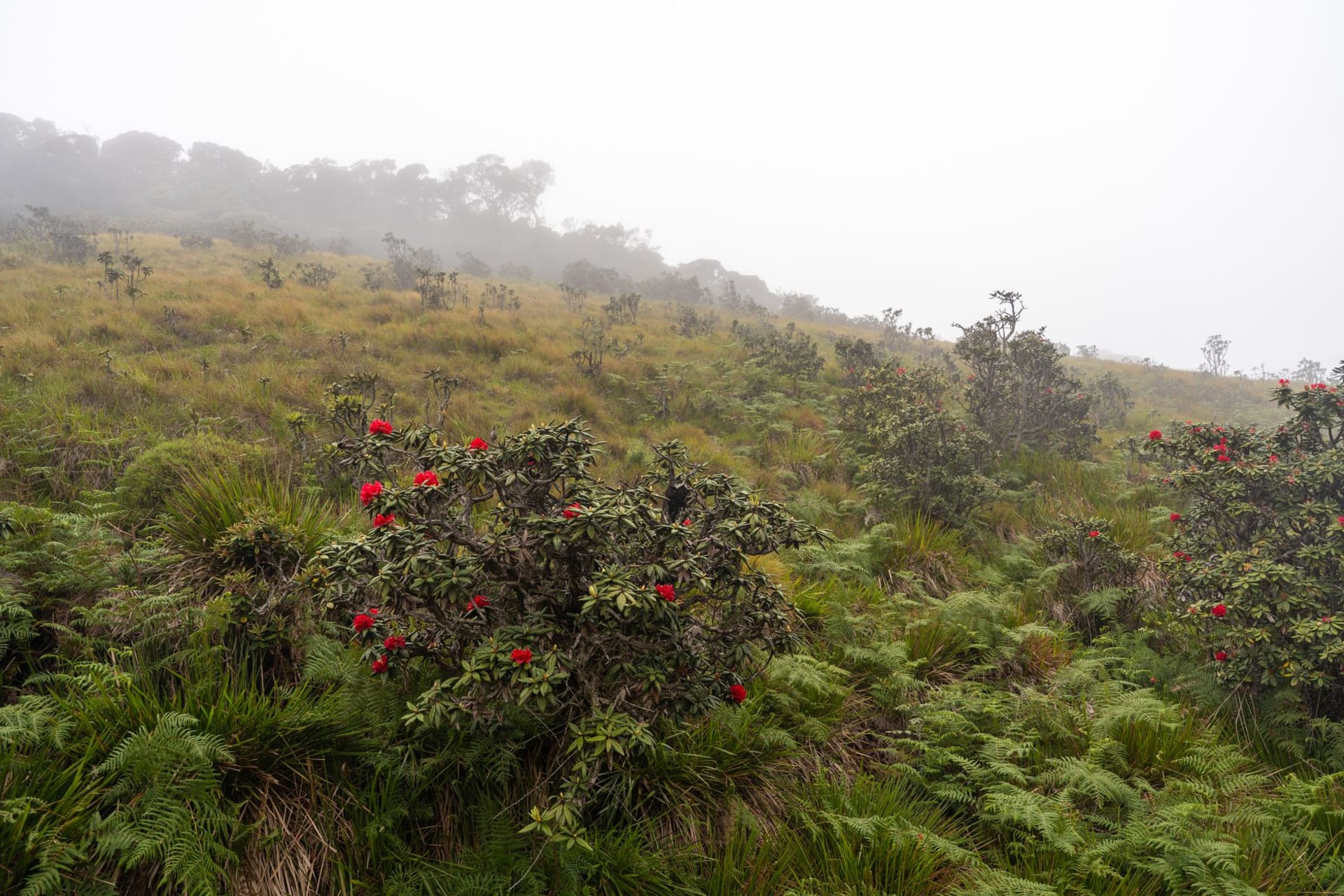
Site 2 — Phu Salato
"Ninety-three jars in the forest and not another soul. That's when the Plain of Jars stops being a destination and starts being an experience."
The tuk-tuk driver dropped me at the base of the trail and said he would be back in an hour and a half. He seemed mildly surprised I wanted to stay that long. The path to Site 2 climbs gently through farmland and then enters a section of secondary forest where the trees close overhead and the light becomes greenish and soft. It takes maybe twenty minutes of easy walking to reach the jars. Unlike Site 1, which you see all at once from a distance, Site 2 reveals itself gradually — a jar through the undergrowth here, then another, then a cluster of five or six around a slight rise in the hillside. It takes a moment to realize how many there are.
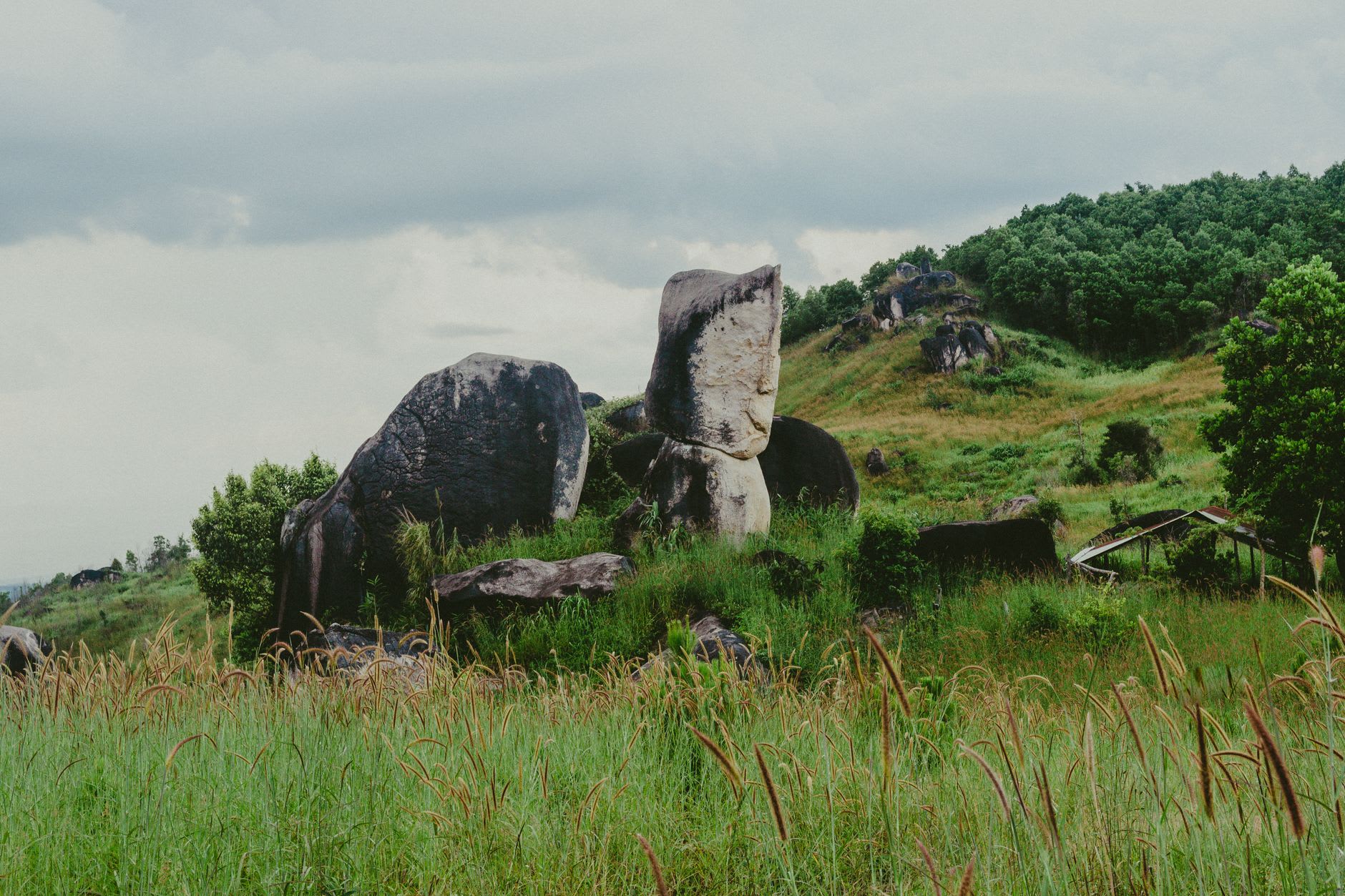
There are around ninety-three jars at Site 2, spread across a hill that feels genuinely remote despite being only a short drive from Phonsavan. The canopy here is real — mature trees, not just scrub — and they cast the jars in a kind of perpetual dappled shade that gives the site a completely different character from the open plateau of Site 1. Here, the jars feel hidden. They feel like things that were meant to stay hidden. I sat on one of the flat stones near the top of the hill and ate the sticky rice I’d bought from a woman at the Phonsavan morning market, and a hornbill made a racket somewhere in the trees above me, and I didn’t see another visitor the entire time. This is more than I can say for Site 1, where I had to queue to photograph certain angles.
The forest also does something useful to the imagination. At Site 1, the open plateau and the visible infrastructure — paths, interpretive signs, bomb crater markers — contextualizes everything. Here, with trees limiting the view to a few dozen metres in any direction, you are left more purely with the objects themselves. What were they for? The question becomes more urgent when you can’t see the parking lot. Some of the jars at Site 2 have their stone disc lids still partially in place. Others have holes drilled through their bases, which has led some researchers to speculate about drainage or ritual liquid use. I stared at the holes for a while and arrived nowhere, which seemed appropriate.
The walk back down through the forest felt slower than the walk up, in the way that a walk you don’t want to end always does. At the bottom, my tuk-tuk driver was eating rice from a container and looking at his phone. He’d arrived forty minutes early. I took that as a suggestion.
When to go: Site 2 is best in the dry season (November to April), when the forest path is clear and the hillside is accessible without mud. I went in mid-January and the walk was completely dry. Avoid mid-afternoon; the heat under the forest canopy in the dry season builds by two o’clock. Early morning is ideal — the light through the trees is extraordinary between seven and nine.