Phu Khe Nature Reserve
"I hiked for three hours without seeing another person and found that to be, in every way, ideal."
Nobody at my guesthouse in Phonsavan mentioned Phu Khe. I found out about it from a Dutch NGO worker at a dinner table who said, offhandedly, that there was a nature reserve a few hours north where you could hear gibbons in the morning if you started early enough. That was the entire recommendation, and it turned out to be entirely sufficient.

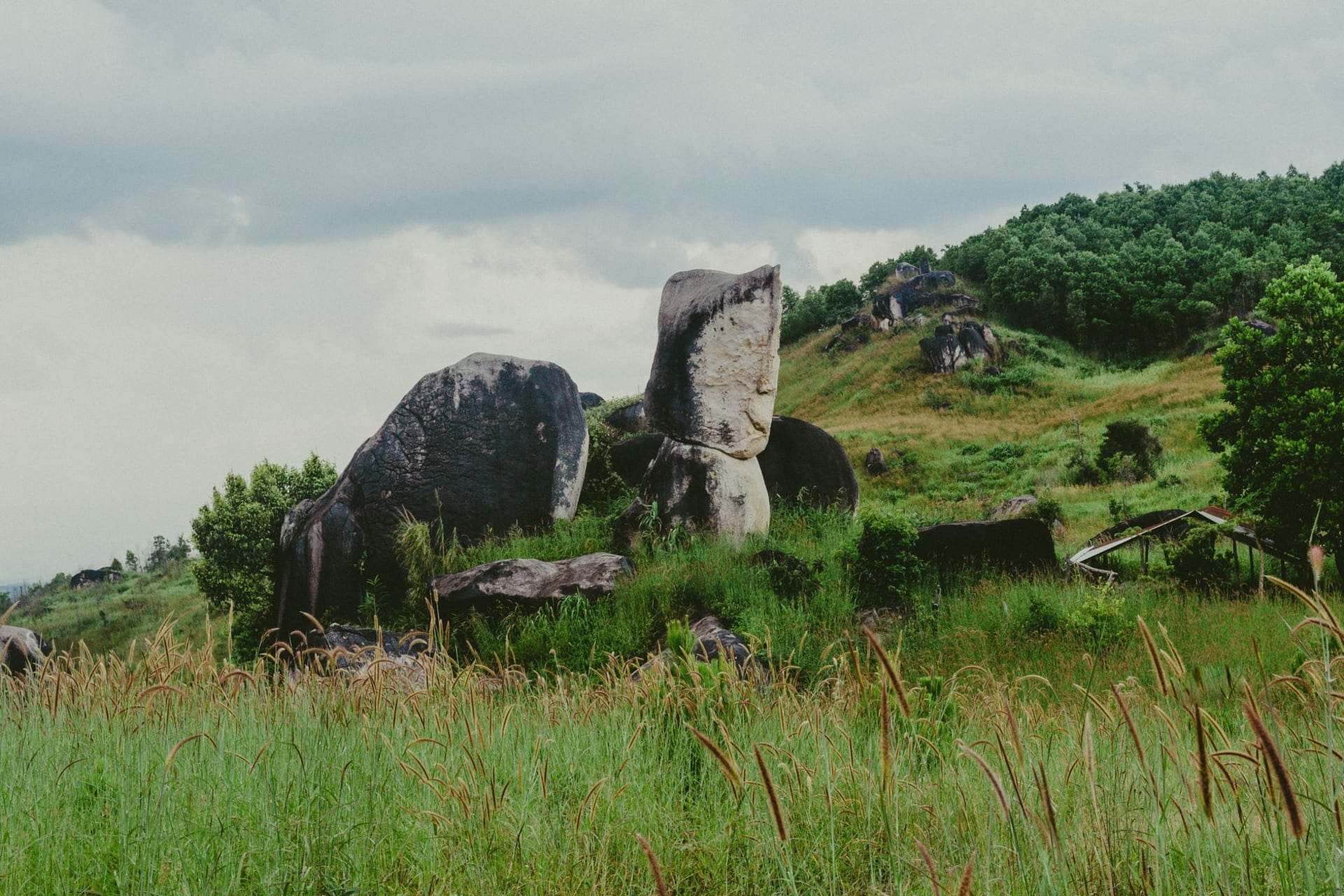
The reserve sits in the highlands north of the main jar sites, where the landscape changes character from the open plateau to genuine montane forest. The trees here are not the scrubby secondary growth of the jar site surrounds but proper highland pine — tall, sparse-branched, creating a forest floor covered in rust-coloured needles that silences footsteps almost completely. The air at this elevation carries a different quality than in the valley below: it’s genuinely cold in the early morning and sharp with resin, the kind of air that makes you feel like your lungs are expanding properly for the first time in weeks.
I hired a guide in the nearest village — a young man named Kham who charged a modest day rate and brought two portions of sticky rice wrapped in leaves, which proved essential — and we walked for about three hours through the forest, climbing steadily before levelling along a ridge with views over successive waves of forested hills. The gibbons made themselves known about forty minutes in: first one call, somewhere high to the left, then an answer from much further away, then silence, then a burst of something that sounded almost musical before stopping abruptly. I never saw them. I stopped walking and looked up into the canopy for a full minute each time they called, seeing nothing but pine needles and light. Kham found this response appropriate and patient. He had the gibbons to thank for his employment.
What draws me to forests like Phu Khe is not the wildlife checklist — I am not someone who travels with binoculars and a notebook — but the particular quality of attention that a forest demands. You listen differently in a forest. You notice the level of moisture in the air, the way the temperature changes as you drop into a gully or emerge onto an exposed slope, the different sounds the wind makes through pine versus bamboo. The forest is also full of birds I couldn’t identify, which is fine. The not-knowing is part of it.

We ate our sticky rice sitting on a log on the ridge, looking out over the hills, and Kham told me in limited English and considerable gesturing that his grandfather had hidden in these forests during the bombing. The forests were too thick and the ridges too steep for the planes to see through. I thought about the jars on the plateau below, sitting exposed in the open grass while the bombs fell, and the people who knew where to go when there was no other option.
When to go: Phu Khe is best in the cool dry season (November to March) when the forest trails are clear and the air at altitude is crisp. Early morning starts are essential for hearing gibbons — they call from roughly six to eight and then go quiet. Hire a guide from the village at the reserve boundary; the trails are not marked and the forest is dense enough to become disorienting. Budget a full day including transport from Phonsavan.