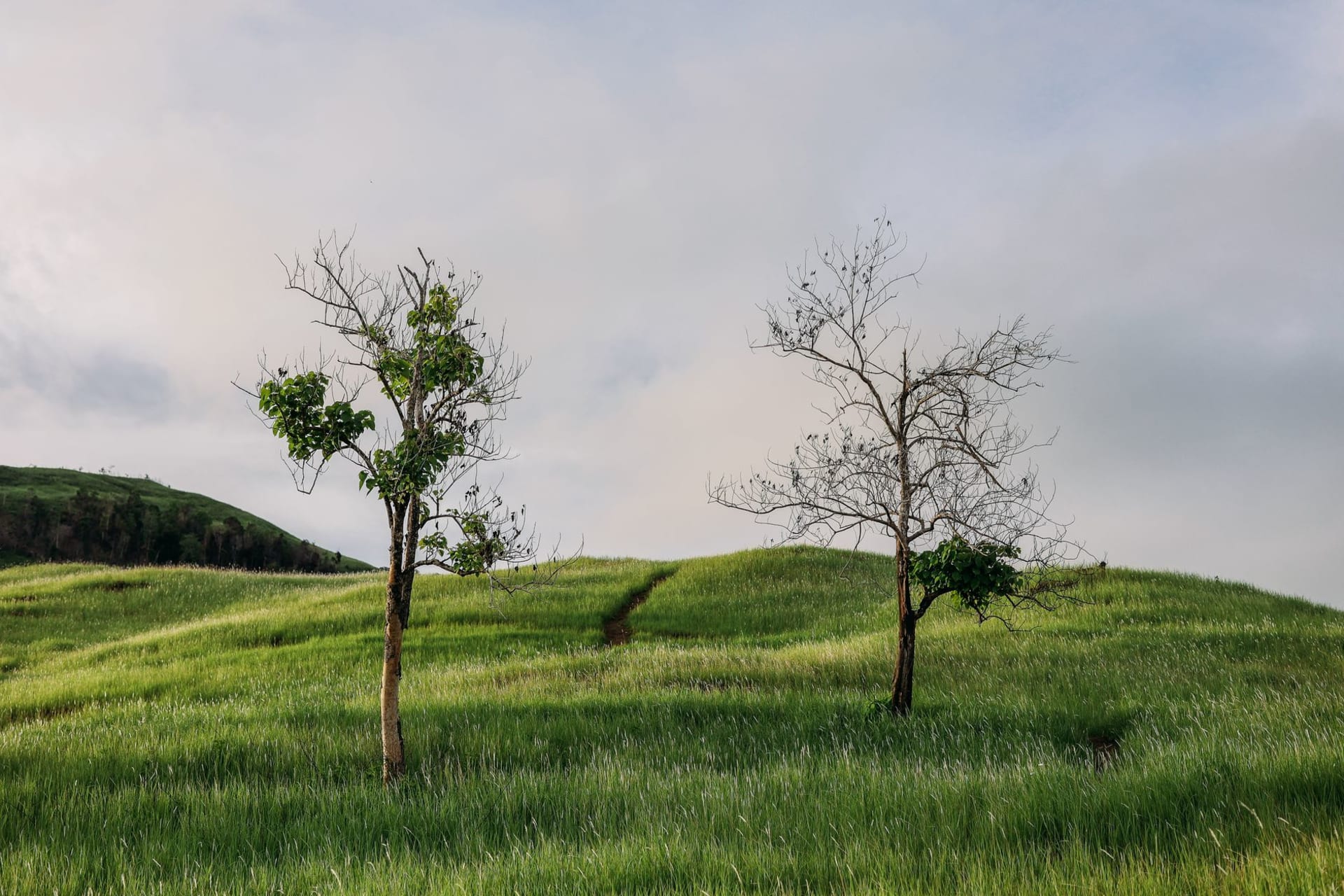
Nong Tang
"Xieng Khouang is a hard country to love, and then you reach Nong Tang and it makes its case."
The plateau around the Plain of Jars is, to put it plainly, a scarred landscape. It was one of the most heavily bombed places on earth during the Secret War, and the evidence is still everywhere — craters, ordnance warnings, villages built among the leftovers of explosives. I had spent two days among the jar sites in a mood that the history kept dragging downward, and Lia, sensing this, suggested we drive out toward Muang Kham to a lake she’d seen marked on a map. Nong Tang was not on anyone’s itinerary that I could find, which is usually a promising sign.
A lake the plateau forgot
We came over a low rise and there it was: a sheet of dark, perfectly still water held in a bowl of jagged limestone karst, the kind of dramatic grey stone you associate with the south of Laos, here surfacing improbably in the cool northern highlands. The lake is small enough to take in at a single glance and deep enough to look bottomless, and on the morning we arrived a low mist sat on the surface and slowly burned off as the sun climbed over the karst. There were no tour buses. There was a man fishing from a narrow wooden canoe, a few ducks, and the particular silence of a place that nobody has decided to monetise yet.
A path runs partway around the shore and there are a couple of small open-sided shelters where Lao families come at weekends to picnic and swim. We had it almost to ourselves on a weekday. Lia waded in off a flat rock, declared the water surprisingly warm near the surface and brutally cold below, and swam out toward the middle while I sat on the bank being sensible and watching the karst reflections shiver where she’d disturbed them. There is a local legend attached to the lake, as there always is — something about a serpent, or a flooded village, the details depending on who’s telling it — but the man with the canoe just shrugged when I asked, which felt like the more honest answer.
The drive out
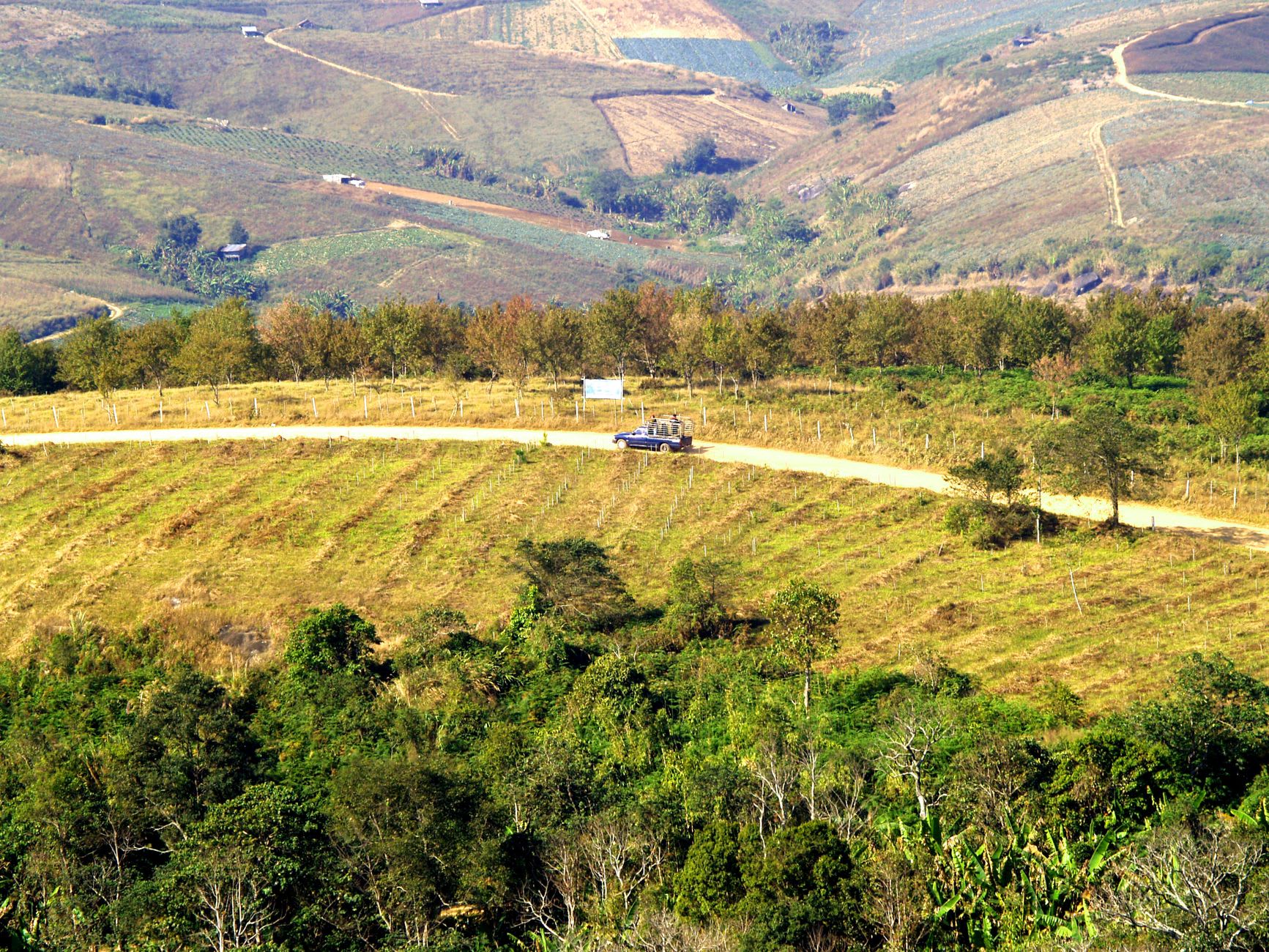
Getting there is half the experience. The road from Phonsavan toward Muang Kham runs through rolling highland country, pine ridges and terraced fields and small Hmong and Khmu villages where children wave at any passing vehicle out of sheer novelty. We stopped at a roadside stall for grilled river fish and sticky rice eaten with our fingers, and a thermos of bitter green tea that the owner refused to charge us for. This is the Xieng Khouang I hadn’t expected — not the bomb craters, but the slow, green, almost gentle highland life going on quietly above them.
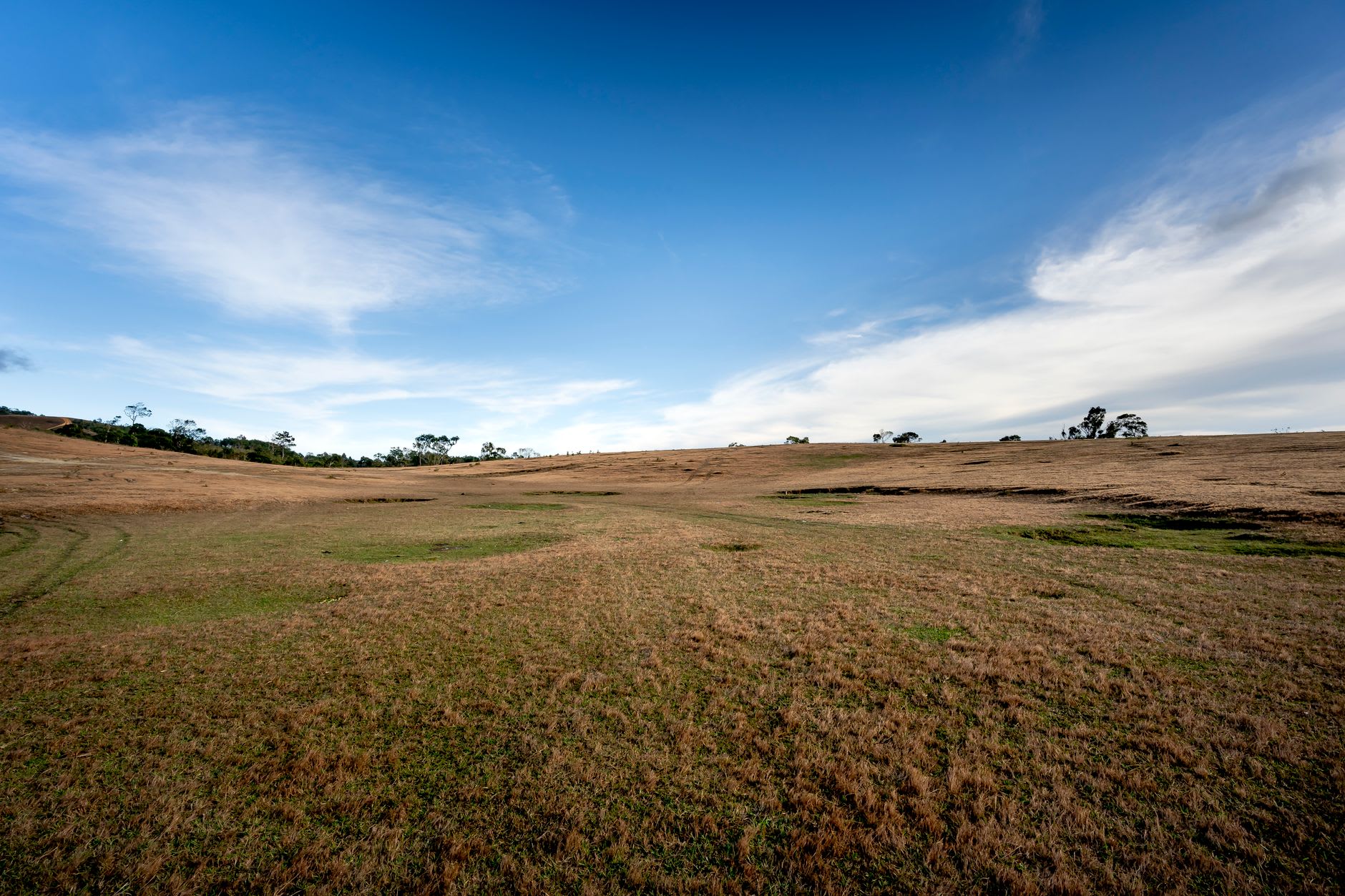
Nong Tang doesn’t undo the weight of the plateau’s history, and I wouldn’t want it to. But it sits there as a reminder that the same land that holds all that damage also holds this — a quiet, beautiful, completely unbothered lake — and that both things are true at once.
When to go: November through February, the cool dry season, when the karst is sharp against clear skies and the mornings carry mist. It’s a roughly hour-and-a-half drive from Phonsavan toward Muang Kham; rent a motorbike or hire a driver for the day, and combine it with the hot springs nearby. Go on a weekday for the lake to yourself.