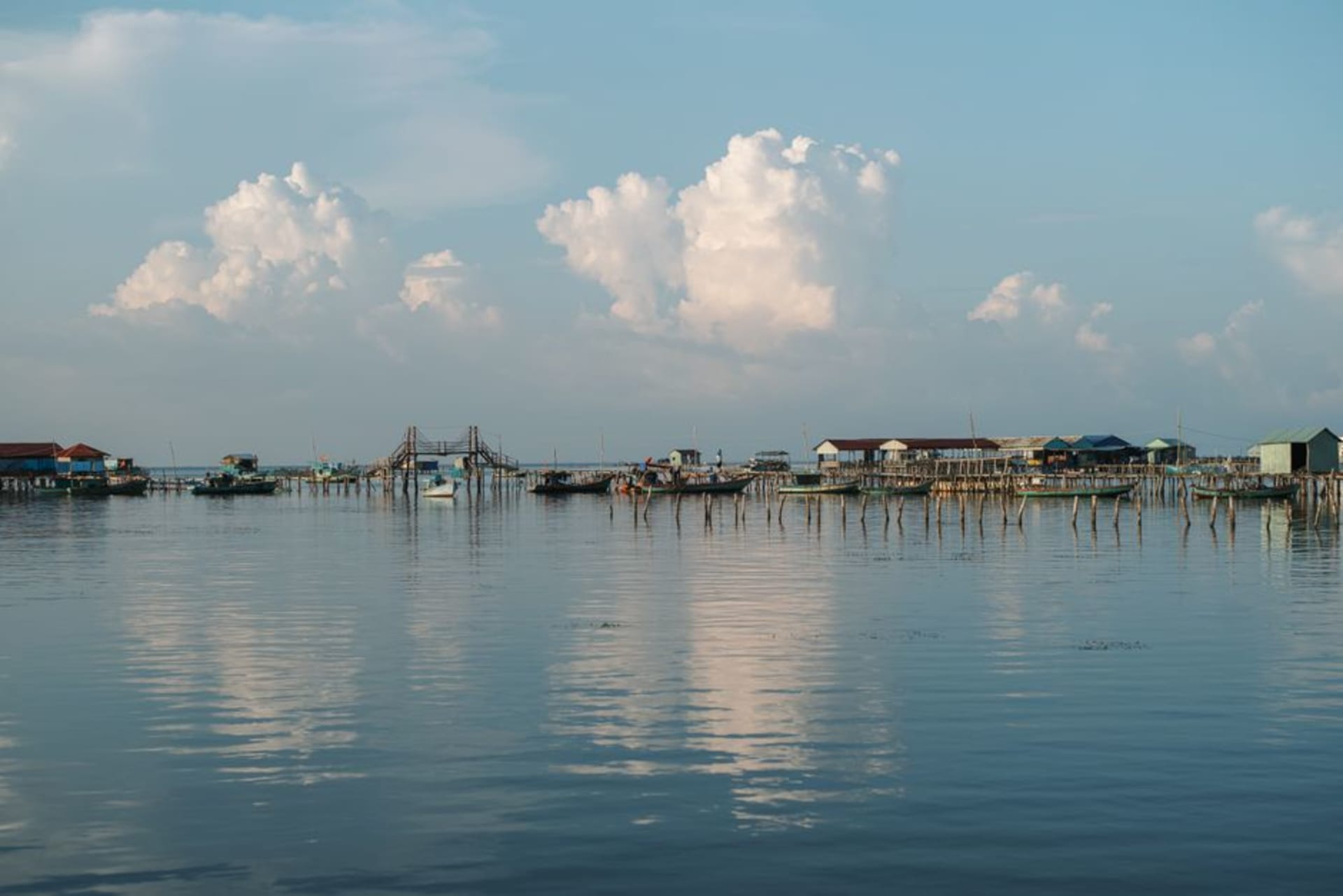
Cửa Cạn
"Some mornings the only sound was oars against water, and I didn't want it any other way."
A slow fishing village at the mouth of Phú Quốc's longest river, where wooden boats and stilt houses outnumber tourists.
We drove up from Dương Đông on a whim, following a road that got narrower and quieter with every kilometer, and by the time we crossed the bridge over the Cửa Cạn River I felt like we’d left the island’s tourist strip behind entirely. Cửa Cạn sits right where the river meets the sea, and the first thing that struck me was the light on the water at that hour — flat and silver, with a dozen wooden fishing boats rocking gently against their moorings. Lia grabbed my arm and pointed at a stilt house leaning out over the tidal flats, laundry strung between its posts, an old woman sorting fish on the porch like she’d done every morning of her life.
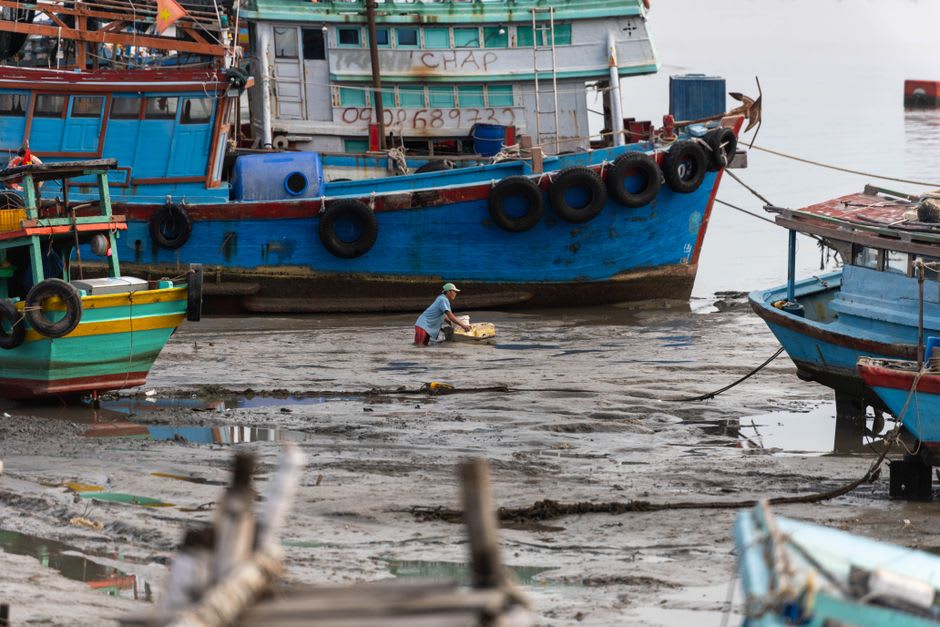
We wandered into the little morning market near the river mouth, and it was nothing like the souvenir stalls further south — just the day’s catch laid out on tarps, squid still glistening, baskets of tiny river shrimp, an old man scaling fish with a knife so worn down it had gone thin as a blade of grass. I bought a bag of dried anchovies from a woman who barely looked up from her scale, and we ate them later on the beach with cold beer, salt on our fingers. This is one of the villages where Phú Quốc’s famous nước mắm has its roots, and you can smell it before you see it — that deep, briny smell drifting from wooden barrels behind a few of the houses along the coast road.
In the afternoon we hired a small boat to take us up the river into the mangroves, the forest of Phú Quốc National Park pressing in close on one bank while the other stayed open toward the sea. The water went from brown to a strange tea-green as we moved inland, and our boatman cut the engine at one point just so we could hear the place — herons lifting off, something splashing we never identified, Lia laughing at how loud her own voice sounded in the silence.
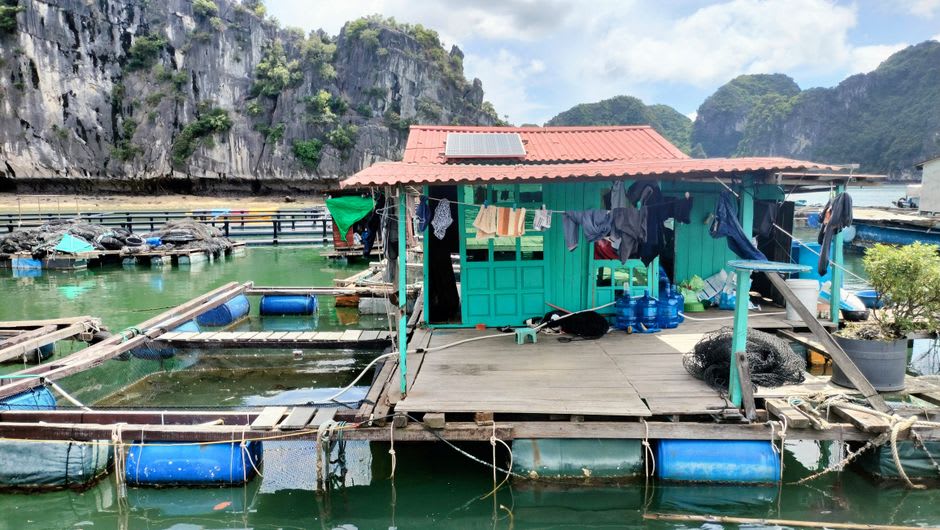
By evening we found ourselves back near the river mouth watching boats come in with the tide, and it hit me how different the pace felt from Dương Đông just twenty minutes south — no bars, no beach clubs, just fishermen coiling rope and kids chasing each other along the sand. It’s the kind of place that doesn’t try to be anything for you, which is exactly why I keep thinking about going back.
When to go: Visit in the dry season from November to April, when the river runs calmer and the boat trips into the mangroves are far easier — and safer — to arrange.