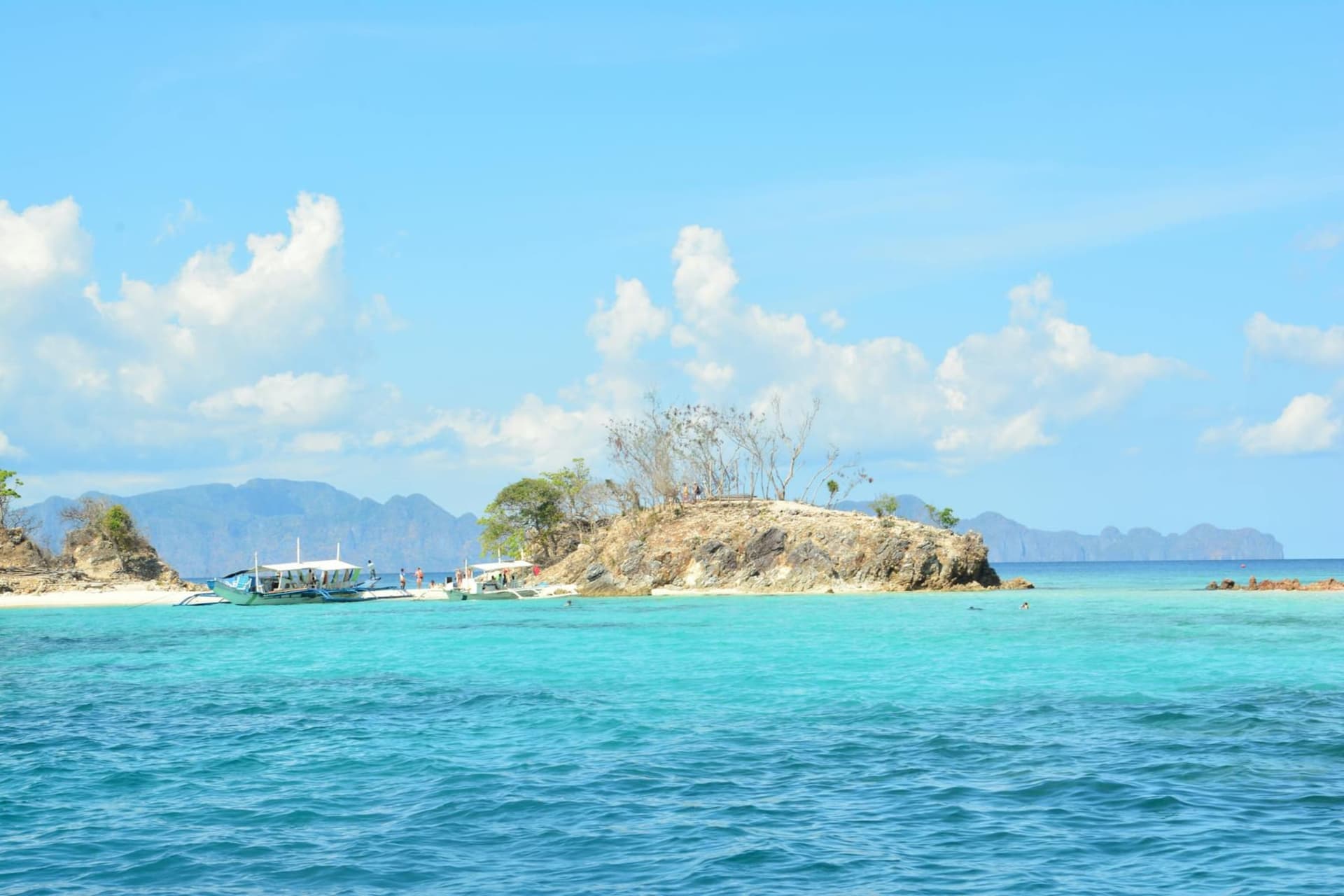
A cluster of limestone islands north of Coron with Japanese WWII shipwrecks sitting in shallow warm water for divers.
The bangka rocked as our boatman cut the engine somewhere northwest of Coron town, and the silence that followed was the particular silence of open water — a pressure in the ears, the creak of wood, the slap of small waves against the hull. Below us, twenty meters down, a Japanese supply ship called the Olympia Maru had been rusting since September 1944. I clipped my BCD, checked my gauge, and rolled backwards into the sea.
What Lies Below
The wrecks around Sangat Island are not the dramatic vertical plunges of deeper dive sites. Most of them rest in ten to thirty meters of water, tilted and soft-edged with eighty years of coral recruitment. The Olympia Maru in particular has become something between a ship and a reef — its cargo holds colonized by lionfish, its deck railings furred with sea fans in rust-orange and yellow. I swam through an open hatch into a hold and floated there, motionless, while a school of batfish moved past me in a slow spiral, indifferent and unhurried.
What surprised me most was the intimacy of the place. I had expected something solemn, a site you’d observe from respectful distance. Instead the wreck folded around me. Lia found a ceramic bowl on the seafloor still intact, half-buried in silt, and we hovered above it without touching it, reading the thing the way you read an old letter you’ve found in a house you just moved into.
The Island Itself
Above the waterline, Sangat is a single resort island ringed by vertical limestone, the kind that looks painted rather than grown. The karst walls here turn gold around four in the afternoon, when the light drops low enough to catch the undercuts and the hanging ferns. After our second dive I sat on the dock eating grilled bangus — milkfish split and pressed flat over charcoal, served with pickled green mango — and watched a monitor lizard work its way along the beach in absolute confidence, as though the island had always belonged to it, which of course it had.
Getting Out Here
Most day-trip boats from Coron town reach Sangat in under an hour, stopping at the Skeleton Wreck or the Lusong Gunboat — barely six meters down, visible from the surface without a mask on a clear day — before working north. The surrounding waters are part of the Coron Island Protected Area, which limits the number of operators and keeps the visibility clean and the crowds thin compared to Coron Bay proper.
When to go: The dry season runs November through May, with March and April offering the clearest water and best underwater visibility. Avoid the southwest monsoon months of July and August, when swells make the bangka crossings rough and surface conditions murky.