Sagada
"Sagada buries its dead in cliffs above the living, and the fog makes it feel like both worlds are present."
Cloud-wrapped mountain town where Igorot coffins hang from cliff faces and caves glow with stalactites.
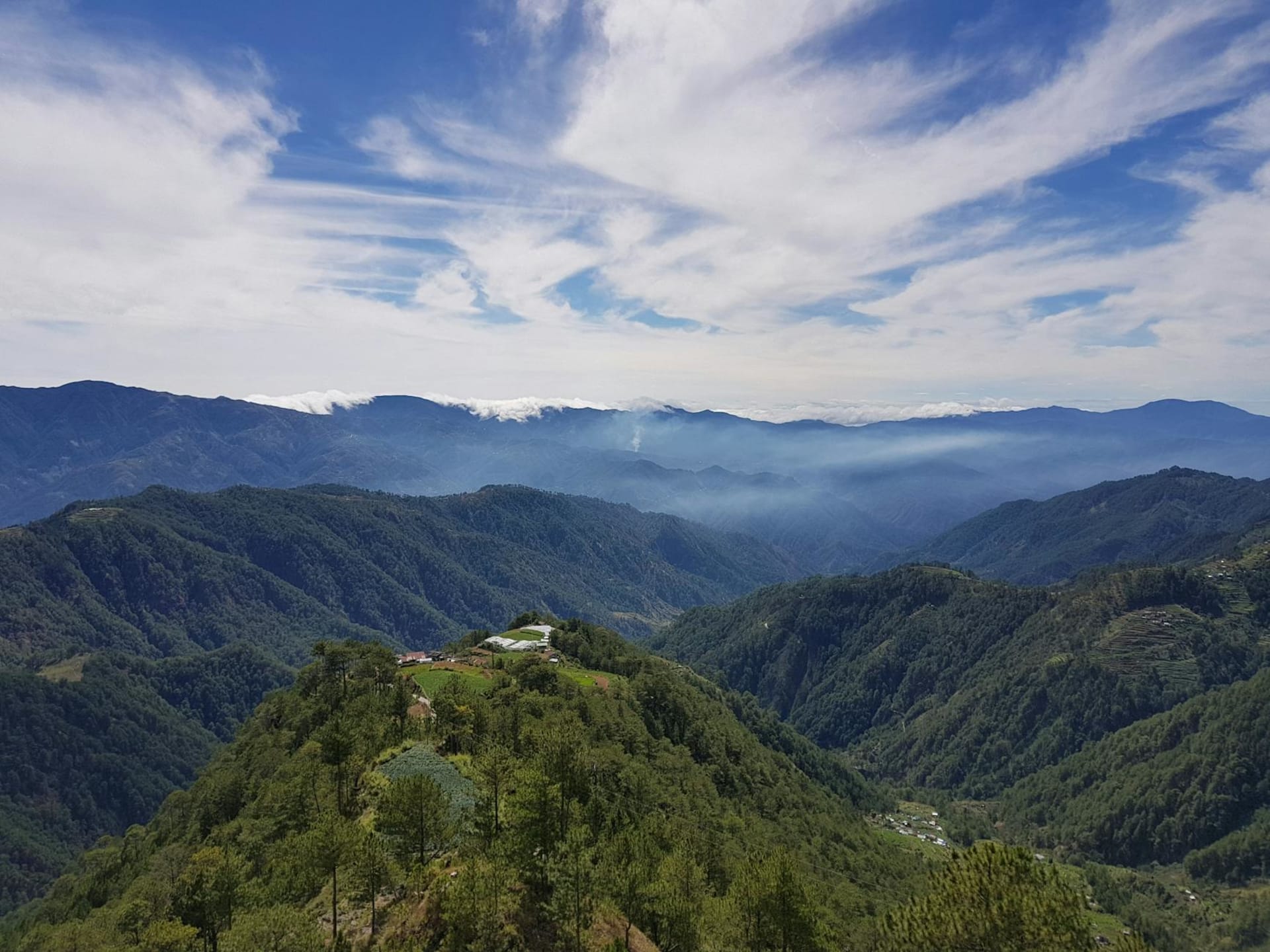
I arrived in Sagada at the kind of hour where the mountains had not yet decided to show themselves. The jeepney from Bontoc dropped us at the junction near the St. Mary the Virgin Episcopal Church — a squat stone building that looked older than the road itself — and the fog was so complete that the pines dissolved after ten meters. Lia pulled her jacket closed and said it felt like driving into a cloud. That was exactly right. At 1,500 meters above sea level, Sagada does not sit beneath the weather. It sits inside it.
Echo Valley and the Hanging Coffins
The coffins are not what the photographs prepare you for. I had seen images — the bright-painted wooden boxes wedged into cliff notches above Echo Valley — but photographs cannot carry the silence of the place, or the way the fog amplifies it. We hiked down from the trailhead on Marlboro Road, past low stone walls and coffee shrubs, the path loose red earth under pine needles. When we reached the cliff base and looked up, the oldest coffins had gone gray with age, their lashings dark as the rock itself. Some had split open. The Igorot belief is that the higher the coffin, the closer the spirit to heaven — so the oldest, most revered dead hang highest, unreachable. Standing below them felt less like visiting a cemetery than interrupting a conversation I had no right to hear.
Sumaguing Cave
The cave entrance is a black seam in the hillside a short walk from the town proper, and you descend with a kerosene lantern held at chest height, the guide’s instructions echoing off wet limestone. No electric lighting, no paved walkways — just the smell of mineral water and bat dung and your own breath quickening as the passage narrows. Inside, the stalactites catch the lantern in ways that make them seem to pulse. The unexpected thing was a chamber the guide called the King’s Curtain, where a thin sheet of flowstone had grown translucent over millennia. He held the lantern behind it and the entire wall glowed orange, like a lamp through paper. I had not planned on being moved by a rock formation. I was wrong about that.
Eating on Sagada Road
Mornings I ate at Yoghurt House, which despite the name serves the best pinikpikan in town — the smoked chicken stew that is the Cordillera’s answer to everything cold and damp. A bowl of it at a wooden table, steam rising, the window glass fogged from the outside: that was the best meal of the trip. The town itself is walkable end to end in twenty minutes, which made it easy to get lost on purpose, following the smell of pine smoke past guesthouses and vegetable gardens until the road ended at someone’s fence.
When to go: The dry season, November through April, offers clearer skies and easier cave access — though even then the mornings fog in reliably. Avoid Lent if you want the hanging coffins trail to yourself; it draws large crowds of Filipino tourists during Holy Week.