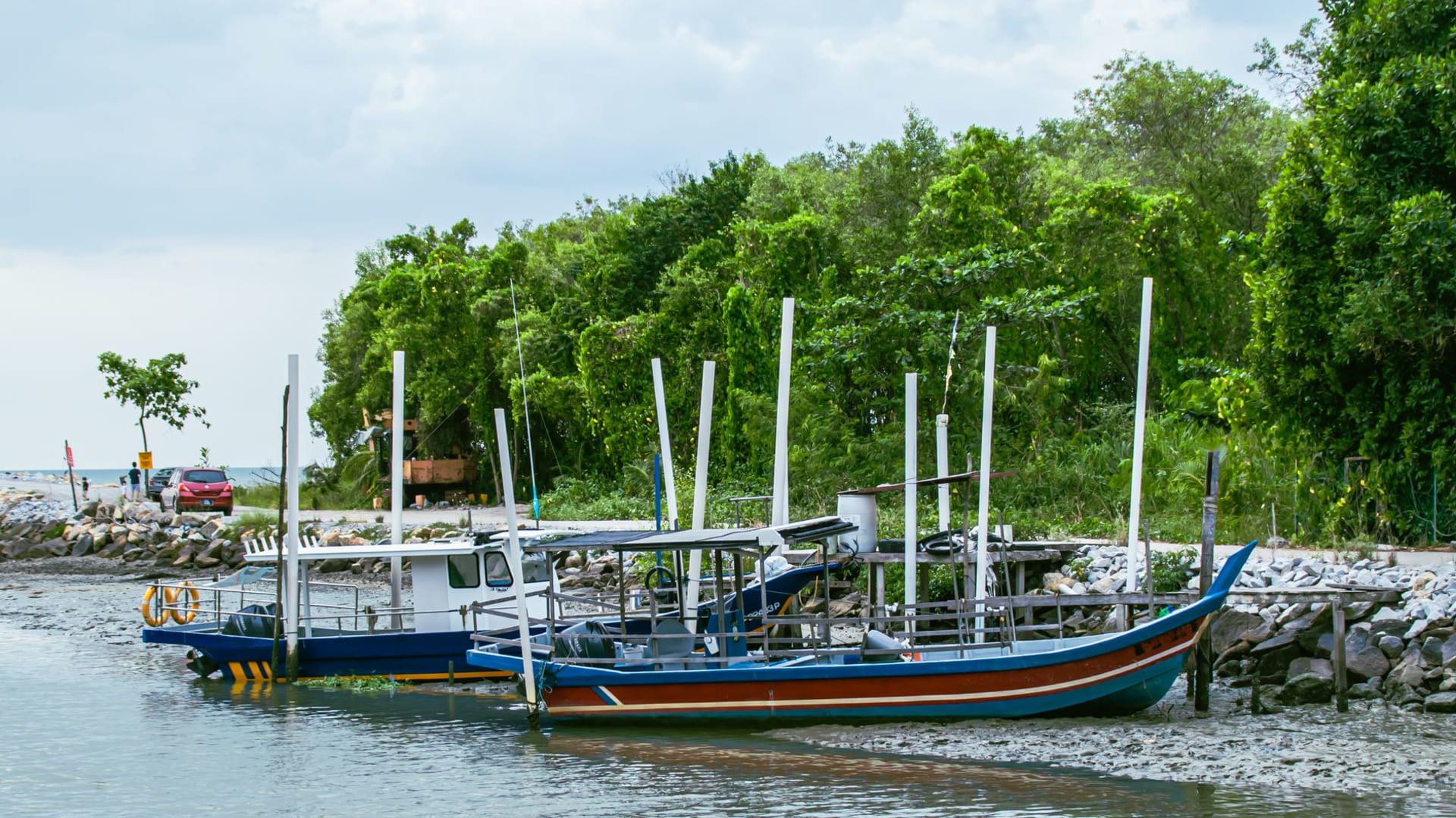
Clan Jetties
"Walk out past the tourist end of the Chew Jetty and you'll find someone mending a net who has no interest in you whatsoever — which is exactly right."
The Clan Jetties of Weld Quay are one of those places where the description — wooden fishing villages on stilts extending into the strait — sounds like something constructed for a travel brochure and turns out to be something else entirely. I walked out onto the Chew Jetty on an early morning when the tourist trinket stalls were still shuttered, and the planks underfoot were damp with the night’s humidity, and the sound was the sound of a working waterfront: water slapping the stilts below, a motor starting somewhere further out, a radio playing a Chinese pop song from inside a house whose shutters were half-open against the morning.
The Clan Jetties — Chew, Tan, Lee, Lim, Mixed Surnames, and Yeoh — were established in the nineteenth century by Hokkien Chinese immigrants who settled by trade clan. Each jetty is a distinct community, with its own temple, its own social hierarchy, its own relationship to the water beneath it. The houses are built on piles driven into the seabed, connected by wooden walkways that flex slightly under your weight, and at the end of each jetty the walkway opens into a small pier where boats have been loading and unloading for a hundred and fifty years. The residents are the descendants of fishermen and dock workers, and some of them still fish, though most have diversified into other trades.
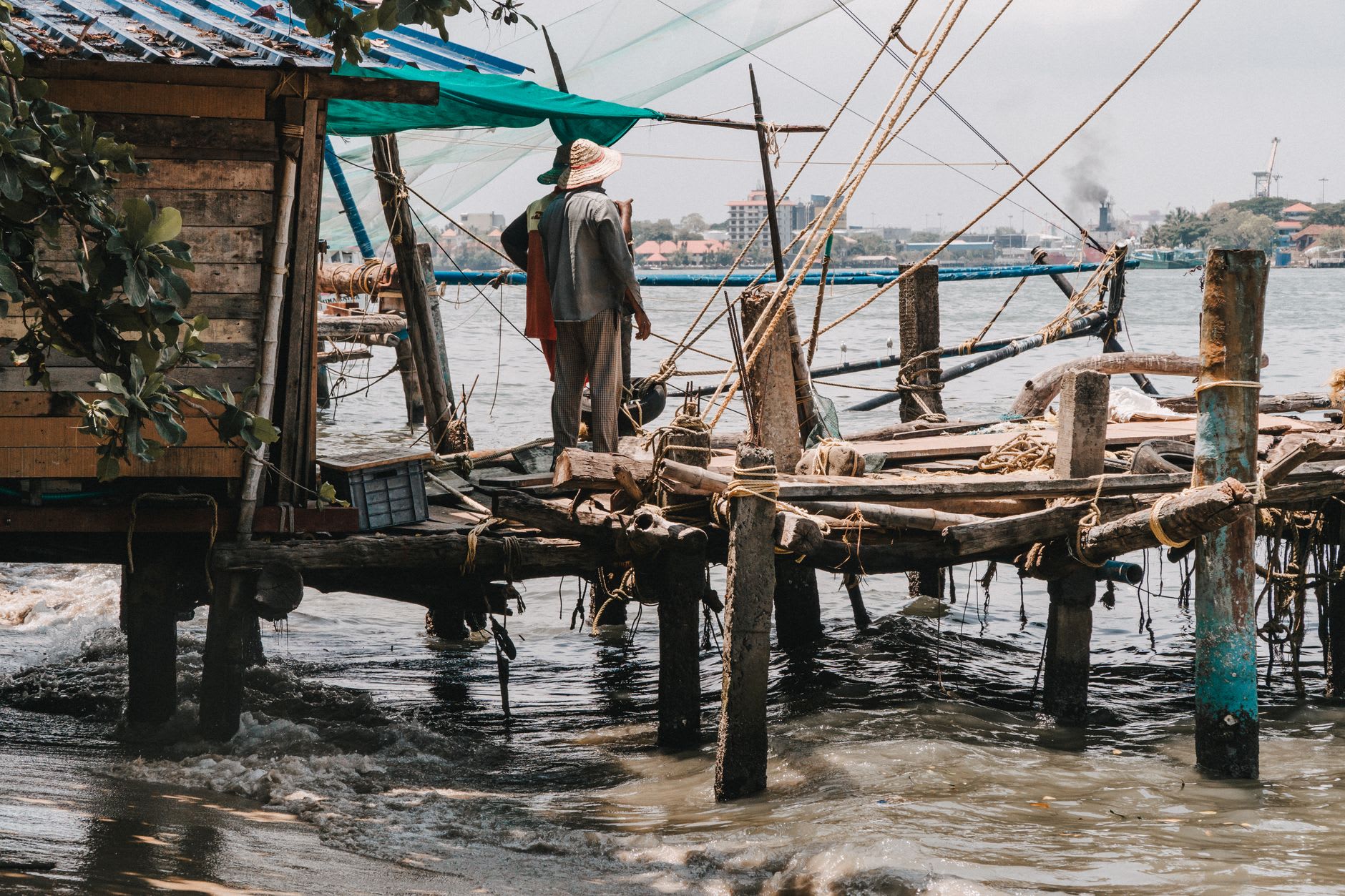
What the tourist material doesn’t prepare you for is the intimacy of it. The houses are close together and the walkway passes directly past windows and front doors. A woman hangs laundry two feet from where I’m standing. A man is doing his morning exercises on a small platform extending from his front door over the water. An old man in a plastic chair outside the clan temple is reading a newspaper with the focused attention of someone who has the entire morning and intends to use it. These are not exhibits. They are people living out their days in a neighbourhood that happens to be perched above a strait.
The Chew Jetty is the most visited and the most tourist-oriented — souvenir stalls, a temple that charges a token entry, a few homestays. Walk past all that, past the stalls selling Penang-branded key rings and miniature sampans, and the jetty becomes something quieter. The fishing boats are tied up at the outer end with their catch-finding equipment still rigged. A teenager in school uniform cycles past me on a bicycle, morning rushing somewhere. Cats sit on every available railing, indifferent to everything. The strait beyond is silver-grey and moving with the tide.
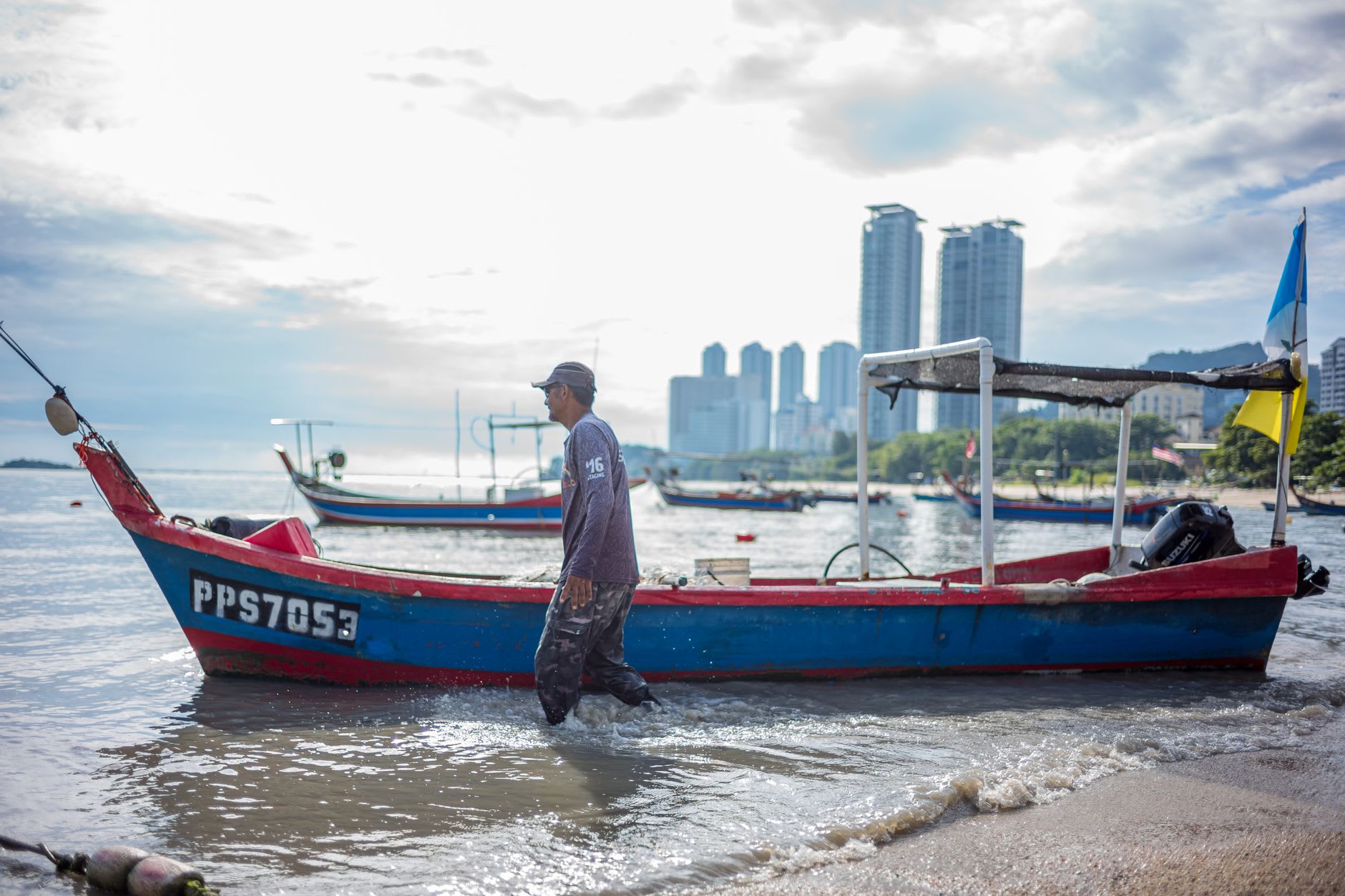
The whole cluster of jetties is small enough to walk in an hour, but the hour passes slowly in the good way — the way that happens when you are actually looking at something rather than documenting it. I sat at the end of the Lee Jetty for a while and watched a freighter navigate the strait and felt the wooden planks move slightly with the current below, and understood in a visceral way that everything here was built on water and had remained on water for a century and a half, which seemed like its own kind of achievement.
When to go: Early morning (before 8am) is the best time — fewer tourists, better light, the community going about its actual business. The Chinese New Year period brings the clan temples alive with celebrations unique to each jetty. Weekend afternoons can get crowded in the Chew Jetty’s tourist section.