Methoni Castle
"We walked out until the mainland disappeared behind us and there was nothing left but stone and sea."
A Venetian sea fortress swallowing an entire peninsula, where a lone octagonal tower still guards the waves that once carried pilgrims to the Holy Land.
Lia and I almost didn’t stop in Methoni. It was supposed to be a lunch break on the drive down the Messinian coast, but the moment we crossed the little bridge over the moat and saw how much of the peninsula the fortress actually swallows, we cancelled whatever plan we’d had for the afternoon. This isn’t a castle with walls around a town square — it’s a fortress that IS the town, or what’s left of one. Venice took Methoni in 1206, right after the Fourth Crusade tore Byzantium apart, and held onto it for three hundred years as a supply stop for ships and pilgrims heading to Jerusalem. You can feel that function in the size of the place. It wasn’t built to look impressive from a distance. It was built to process people, ships, and cargo, over and over, for centuries.
We spent a long time just following the outer wall, and I kept thinking about how exposed the whole point of land is — cut off from the mainland by that moat, sea on the other three sides. There’s a phrase the Venetians reportedly used for Methoni and its twin fortress at Koroni: “the eyes of the Republic.” Standing there with the wind coming hard off the water, that made complete sense to me. Whoever held these two points controlled who moved through this stretch of the Mediterranean. It’s not romantic, it’s logistics — but there’s something moving about logistics that old, still standing.
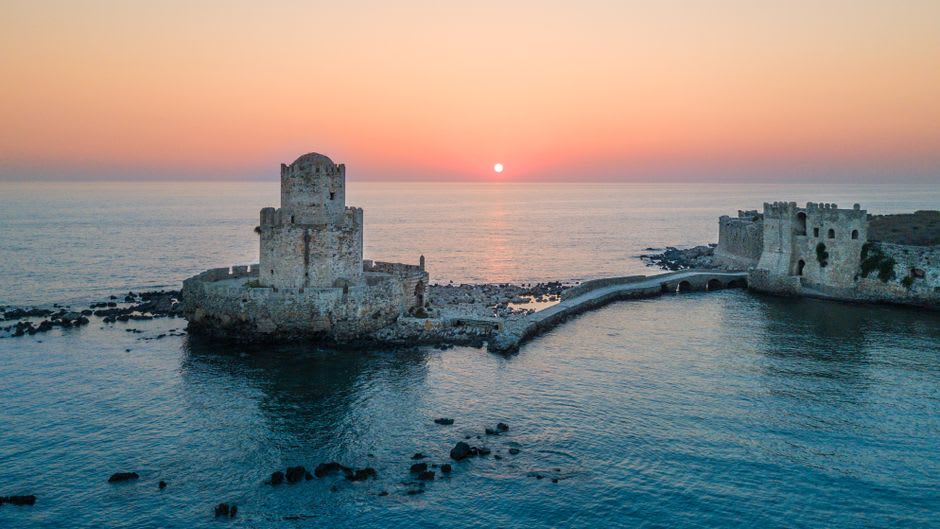
The Bourtzi is what pulled us all the way to the far tip. It’s this octagonal tower sitting almost detached in the sea, connected by a short causeway, and it isn’t even Venetian — the Ottomans built it after they took Methoni in a siege in 1500 that, from what I’ve read, was brutal even by the standards of the time. Lia sat on the rocks near it for a while with her sketchbook while I just watched the light change on the water. It’s strange to stand in a spot built by two different empires a few hundred years apart, each one convinced this rock mattered enough to fight and die for.
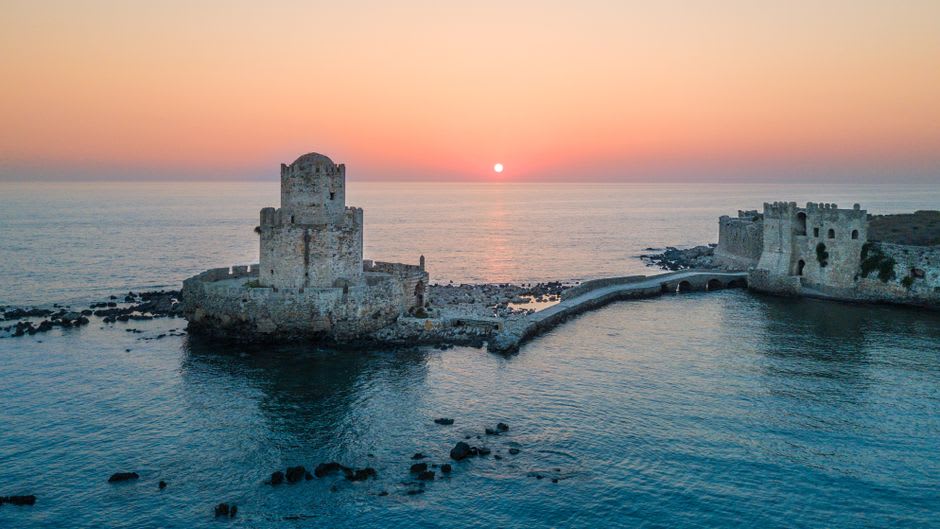
We ended up eating grilled octopus at a taverna right by the entrance afterward, still salty from the wind, and I remember telling Lia that Methoni felt like the kind of place that rewards silence more than facts. You can read all the history you want beforehand — I did — but what actually stayed with me was just walking the length of that wall with the sea on both sides and feeling how small the mainland looked behind us.
When to go: I’d aim for spring, April through June, or slip in during September and October — the fortress has almost no shade, and we were grateful for the milder sun and the quieter light on the water.
Keep exploring
More from Peloponnese
 peloponnese
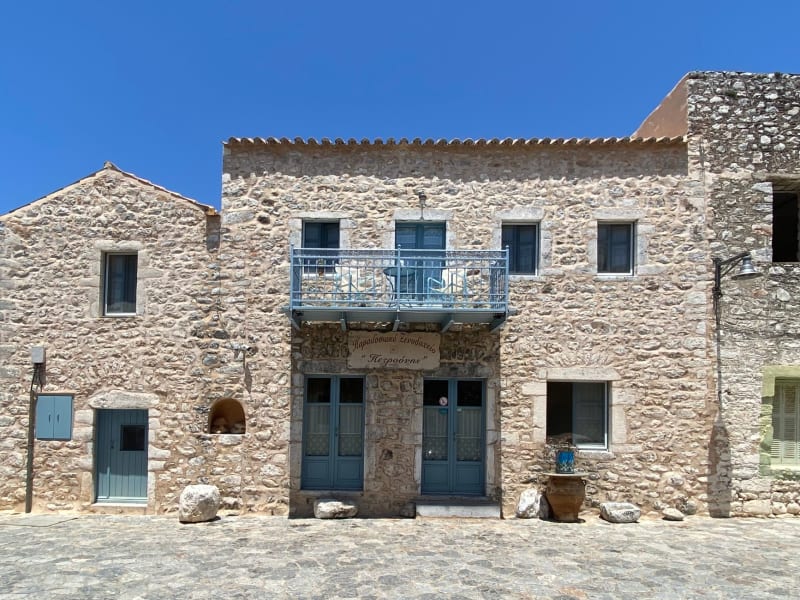
 Monemvasia
A medieval rock fortress city rising from the Laconian sea, its car-free lower town a time capsule of Byzantine and Venetian stone.
Explore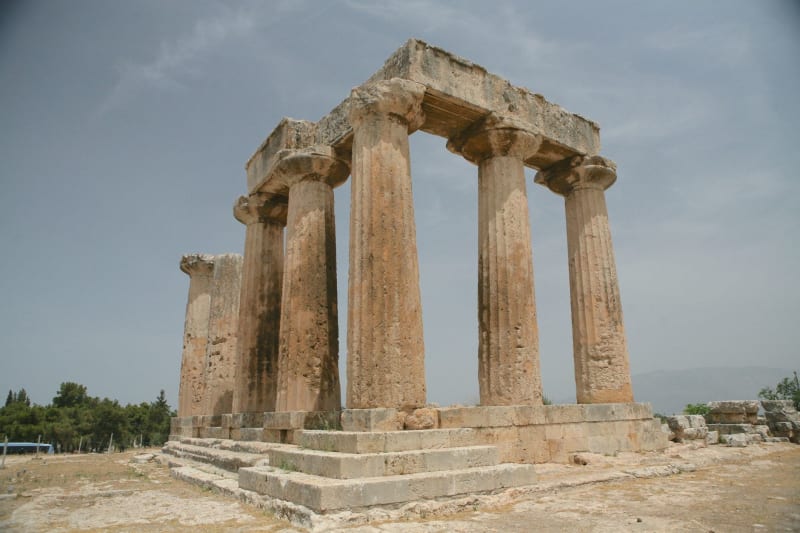 peloponnese
 Mycenae
A Bronze Age citadel so massive and strange it makes the mythology surrounding it feel like understatement.
Explore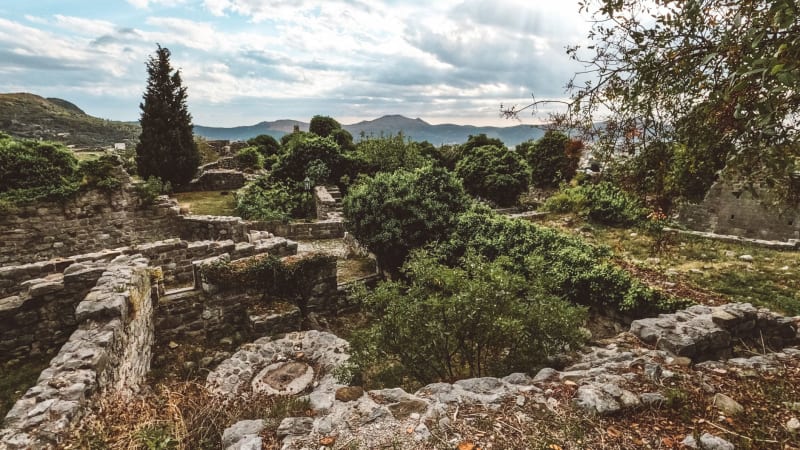 peloponnese
 Mystras
A Byzantine ghost city clinging to a Spartan hillside, its frescoed churches still vivid fifteen centuries after the last emperor left.
Explore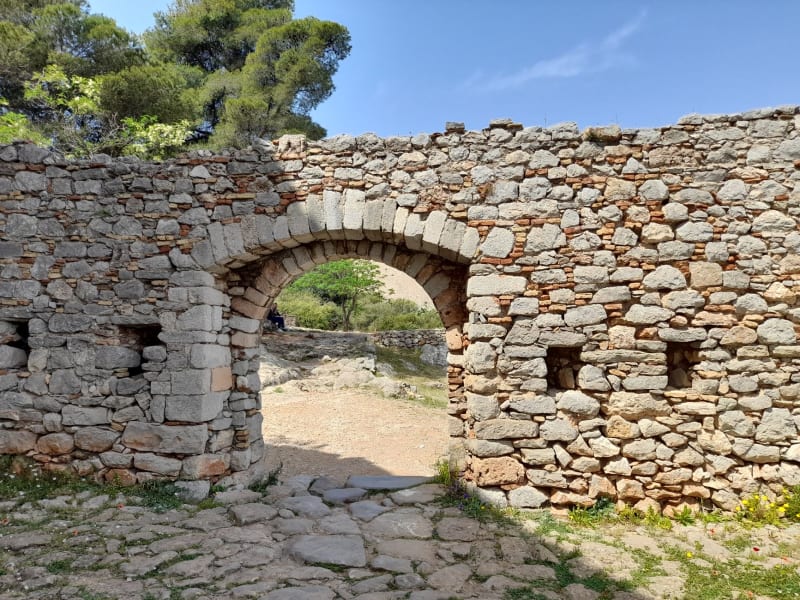 peloponnese
 Nafplio
Greece's most quietly beautiful port town, where Venetian mansions and Ottoman fountains share alleyways with cats and excellent honey.
Explore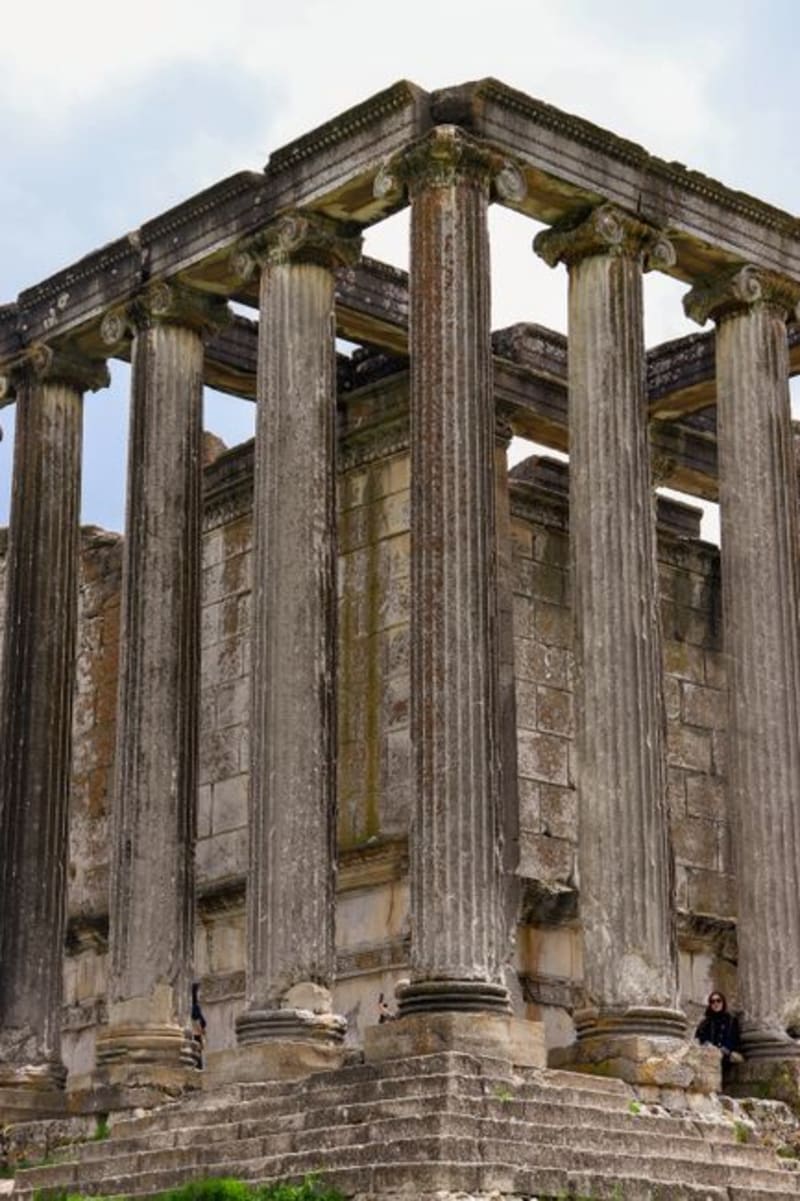 peloponnese
 Nemea
Three lonely columns, a restored ancient stadium, and a valley of Agiorgitiko vines where Heracles supposedly killed a lion.
Explore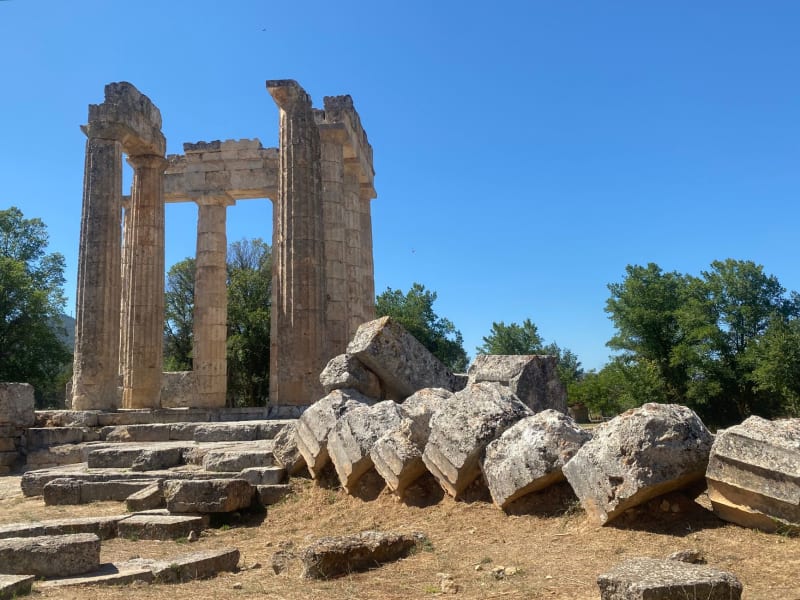 peloponnese
 Ancient Olympia
The birthplace of the Games, where the ghost of ten thousand athletes still seems to linger in the tunnel leading to the stadium.
Explore