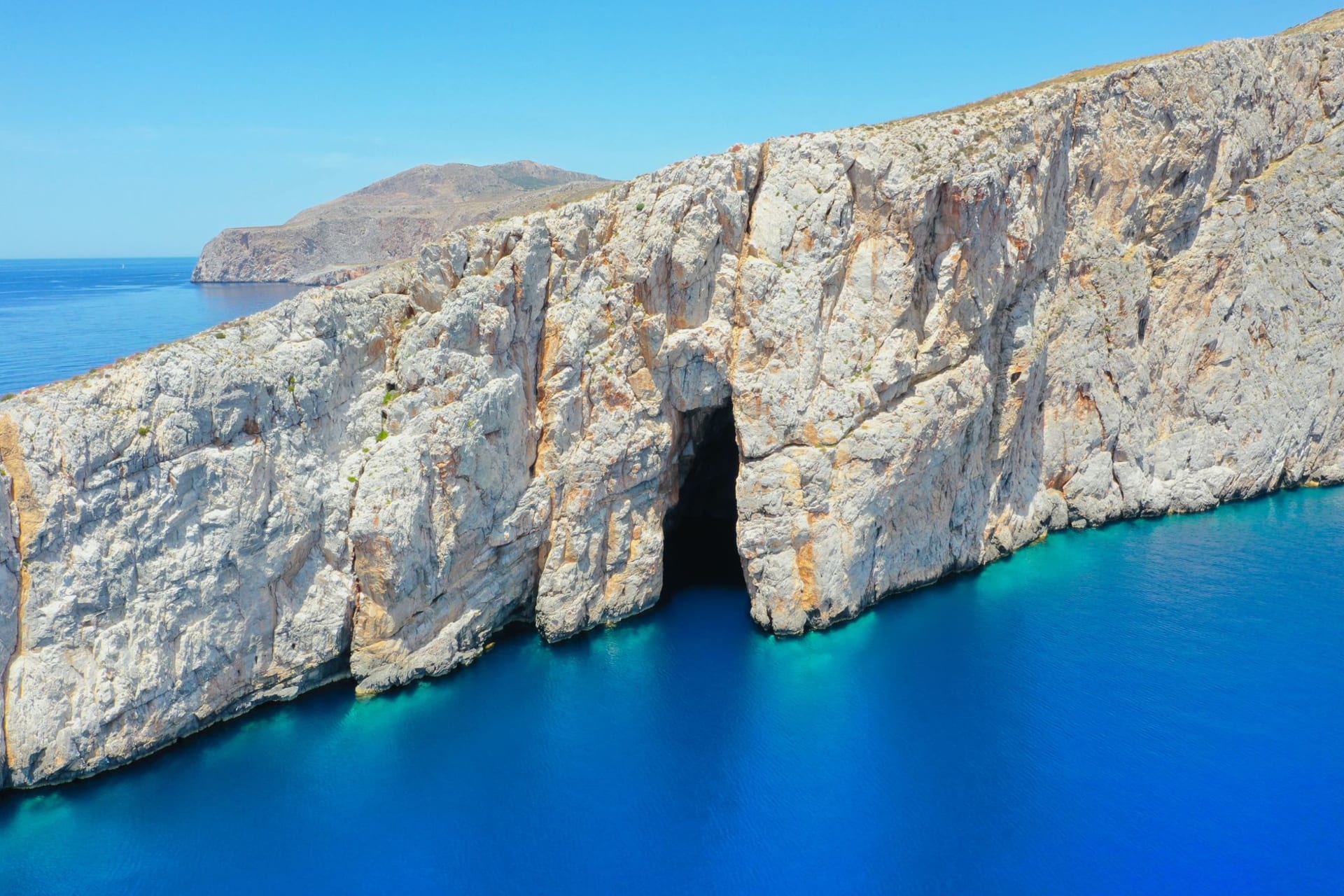
Diros Caves
"The boat rounded a corner and we were in a cathedral made of calcium, and no one said a word."
You arrive by boat and you leave the same way, which is part of what makes Diros so disorienting. The flat-bottomed craft — narrow enough for two people to sit side by side — enters the cave system at water level, ducking through an entrance in the cliff face at the edge of a small bay, and then you are inside a world that has no obvious relationship to the one you just left. The boatman poles and paddles in silence. The ceiling of the cave descends to within centimetres of your head in some passages, forcing you to lean back against the person behind you. In the wider chambers, the stalactites drop from above like an inverted forest, their reflections perfect in the dark water below. The temperature drops immediately and noticeably. Everything drips.
The Diros system — technically two connected caves, Vlychada and Alepotrypa — was formed over millions of years by an underground river that still flows through the lower passages. The human connection is ancient: Alepotrypa was inhabited in the Neolithic period, and the bones and artefacts found inside it suggest it was used as both a dwelling and a place of burial for a community that lived there continuously for thousands of years before a collapse sealed the entrance. The archaeological museum in the small village of Pyrgos Dirou outside the caves houses the finds — pottery, obsidian tools, human remains — with a matter-of-factness that somehow amplifies rather than reduces their strangeness.
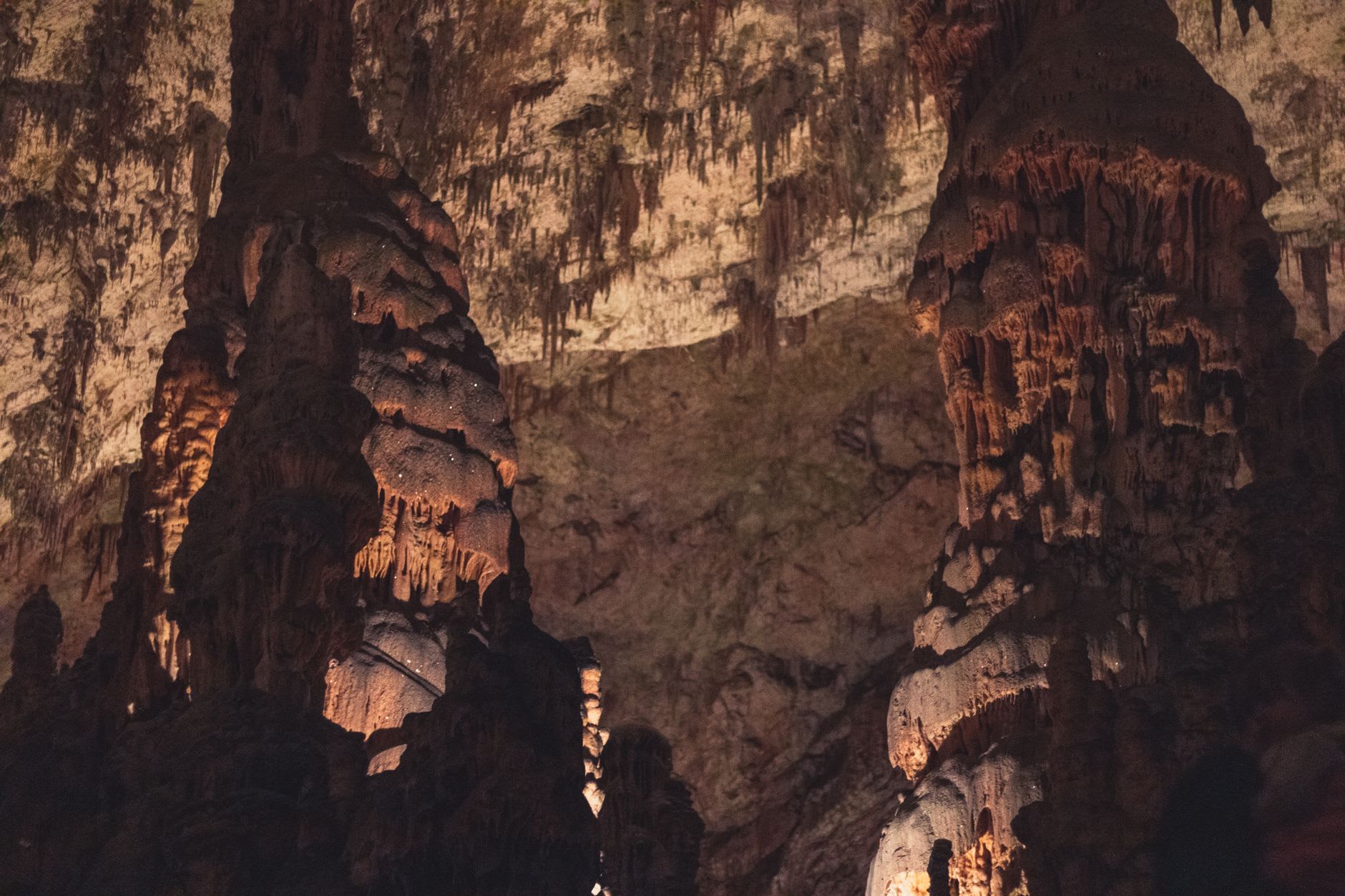
The boat journey through Vlychada takes around thirty minutes and covers roughly a kilometre of underground passages, though the turns and the scale of individual chambers make it feel longer. There are orange plastic buoys marking the route and safety lighting at strategic points, but the caves mostly resist the theme-park aesthetic that ruins places like this elsewhere. The drama is inherent and needs no enhancement. At one point the passage opens into a chamber roughly the size of a large cathedral, the ceiling lost in darkness above, the stalactites and stalagmites meeting in columns of white stone. The boatman stopped poling. In the absolute quiet I could hear water dripping somewhere distant, one drop at a time. The sound echoed until it dissolved.
What stays with me is the colour of the water. Above ground, the Mani coast has water that runs from pale turquoise in the shallows to deep Ionian blue offshore. Underground, the water in the caves is a different thing entirely: not quite black, not quite transparent, but a deep greenish-grey that shifts depending on the angle of your light. Looking down into it from the boat felt like looking into something that had no bottom, even when I knew intellectually it was shallow. There’s a particular quality of darkness in caves that makes depth ambiguous.

After the cave, the day-trip logic of most visits (drive up from Areopoli or Gythio, cave, lunch, drive back) misses the best part of being in this corner of the Mani. The village of Pyrgos Dirou has a small taverna that does a grilled fish lunch of total simplicity — whatever was in the boats that morning, cooked on charcoal, served with lemon and local olive oil. I ate there at a table under a fig tree with a direct view of the sea. The water was the proper turquoise colour again, ordinary and beautiful. I thought about the cave’s water, and the difference between the two, for the rest of the afternoon.
When to go: The caves are open year-round but operate on a timed-ticket system in peak season (June through August) with queues that can reach two hours. The best strategy is to arrive at opening time (around 8:30am) or book tickets in advance if the system allows. Spring and autumn visits are significantly calmer. The cave temperature stays around fourteen degrees Celsius regardless of season, so bring a layer.