Kinder Scout
"People once went to prison so that I could stand here in the wind eating a soggy sandwich. I take the privilege seriously."
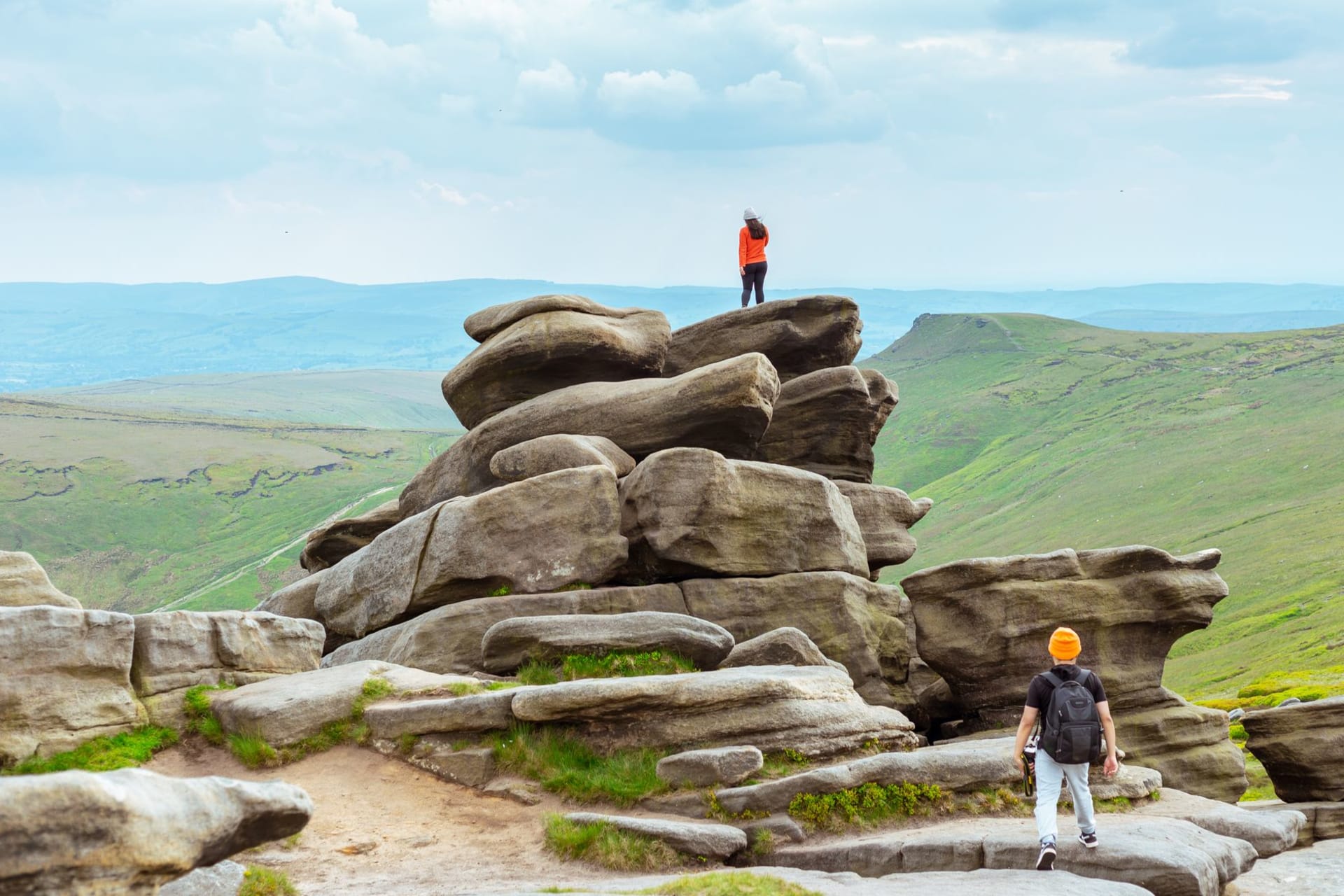
Kinder Scout is not a mountain with a summit so much as a vast, brooding tabletop of peat and gritstone hauled up over the rest of the Dark Peak. At just over six hundred metres it is the highest point in the Peak District, and on the day Lia and I climbed it the cloud was sitting on top like a lid, so we spent the first hour walking up out of the green Edale valley into progressively greyer weather, fairly sure we would see nothing. We were half right. We saw plenty — just not far.
The trespass that changed England
You cannot walk Kinder without walking into history. In April 1932, several hundred working-class ramblers from Manchester and Sheffield deliberately trespassed onto the plateau, which was then private grouse-shooting moor that ordinary people were forbidden to set foot on. There were scuffles with gamekeepers; five trespassers were jailed. But the Kinder Scout Mass Trespass became a rallying point, and it fed directly into the eventual creation of Britain’s national parks and the right-to-roam laws that now let me wander up here at all. There is a small plaque at Bowden Bridge quarry where they set off. I read it before we started, and it gave the whole sweaty climb a faint sense of pilgrimage.

The standard route from Edale goes up Jacob’s Ladder, a steep, stepped old packhorse path, and then onto the plateau edge. The climb is honest work but not technical, and the reward at the top is one of the strangest landscapes in England.
A plateau that wants to eat your boots
The top of Kinder is a peat bog the size of a small town. The ground is cut through with groughs — deep, dark channels of bare black peat that you have to clamber in and out of, and which in wet weather turn into a sucking, boot-stealing mess. We lost the faint path almost immediately in the mist and navigated by compass and stubbornness between weird weathered gritstone tors that loomed up out of the murk like abstract sculpture. Then we reached Kinder Downfall, the highest waterfall in the Peak District, where a stream pours off the western edge of the plateau. The wind was so strong it was blowing the water straight back up over our heads in a fine drifting spray. Lia laughed for about a full minute. It is genuinely one of the odder natural sights I have seen — a waterfall flowing upward.

This is not a pretty, gentle walk. Kinder is bleak and serious and the weather turns fast, and people get caught out here every year underdressed and over-confident. But it is also, for my money, the most genuinely wild-feeling place in a national park otherwise full of tearooms and stone villages. We came down into Edale four hours later, mud to the knees, and had the best pint of my life in the pub by the station.
When to go: Late spring and early autumn give the best balance of long daylight and firmer ground underfoot — the peat is at its worst after winter rain. Summer brings purple heather across the moor and clearer long-distance views. Whatever the season, carry waterproofs, a map and compass, and the humility to turn back; the plateau is notorious for swallowing the path in cloud.