Hathersage
"Every writer needs a place where the weather does their brooding for them — this was Charlotte's."
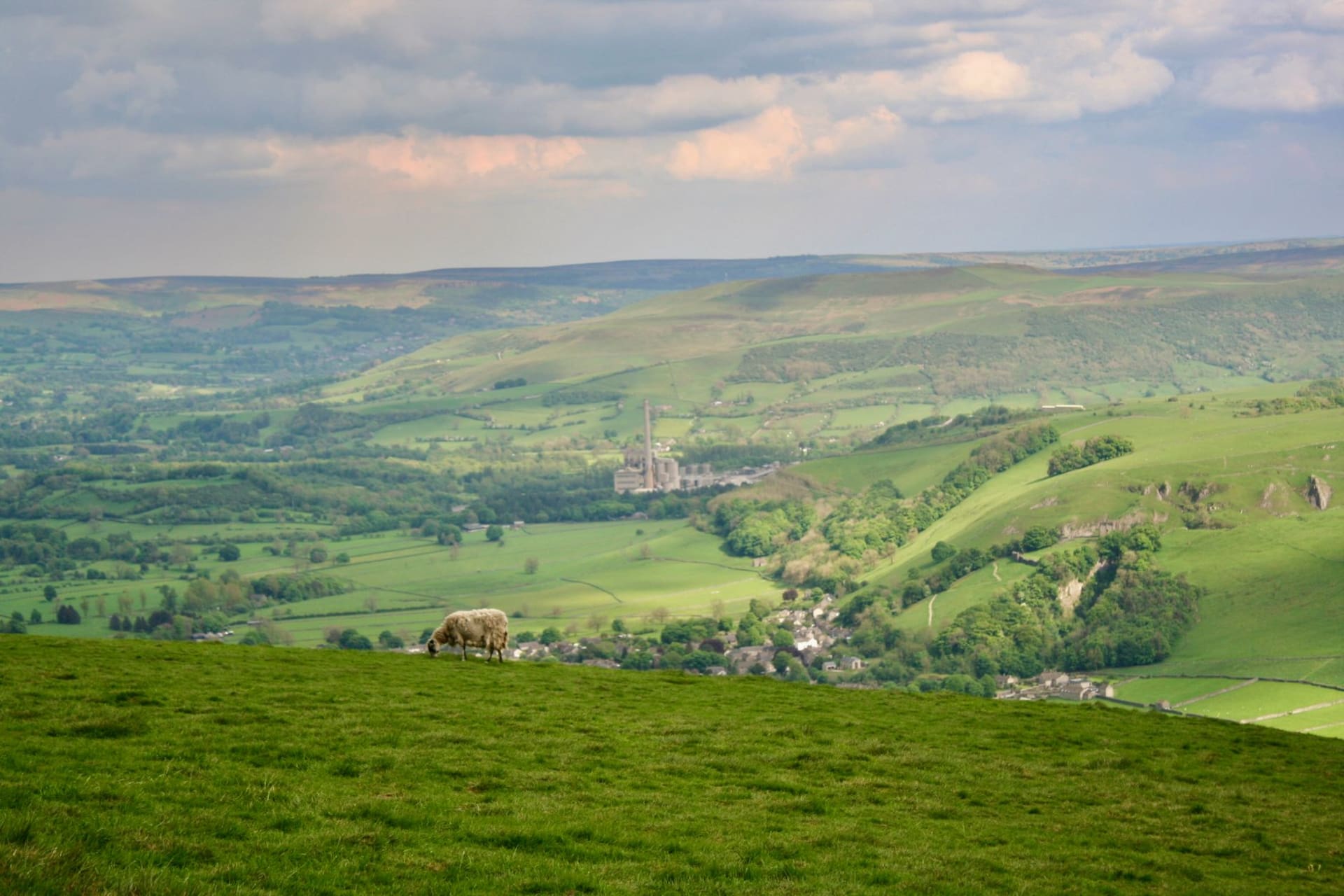
Charlotte Brontë stayed at Hathersage vicarage for three weeks in 1845 and went home to write Jane Eyre. This is the kind of biographical footnote that gets attached to English villages like lichen — plausible, impossible to fully verify, and used to sell tea towels — but in Hathersage’s case the connection feels right. Standing on the hillside above the village looking south across the Hope Valley, with Stanage Edge’s gritstone shelf filling the whole northern skyline and the wind coming off the moor with something to say, you understand why someone with Charlotte Brontë’s imagination would find this useful. The landscape is Gothic in the original sense — overpowering, slightly unsettling, darkly beautiful in a way that works specifically well as a backdrop for female characters with complicated inner lives.
The village is tidy without being showy — a main street of stone buildings, a few good pubs, an outdoor swimming pool fed by a natural spring that is open from May to September and is one of those things that sounds peculiar until you are in it at seven in the morning with moorland all around and nothing warmer than the water. Hathersage Pool is genuine outdoor swimming, not spa aesthetics: cold, unheated beyond what the spring provides, the changing rooms functional rather than luxurious. I went in May when the air temperature was still April-uncertain and the water was 15°C, which produced a particular quality of sharpness that I kept thinking about for the rest of the day.

The parish church of St Michael sits above the village on a small hill and contains the grave of Little John — Robin Hood’s most famous companion — which is a claim as ancient as the other Robin Hood grave sites scattered across the north of England and no more or less convincing than any of them. The grave is long: an early Victorian opening of the alleged site found bones that suggested a man over two metres tall, which is consistent enough with the legend to keep the story alive. The church itself is worth the walk for its Norman origins and its Eyre family memorials — the same family, presumably, that gave Charlotte Brontë her heroine’s name. These connections accumulate in Hathersage like layers of limestone: each one too thin to be definitive, together becoming something solid.
Below the church, the main street holds the George Hotel, which has been feeding and watering travellers since 1505 and has the low ceilings to prove it. The kitchen does a steak and ale pie that arrives with a crust properly browned and a filling that has clearly been cooking since before lunch. There is a cheese shop on the main street where the local versions — Hartington Stilton and various Derby cheeses — are presented with the gravity they deserve. I spent too long in there and came out with more cheese than I had room for in my bag.

Stanage Edge starts its climb a twenty-minute walk from the village centre, making Hathersage one of the best base options in the whole park — accessible by train on the Sheffield-to-Manchester Hope Valley line, close to the edges, with enough amenities to be comfortable without being a tourist town. On weekday evenings it is absolutely quiet, the kind of quiet that Charlotte Brontë would have recognised: stone houses, wind, a church clock marking the hours.
When to go: May and June for the outdoor pool and wildflowers on the moor above. October for the bracken turning copper on the hillside and the best light on Stanage. The village is quieter than Bakewell and Castleton year-round — a midweek stay in any season is reliably peaceful. Christmas and New Year are particularly quiet and particularly atmospheric with frost on the churchyard.