
Pumalín Park
"Lia called it a cathedral, and for once the cliché was simply accurate."
Pumalín exists because of one stubborn idea: that you could buy wilderness in order to protect it from being turned into something else. The American clothing magnate Douglas Tompkins started acquiring land here in the early 1990s, stitching together a vast tract of temperate rainforest along the fjords south of Puerto Montt, and the project was viewed with deep suspicion by Chileans who could not understand why a foreigner would spend so much to do, essentially, nothing. He eventually handed the whole thing over to the state. Tompkins died in a kayaking accident in these same waters in 2015, which the locals mention quietly, the way you mention something that still hasn’t quite settled.
The forest
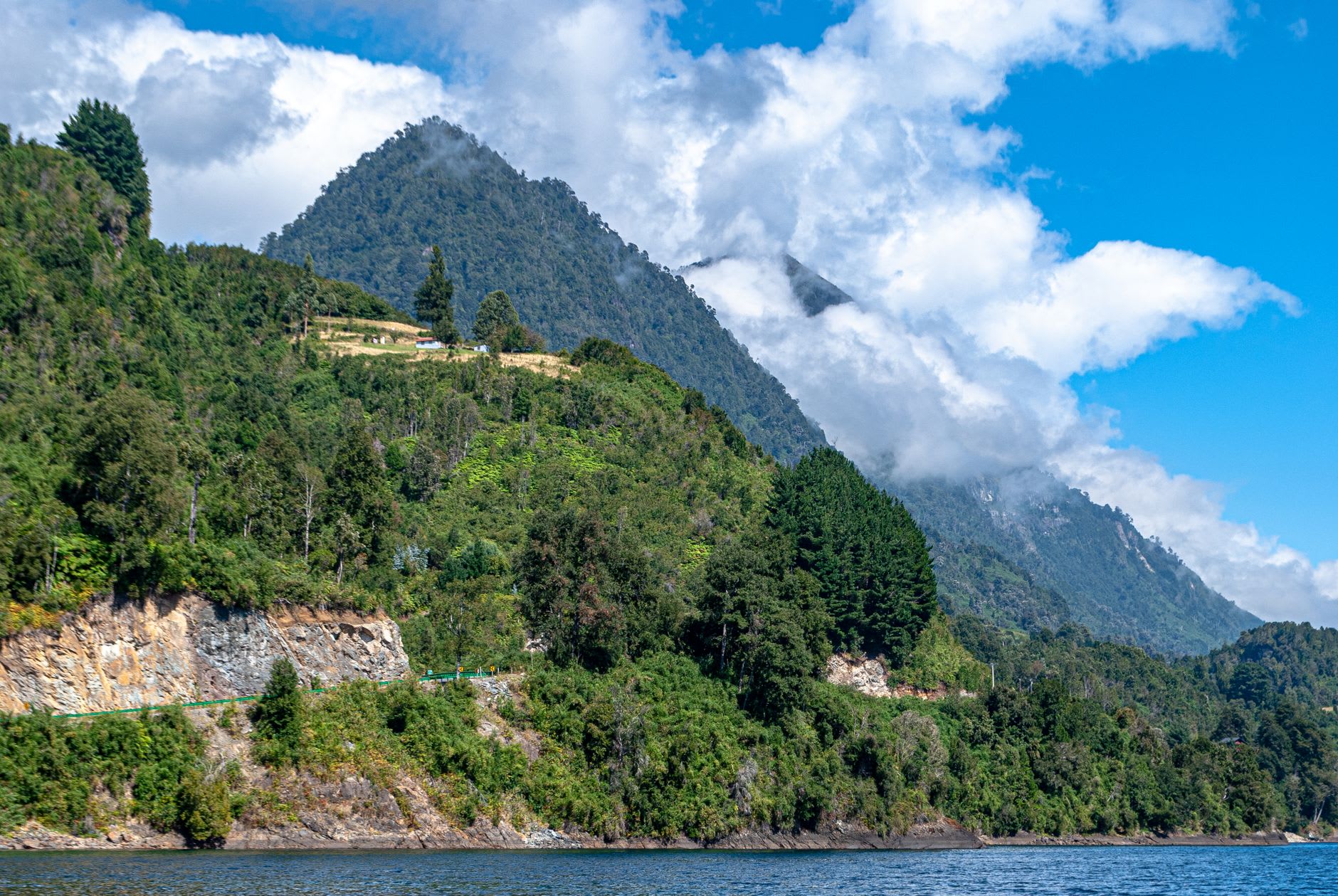
We reached the park by the Carretera Austral and a short ferry, the road threading between the water and walls of vegetation so dense it felt less like driving through a forest than through a green tunnel. The star of Pumalín is the alerce — a relative of the giant sequoia that grows with absurd slowness and lives for thousands of years. The Sendero Alerces is a short boardwalk loop, and walking it I kept stopping to put a hand on trunks wider than I could reach around, trees that were already old when Europeans first reached these coasts. The forest floor is a chaos of ferns, fallen logs furred with moss, and a constant patient drip of water from a canopy that more or less never dries out. Lia called it a cathedral, and for once the cliché was simply accurate; we both ended up speaking in the lowered voices the comparison demands.
Chaitén, still smoking
The other presence here is the Chaitén volcano, which erupted with almost no warning in 2008 and buried the nearby town under ash and a river of mud. The Sendero Volcán Chaitén climbs steeply through a forest that the eruption killed — a ghost stand of bleached grey trunks standing in a sea of new green growth — to a viewpoint over the still-steaming caldera. It is a hard, sweaty hour up wooden steps, and at the top the smell of sulphur arrives on the wind and the whole geological argument suddenly feels less abstract. The ash-grey trees against the regrowing forest are the most honest landscape I saw in the region: destruction and recovery sharing the same hillside, neither one winning.
Practicalities and weather
The infrastructure here is unusually thoughtful — beautifully built campgrounds, clear trail markers, composting toilets that actually work — all bearing the slightly obsessive design fingerprint of the Tompkins foundation. We camped at Caleta Gonzalo, where the forest comes right down to a fjord and the morning fog burned off to reveal water like dark glass. There is a small café there and very little else, which is exactly correct.
The thing nobody adequately warns you about is the rain. This is one of the wettest places I have ever stood, and the forest is the way it is precisely because of that relentless water. We had three days and saw the sun for perhaps four hours total. Bring genuinely waterproof everything, accept that you will be damp, and reframe the rain as the main event rather than an obstacle — because it is the rain, in the end, that grew the cathedral. Come between December and March for the least miserable odds, though “least miserable” is doing a lot of work in that sentence.