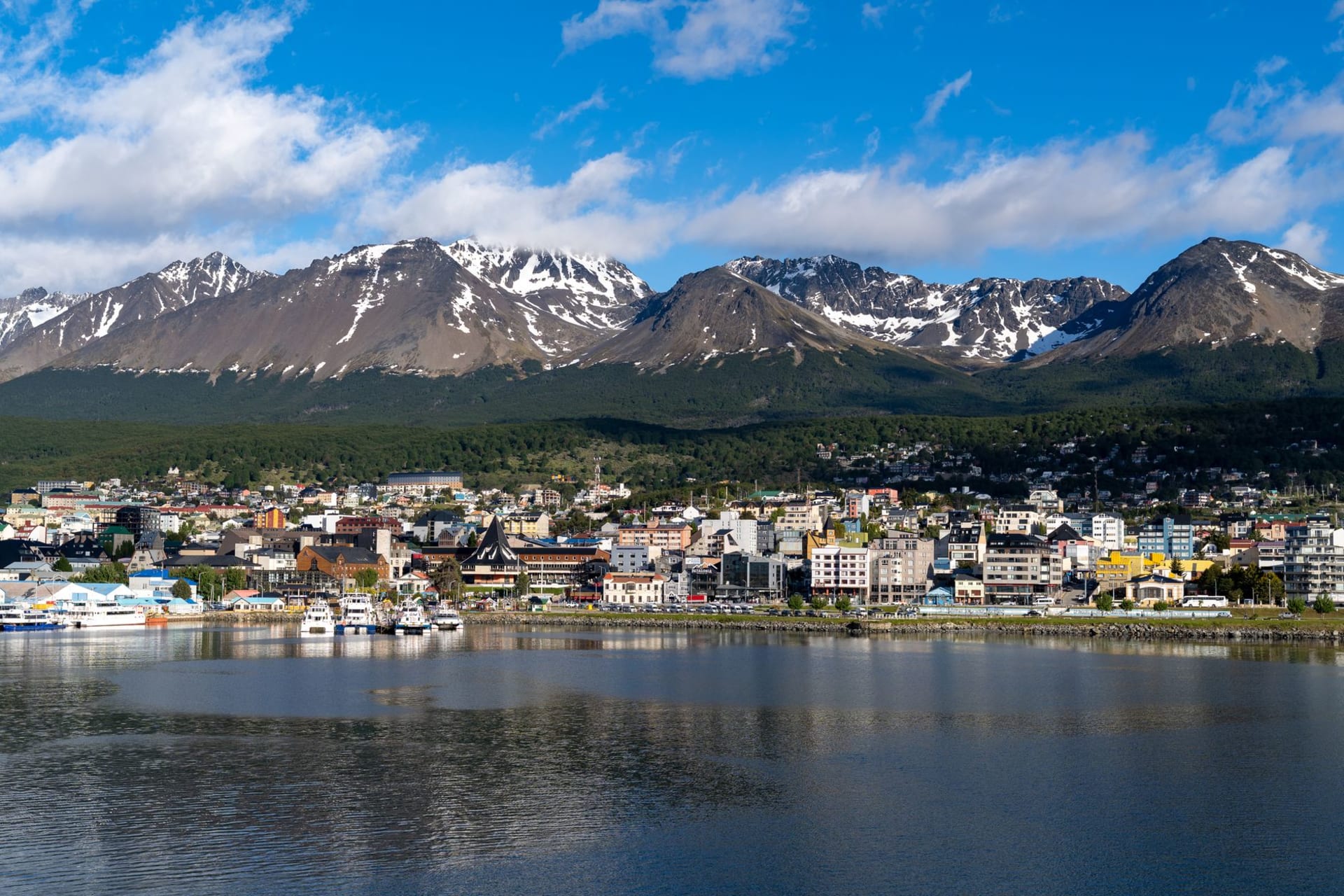
Puerto Natales
"I came to Puerto Natales for one night between the ferry and Torres del Paine. I left three days later having eaten my weight in lamb."
The Navimag docked at Puerto Natales on a morning when the wind was doing what the wind always seems to be doing here — arriving from the west in a steady, purposeful stream that lifts collars and redirects conversations and makes you feel that being upright is something you have to continually renegotiate with the atmosphere. The Last Hope Sound — Seno Última Esperanza, a name that is either poetic or alarming depending on your situation at the time — stretched behind the ship in the thin early light, its dark blue surface corrugated by the same wind, the distant Cerro Balmaceda and Cerro Paine Grande already pink at their snowy tips in the southeast.
Puerto Natales is a town of about twenty thousand people that has been organized, over the past thirty years, almost entirely around the Torres del Paine circuit. The W Trek and the O Circuit — the hiking routes through the national park sixty kilometres to the north — have made this small southern Patagonian port into one of South America’s great gear-and-resupply towns, and the main street’s mix of adventure equipment shops, freeze-dried food stockists, and restaurants that have become excellent because hikers returning from a week outdoors will pay remarkable amounts for a good meal has given it a particular character: purposeful, outdoorsy, surprisingly good at coffee.

What I hadn’t expected was how much I liked the town itself, independent of its function as a staging post. The Patagonian architecture — corrugated iron painted in primary colors, low buildings braced against the wind, wooden facades that have been weathered to beautiful complexity — gives the waterfront a quality that I find in very few places: it looks exactly like what it is. There is no performed authenticity here, no heritage marketing. The corrugated iron is there because it works, and the colors are there because someone chose them, and the result is a streetscape of cheerful, battered pragmatism.
The food, as the returning-hiker economy has demanded, is excellent. Lamb is the ingredient that defines the cooking here — the Magallanes region produces some of the world’s best, slow-raised on the wind-battered steppe grass, and the meat has a depth and leanness that factory-raised lamb doesn’t approach. A slow-roasted shoulder served with merkén-spiced mash at one of the better tables on the main street was one of the best meals I ate in Chile. The pisco sour that preceded it, poured at a bar where everyone at the counter had the mud of Torres del Paine still on their gaiters, was not bad either.

The sound at night is wind and not much else. I walked along the shore after dinner in a jacket that was not quite sufficient, past fishing boats and a seal sleeping on the dock without any concern for the cold, and thought about how far I was from any highway. The sense of genuine south-ness, of having arrived at a threshold below which the world becomes ice and nothing else, settles in after dark in Puerto Natales more completely than anywhere else I have been.
When to go: November through March for the peak trekking season, when Torres del Paine is operating at full capacity and the town is lively. October and April offer quieter conditions and cheaper accommodation. The ferry from Puerto Montt arrives three to four times weekly in summer — book your crossing before your accommodation, as beds fill faster in this direction during peak season.