
Puerto Edén
"The ferry horn sounded twice and the whole village came to the dock — not for us, but because that is what happens when the ferry comes."
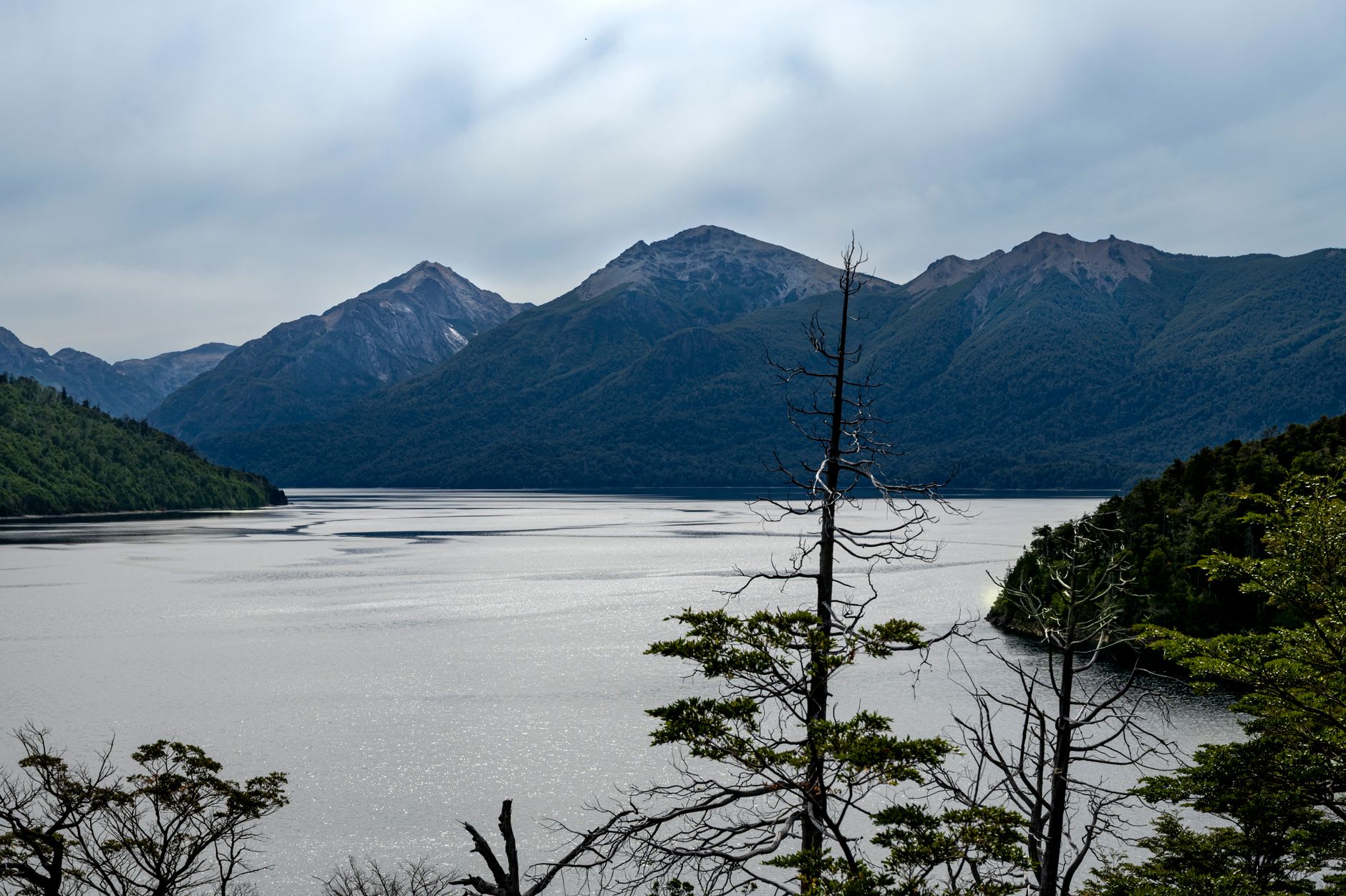
The announcement over the ship’s intercom was calm and bureaucratic: we would stop at Puerto Edén for approximately two hours for cargo operations. By the time I got on deck, the settlement was already visible — a scatter of maybe thirty houses on a hillside so steep that the roofs of the lower buildings were almost at the level of the upper buildings’ foundations, all of it looking like something that had been placed there by accident and then decided to stay. The fjord around it was completely still, the water the colour of strong tea from the peat dissolved in it, the mountains vanishing into low cloud so that the treeline appeared to float without any support above.
Puerto Edén sits inside the Wellington Archipelago, roughly halfway between Puerto Montt and Puerto Natales, in a position so remote that it has no road connection to anywhere. The ferry stops twice a week. Between visits, the village exists on what the sea provides and what the supply boat carries, and on a tradition of habitation that goes back thousands of years — because the Kawésqar people, the nomadic canoe people of the channels, lived and moved through this entire coastline before any ferry route existed. The handful of families who remain are their descendants, the last speakers of a language and the last holders of a knowledge of the channels that no map fully captures.
I went ashore with about twenty other passengers, past the small wooden church and up the slope past houses where children watched from doorways without particular curiosity. There is no restaurant in Puerto Edén, no hotel, no place to buy anything except a small general store that had cooking oil, batteries, and a few tins of food in quantities that suggested it was replenished exactly as often as it was needed. What there is, instead, is the quality of absolute isolation — not lonely, because the community has its own deep gravity — but genuinely beyond the reach of the ordinary. Mobile phones didn’t work. There was a satellite internet connection in the community centre that was available at certain hours. A dog followed me for a while and then didn’t.
The feeling on the dock when the ferry prepared to leave was something I’ve thought about since. The passengers gathered with their cameras and their backpacks, and the village residents gathered separately, watching the ship rather than us, the way you might watch a weather system that is large and temporary and will pass. A few people received packages from the cargo hold — boxes of supplies, a piece of machinery, something in a sealed plastic crate. Then the horn sounded and the ramp lifted and the distance between the ship and the dock opened, and Puerto Edén went back to being what it has always been: a place that exists in a different relationship to the world than the one most of us have chosen.

I stood at the stern until the settlement was too small to distinguish from the rock and the trees and the cloud. Which didn’t take long.
When to go: Puerto Edén is accessible only via ferry — the Navimag route between Puerto Montt and Puerto Natales, which operates year-round but runs more frequently from October through April. The ferry stop lasts one to three hours depending on cargo; you cannot stay unless you make separate arrangements with the community well in advance. Go with no agenda except to be present.