Parque Nacional Queulat
"We stood there for twenty minutes waiting for the ice to crack, and when it finally did, neither of us said a word."
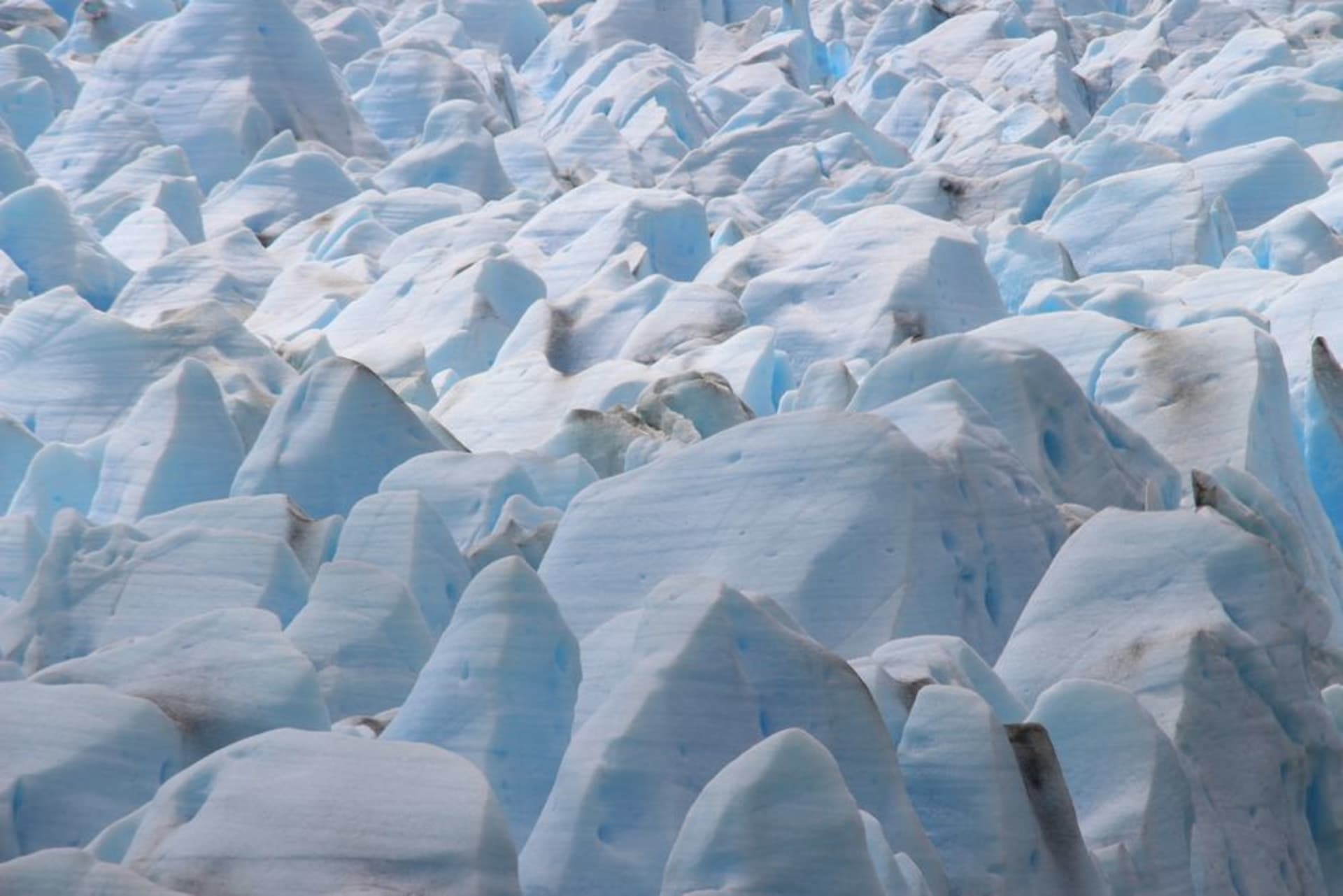
A hanging glacier calving into a waterfall above a fjord, reached by a short trail off the Carretera Austral.
We almost drove past the turnoff. That’s the thing about the Carretera Austral — after four days of gravel and switchbacks and views that keep topping themselves, you start to go numb to the signs. But Lia had read about Queulat months before we left Puerto Varas, and she wasn’t about to let me miss it. So we parked, laced up, and started down the short trail through the forest, not really knowing what to expect beyond a glacier we’d seen in photos.
What the photos hadn’t captured was the scale of it. Ventisquero Colgante hangs off a wall of granite like something that shouldn’t be able to stay there, a slab of ice suspended hundreds of meters above Lake Témpanos, and the whole basin around it is thick with Valdivian rainforest — ferns, moss, dripping green everywhere, the air so humid it felt like breathing through a wet towel. We crossed a couple of suspension bridges over meltwater rivers that were running fast and glacial-blue even in the warmth of a Patagonian summer afternoon, and I remember thinking that Chile had built one of the most accessible glacier views in the region and somehow it still felt like we’d earned it a little.

At the lookout, we sat on a rock and waited. That’s really the whole activity at Queulat — you wait, and you watch the glacier, and eventually a piece of it lets go. We heard it before we saw it: a crack like distant thunder, then a chunk of ice peeling off the cliff face and dropping into the waterfall below, throwing up a fine mist that caught the light for a second. A French couple next to us actually gasped. I didn’t blame them. Queulat has protected more than 154,000 hectares of this terrain since 1983, fjords carved deep into the Aysén region, steep peaks standing over all of it, and for a moment the whole park felt built around that single sound.

We ate empanadas we’d packed from a bakery in La Junta, sitting on that same rock long after the ice had gone quiet again, watching the light shift on the fjord below. Lia said it reminded her a little of Norway, minus the crowds. I couldn’t disagree — this is one of those places in Patagonia that still feels like it belongs to whoever bothers to show up.
When to go: Aim for December through March, Chilean summer, when the trail is clear and the glacier is most visible — we got lucky with a cloudless afternoon, but locals told us the ice can hide behind fog for days at a time even in the best months.