
Valdés Peninsula
"The whale surfaced two metres from the zodiac and blew, and the smell of krill breath is something I will never forget."
Puerto Madryn, the gateway city to the Valdés Peninsula, does not prepare you for the peninsula. Puerto Madryn is a reasonably pleasant beach town with a diving culture and a Welsh heritage that manifests in tea shops and occasional street names in Cymraeg, and it is fine. But then you drive north on the road to the peninsula, through one hundred and twenty kilometres of open steppe — flat, brown, scrubby, relentless — and you feel the accumulated weight of that emptiness pressing against the car windows. You arrive at the narrow isthmus that joins the peninsula to the mainland feeling like you’ve been let through a door into something that was previously withheld.
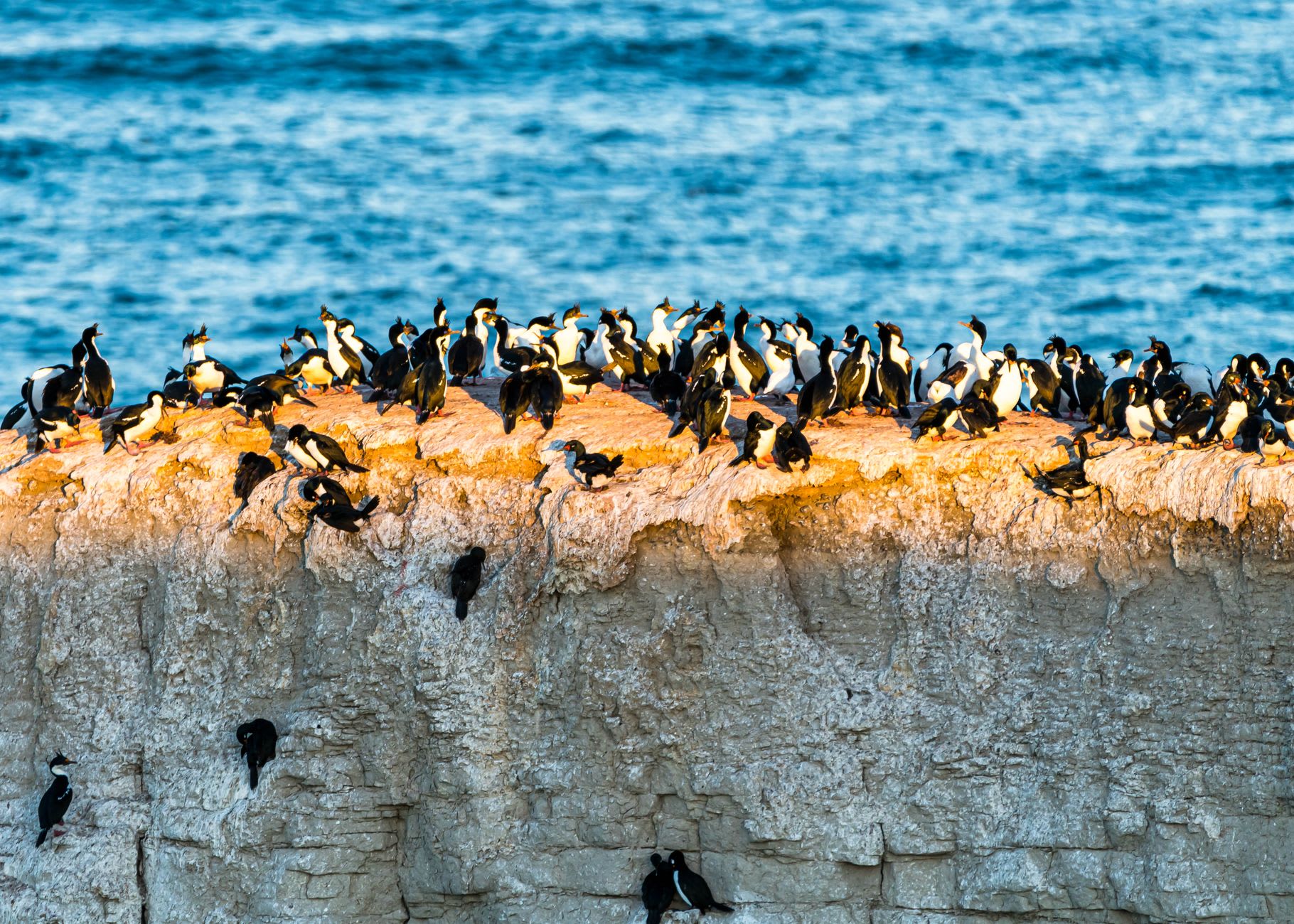
The peninsula itself is a raised plateau of semi-arid steppe about two thousand square kilometres in area, surrounded on three sides by cold Atlantic water that is extraordinarily rich in nutrients. This nutritional abundance is the reason for everything: the southern right whales that come from June to December to breed in Golfo Nuevo and Golfo San José, the orca populations that have developed the unique behaviour of intentional beaching to hunt sea lion pups on the Punta Norte beach, the hundreds of thousands of Magellanic penguins that nest at Punta Tombo, just south of the peninsula on the mainland coast.
I was there in September, whale season, and went out on a zodiac from Puerto Pirámides — a village of perhaps three hundred people on the Golfo Nuevo shore — with a local guide named Fernanda who had been running whale-watching trips for fifteen years and who spoke about the individual animals with the ease of someone discussing neighbours. There is a female that has been returning since the 1970s, she told me, whom the researchers call Nobleza. We did not see Nobleza that morning but we saw seven other right whales within a hundred metres of the boat, including a mother-calf pair that surfaced near the bow with a slowness and deliberateness that felt, at the time, intentional. The blow — the spout, the exhalation — carries a smell of krill and cold deep water that is not unpleasant but is entirely unlike anything else. You smell it before you see the whale.

The orca behaviour at Punta Norte is harder to see and more extraordinary for it. The hunting is tied to the tides and the movement of the sea lion pups, and you can spend an entire morning in the viewing area seeing nothing but the ocean and the barking colony and then, in one five-second window, watch a four-tonne animal slide itself onto the beach in an explosion of white water, close its jaws around a pup, and roll back into the sea. The people around me at the viewpoint exhaled as one. Nature documentaries compress this into something inevitable; in person it is violent and shocking and over before you’ve processed the beginning of it.
The steppe between the wildlife sites holds its own quieter drama. I drove the peninsula circuit with the windows down and stopped for a family of maras — Patagonian hares, actually their own genus, upright and dignified as small deer — crossing the road without urgency. Guanacos grazed on hillsides. A culpeo fox trotted along the verge with a ground squirrel in its mouth, paused to look at me with the expression of someone caught doing something they had decided was not wrong, and continued. The steppe rewards attention with specificity: the more slowly you drive, the more particular it becomes.
When to go: The peninsula offers different wildlife at different times of year. Right whales are in the gulfs from June through December, with September and October the peak months for cow-calf pairs. Orca hunting at Punta Norte occurs from February through April. Penguins are at Punta Tombo from September through March. There is genuinely no bad time to visit, only a question of which animal you have come to see.