Ybycui National Park
"The forest here grew back over a foundry and never once asked permission."
A pocket of Atlantic Forest folded around 19th-century iron ruins, where waterfalls drop through jungle that has quietly reclaimed a war industry.
I had not expected an iron foundry in the middle of a national park, but that is exactly what waits at the heart of Ybycuí, a couple of hours south of Asuncion by rented car on roads that get progressively narrower and greener. La Rosada, as the ruins are known, was Paraguay’s first heavy industry, built in the 1850s to forge cannons and cannonballs ahead of the catastrophic War of the Triple Alliance. What remains is a set of brick arches and furnace walls half-swallowed by ferns, with butterflies moving through window openings where soldiers once worked bellows. Standing inside it, I felt the particular vertigo of a place that was once loud with hammers and fire and is now silent except for birdsong.
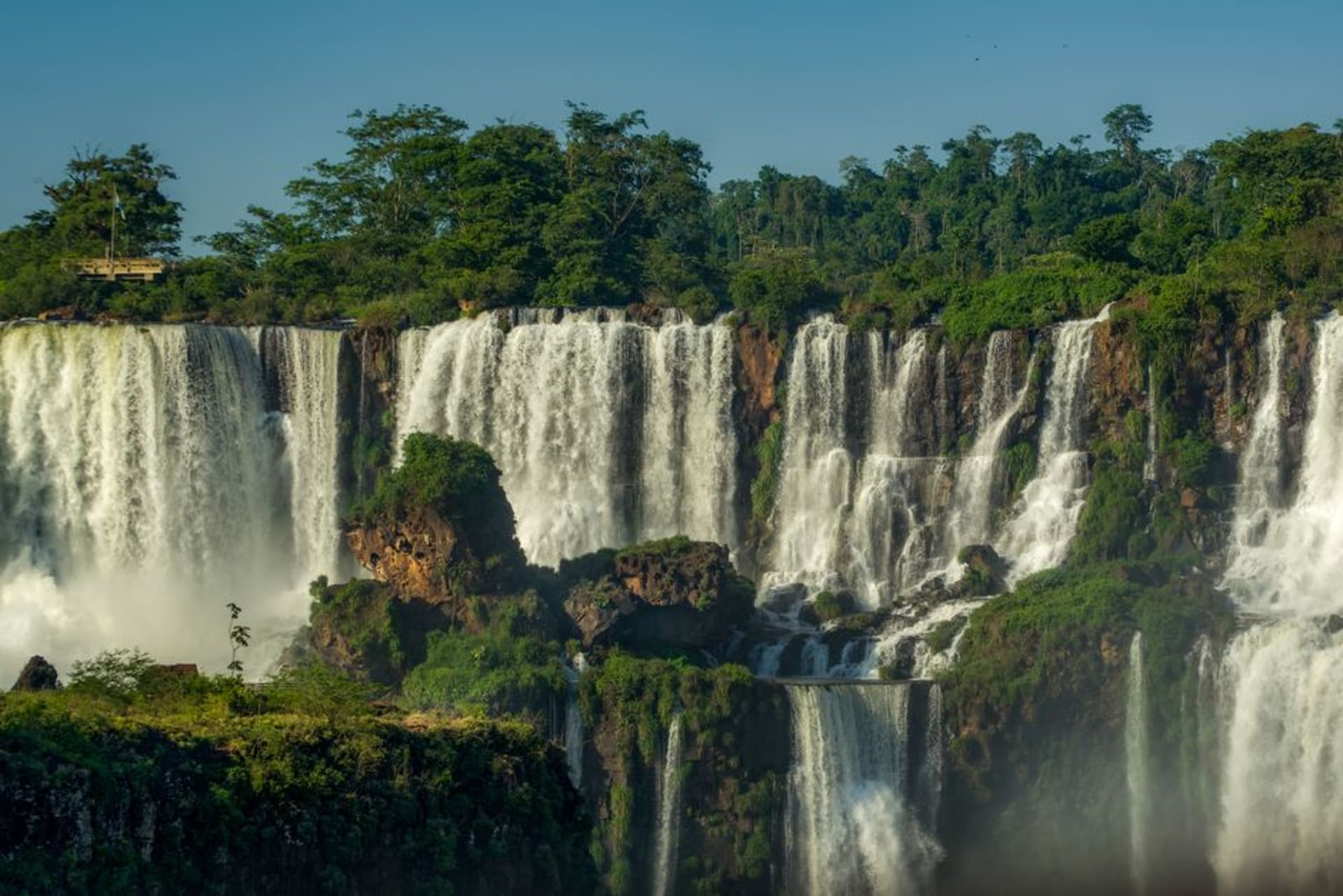
The park itself is one of the last significant remnants of the Bosque Atlántico del Alto Paraná — the Upper Paraná Atlantic Forest — an ecosystem that has been reduced to a fraction of its original extent across Paraguay and Brazil, making Ybycuí feel almost improbably intact. We hiked to the Salto Guaraní waterfall along a trail thick with tree ferns and howler monkey calls I never quite located, the humidity settling on my skin within minutes of leaving the car park. The waterfall itself drops maybe fifteen meters into a dark pool, cold enough that Lia shrieked when she waded in, and clear enough to see small fish darting near the rocks.

A park ranger named Aníbal, who had grown up in the nearby town and clearly considered the forest a kind of extended family, walked with us for part of the trail and pointed out a toucan we would have missed completely, a flash of yellow bill high in the canopy. He told me the park had almost been logged into oblivion in the 1980s before conservationists intervened, and that some of the older trees we were walking under predated Paraguayan independence. It reframed the whole visit for me — this wasn’t just scenery, it was a survival.
When to go: The dry season from May to September keeps trails passable and the waterfalls swimmable without the worst of the summer storms that can flood the access roads.