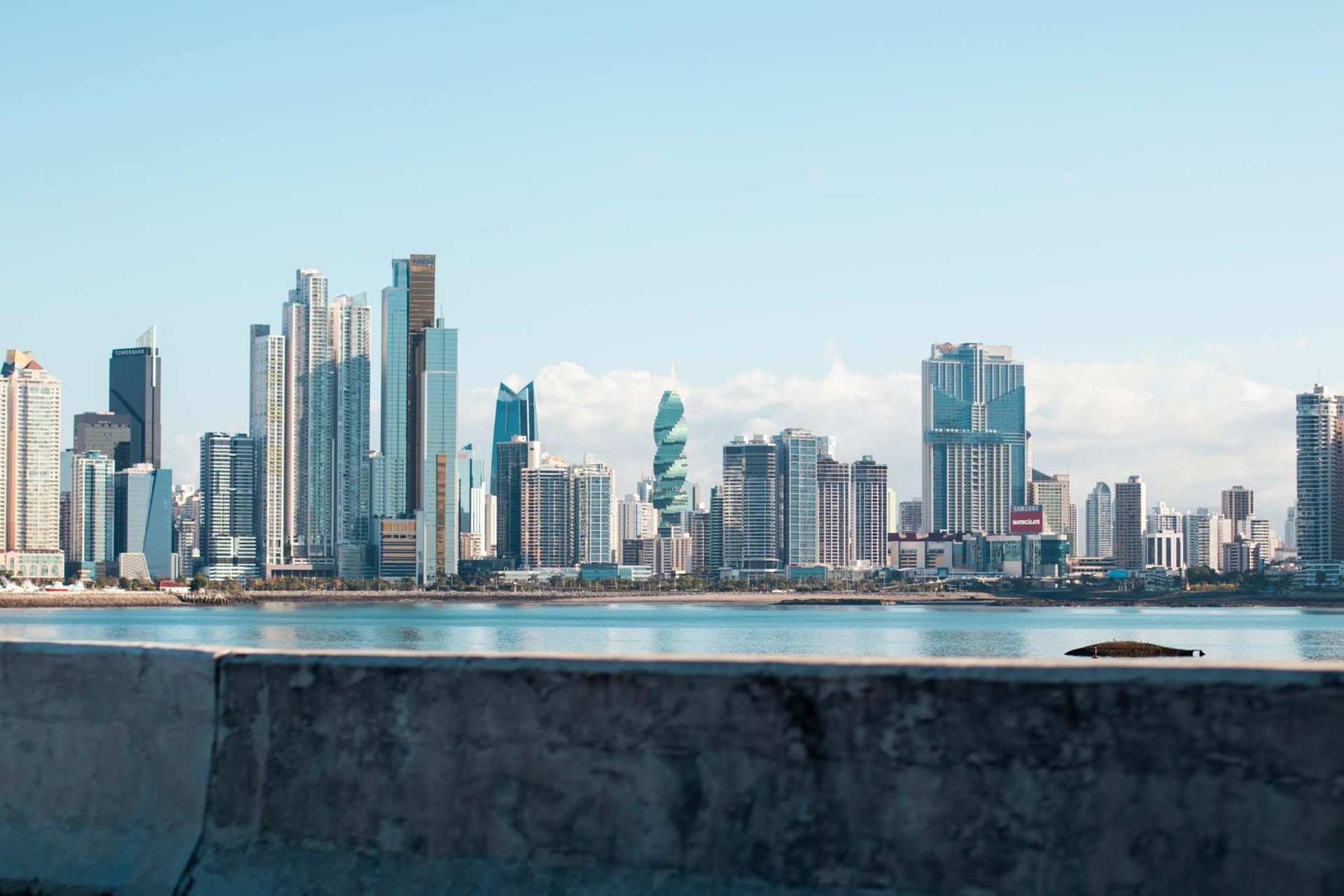
Where the Americas were severed and stitched back together — a city of colonial ruins beside a glittering skyline.
I arrived in Panama City with the vague sense that I was standing at a seam — the kind of place where continents were once torn apart and then, improbably, sutured back together with concrete and ambition. The skyline from the Amador Causeway looks like someone transplanted a sliver of Miami and left it to bake beside the Pacific. Behind it, invisible until you go looking, Casco Viejo is falling apart in the most beautiful way.
Casco Viejo at the Hour the Light Turns
We checked into a guesthouse on Calle 8a Este, where the plaster was the color of old teeth and bougainvillea had swallowed the courtyard wall completely. Lia photographed every peeling door on the block while I stood in the street and watched a vulture perch on a satellite dish above the Plaza de la Independencia. The square smells like frying plantains and something floral I never identified. In late afternoon, the light comes in sideways off the bay and turns every ruin amber — the kind of light that makes you feel like a witness to something that has already ended.
We ate patacones con ceviche at a plastic table on Avenida Central, the kind of place with no menu and one fluorescent bulb. The corvina was dressed with enough ají chombo to make my eyes water. I ordered a second round.
The Canal, Which Defies All Preparation
I thought I understood the Panama Canal before I saw it. I did not. We took a bus out to the Miraflores Locks and stood on the observation deck as a Panamax vessel called the Maersk Kotka — container stacked on container, each one the size of a house — was walked through the chamber by mules running on rails. The water churned green and diesel-grey. The scale of it broke something in my brain in a good way. No photograph prepares you for the slowness of it: the ship moves at walking pace, absolutely silent except for the water, while a hundred people stare in collective disbelief.
The unexpected detail that stayed with me: the lock gates are hollow. They float. I read that in an exhibit panel and stood there for a long moment thinking about it — those massive steel walls, buoyant on their own emptiness.
Staying Longer Than Planned
This is what Panama City does. You book three nights and start researching apartments on the fourth morning. The city is too unresolved to leave quickly — too many simultaneous centuries happening at once. I liked it best from a rooftop on Calle Eloy Alfaro, cold Balboa in hand, watching a containership slide silently through the dark water toward the Atlantic while the city hummed below.
When to go: The dry season runs from mid-December through April — lower humidity, reliable sun, and the canal traffic is just as hypnotic in clear weather. Avoid October and November if the heat and daily rain would wear on you, though the city turns dramatically green.