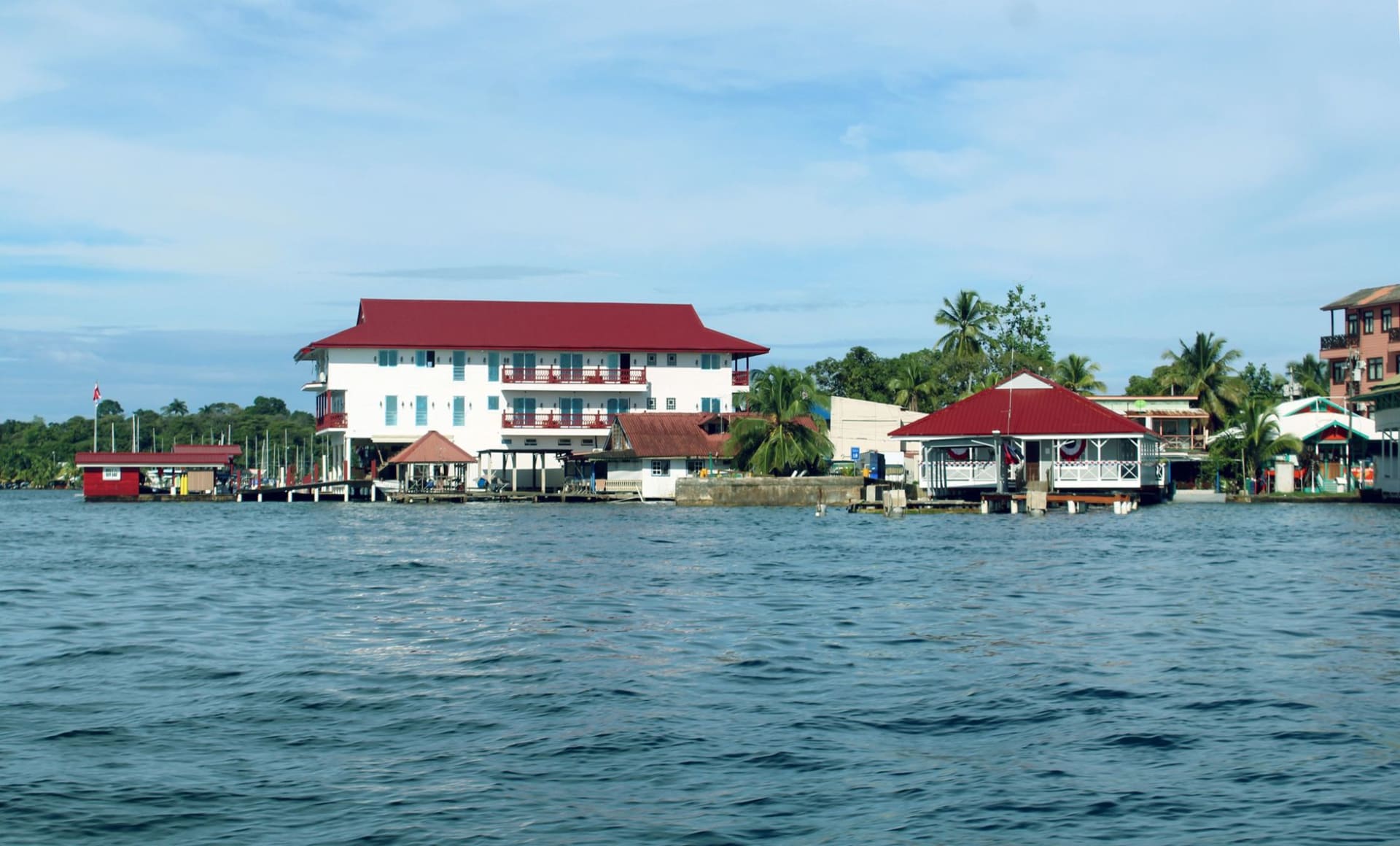
A Caribbean archipelago of stilted villages, coral gardens, and lazy days that feel stolen from another era.
There is a particular quality of light in Bocas Town at four in the afternoon — thick and amber, the kind that turns every corrugated roof and painted balcony into something slightly cinematic. The smell is salt and diesel and something fried. A water taxi idles beneath the pier on Calle 3, its driver asleep under a Panama hat. Nobody is in a hurry here. It took me about six hours to stop being in a hurry myself.
Bocas Town and the Art of Doing Nothing
The main island, Isla Colón, is where most people arrive and, if they’re not careful, where most people stay forever. Bocas Town is small enough to walk in twenty minutes and interesting enough to occupy a week. The main drag — Avenida Central — is a loose parade of dive shops, juice stands, open-air restaurants, and hostels with names that suggest someone had a very good evening when they chose them. Lia found us a room in a wooden guesthouse that jutted out over the water; at night the tide came in beneath the floorboards and rocked us almost imperceptibly to sleep. I have slept in worse places.
The food surprised me. I was expecting island mediocrity — overpriced fish, sad salads — and instead found a plate of rondón that stopped me mid-conversation. Rondón is a Bocas staple: a slow-cooked coconut milk stew with whatever the sea gave up that morning, served over yuca and plantain, with a heat that builds quietly and then announces itself. The woman who made it ran no visible restaurant. She cooked out of a window on Calle 1 and served perhaps twelve plates a day. We went back twice.
Starfish Beach and the Reef at Hospital Point
The other islands require boat taxis, which leave with approximate regularity from the town pier. Isla Bastimentos is the one people mean when they talk about Bocas in reverential tones: dense jungle, Red Frog Beach, and the kind of Caribbean water that makes you distrust all other water. But it was Hospital Point, a snorkel site just off the north end of Isla Colón, that undid me. I slipped off the side of the panga expecting the usual — some coral, some fish — and dropped into a garden so dense and strange it felt architectural. Brain coral the size of armchairs. A spotted eagle ray moving through blue shadow like a thought. I surfaced and Lia was already laughing at whatever expression was on my face.
Starfish Beach on Isla Colón is worth the twenty-minute water taxi for the image alone: enormous red sea stars resting in the shallows between mangrove roots. It sounds like a postcard and it is, but some postcards exist because the thing itself is genuinely astonishing.
When to go: The driest months run from mid-December through April, with September and October offering a second dry spell. The so-called rainy season is rarely a reason to stay away — showers pass fast, and the crowds thin considerably.