Rock Islands Southern Lagoon
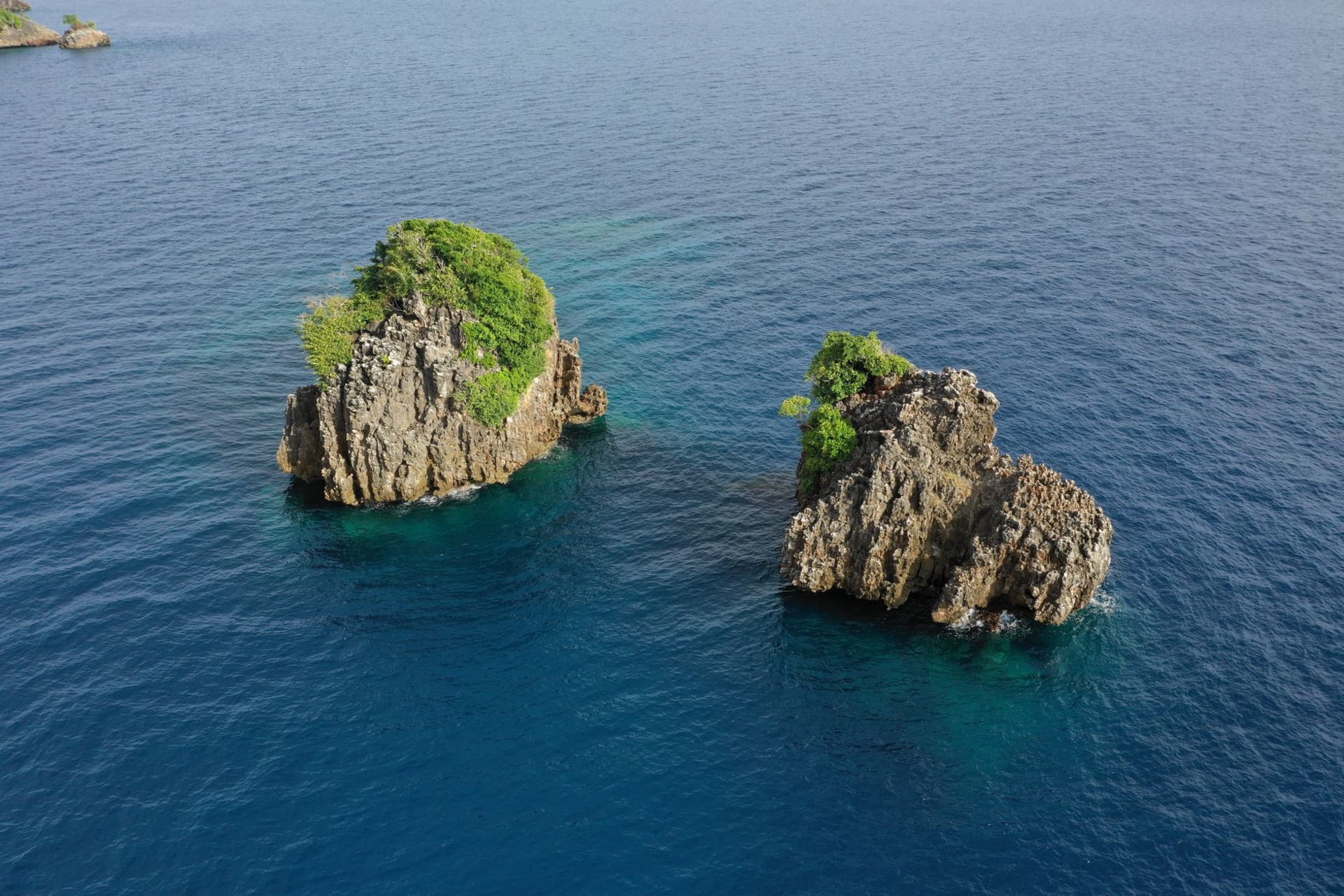
"From above, they look like the sea grew a forest and then forgot to stop."
I first saw the Rock Islands from a twelve-seater prop plane descending into Koror, and I did something embarrassing — I pressed my face against the oval window like a child. Below me, hundreds of limestone formations rose from turquoise shallows, each one rounded at the base and dense with jungle on top, as if someone had scattered enormous mushrooms across a lagoon and let the tropics colonize them. The water between them shifted from pale aquamarine to deep cobalt in bands so distinct you could draw the depth contours with your finger on the glass.
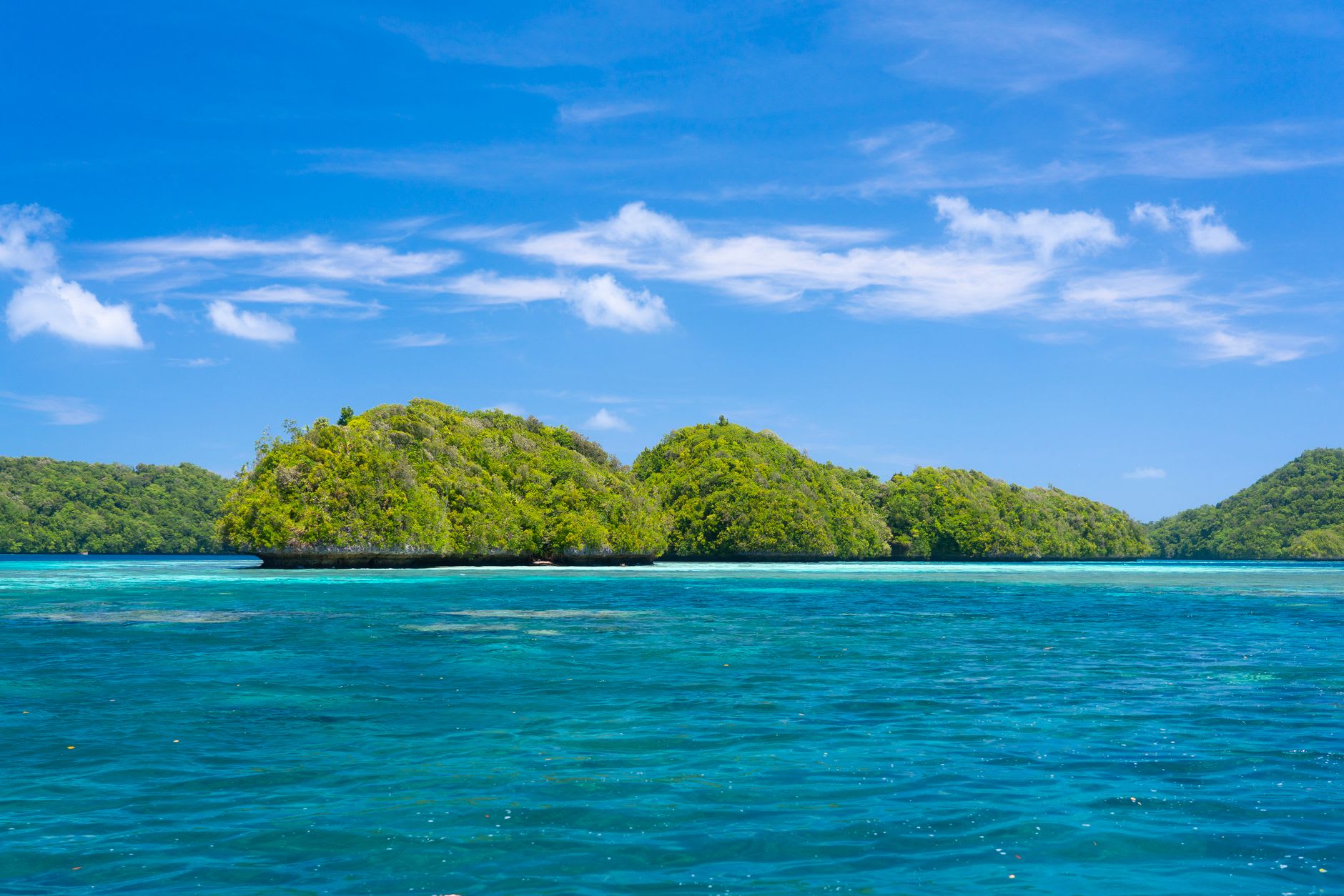
Getting down among them by kayak is a different experience entirely — intimate in a way that the aerial view doesn’t prepare you for. The limestone undercuts at the waterline, hollowed out by centuries of wave action into arches and grottos, and the sound of water moving through those spaces has a particular resonance, half slap and half echo, that stays with you. I paddled for three hours one morning without a guide, which I don’t entirely recommend since it is genuinely easy to get disoriented in there, but the silence was extraordinary. Just the creak of the paddle, the occasional splash of something dropping from a branch, and that water sound moving through the stone.
The color of the lagoon is the thing that photographs try and fail to replicate. It isn’t simply turquoise — it changes by the hour. At nine in the morning with the sun at a low angle it reads as almost green, a lit-from-below emerald. By noon it bleaches to something so pale it looks almost white at the shallows and then drops suddenly to navy at the channel edges. In the late afternoon, when the light comes in sideways through gaps between the islands, it turns the color of a backlit aquamarine and everything seems to glow from underneath. I spent twenty minutes one afternoon just sitting in the kayak doing nothing, watching the color shift. There is no practical reason to linger like that. It just felt impossible to leave.
The snorkeling inside the lagoon is exceptional even without going to the dedicated dive sites. Coral gardens grow along the submerged bases of many islands, and the fish density in the cleaner channels rivals anything I’ve seen in the Coral Triangle. I spotted a bumphead parrotfish school one morning — that lumbering, prehistoric-looking species that you normally have to dive deep to find — just cruising through a shallow channel in about four meters of water. Giant clams sit on the sandy patches between coral heads. A hawksbill turtle surfaced ten meters from my kayak, looked at me with what I can only describe as mild contempt, and dove back down.

The Rock Islands are a UNESCO World Heritage Site, which in practice means there are entry fees and designated camping areas and certain beaches that require permits. Don’t resent the system — Palau has done a remarkable job of managing what could easily have become a theme-park version of itself. The regulations are real: you cannot anchor on coral, you cannot take anything from the water, you cannot enter certain lake systems without a guide. These rules are enforced, not just printed on a sign. The result is that the place still feels genuinely wild, which in the twenty-first century Pacific is not something to take for granted.
When to go: November through April offers the calmest lagoon conditions and best underwater visibility. The dry season mornings are extraordinary — flat water, light mist burning off the islands around seven a.m., and almost no other boats in the early hours. Avoid arriving by day-trip boat from Koror on weekends in July and August, when the most accessible snorkel spots can get crowded. If you have time, stay overnight at one of the small guesthouses on the lagoon edge — the islands are unrecognizable after the day boats leave.