German Channel
"A manta ray passes at arm's length and all your plans for the rest of the day dissolve."
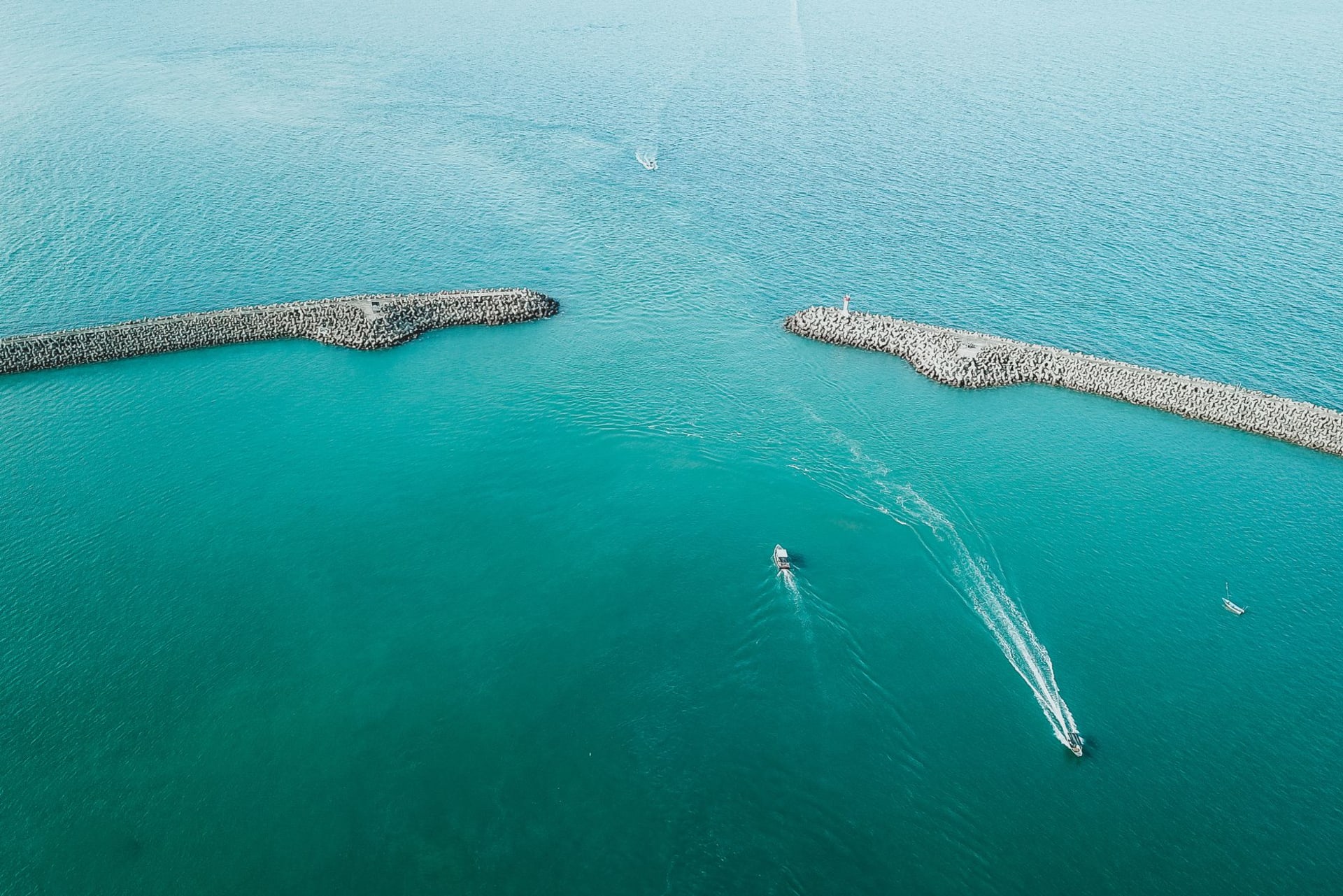
The Germans dredged this channel through the reef in 1902 to give their colonial shipping a more direct route between the lagoon and the open ocean. They were thinking about copra and phosphate. They had no idea they were building one of the great wildlife corridors of the Pacific. A hundred and twenty years later, the channel they cut through the coral has become the primary cleaning station for the manta rays that congregate in Palauan waters, and on any given day in the right season, you drop into thirty meters of water and find yourself in the presence of the largest rays in the ocean hovering at the current’s edge while small cleaner fish pick parasites from their gill slits.

I want to be precise about the experience of a manta ray at close range, because the photographs don’t do it right. What they can’t convey is the sense of scale in water, which is different from scale in air. On land, something eight feet across is something eight feet across. Underwater, the water compresses distance and the manta’s wingspan seems to expand as it approaches, and when one passes directly overhead — and they do, indifferently, the way something very large and not threatened by anything ignores things smaller than itself — the shadow it casts covers you completely. You are in the shadow. The wing edge is within reach. The eye, set into the leading edge of the wing and surprisingly mobile, moves to take you in. And then it banks, tilts, and goes, and the water fills back in and you realize you haven’t been breathing properly for the last ninety seconds.
The cleaning station works on manta time, not dive-boat time. The rays are there when they are there, and some days you wait twenty minutes and some days you wait four. The guides know the signs — the way the cleaner fish position themselves, the current conditions that correlate with manta arrivals — and a good guide will read the site correctly most of the time. I went twice. The first dive produced three rays over forty minutes, including one enormous female that circled the cleaning station six or seven times before dropping back into the blue. The second produced twelve in twenty-five minutes, including one sequence where three rays overlapped at the cleaning station simultaneously, which I was not emotionally prepared for.

The site is not just mantas — the channel itself is rich with fish life, and the coral along the walls shows the particular health of a site that sees good current flow and minimal anchor damage. Napoleon wrasse cruise the bottom. Barracuda hang in mid-water. Spotted eagle rays occasionally pass through. But the mantas are the reason you’re here, and the mantas are the reason you’ll talk about it for years. There is something about the particular kind of grace that an animal the size of a small car moves with that recalibrates your understanding of what grace can mean.
Palau has been thoughtful about protecting this site. Dive operators adhere to approach protocols that keep diver pressure on the mantas minimal — no chasing, no positioning above the cleaning station in ways that disrupt the behavior, no touching. The system works because the operators enforce it, not because it’s just written in a brochure.
When to go: Manta activity at German Channel peaks from roughly November through April, corresponding to dry season and the nutrient-rich upwellings that the rays follow. October and May are transitional months and can be productive. Current strength at the site varies and affects both dive conditions and manta behavior; an intermediate certification and some experience with current diving is advisable. The channel is accessible by day trip from Koror in about forty minutes by speedboat.