
Crater Lake
"No photograph has ever been honest about that blue. I've stopped trying to explain it."
Every time I’ve driven toward Crater Lake — and I’ve done it three times now, coming from different directions, in different seasons — there’s a moment just before the rim where the forest closes in tight and the road climbs and you can feel something about to happen. Then the trees pull back and there it is: an oval of water so blue it looks like someone poured food coloring into a volcanic crater and forgot to stir. Which is not far from what actually happened, geologically speaking. The caldera is the remains of Mount Mazama, which erupted and collapsed about seven thousand years ago and has been filling with snow and rain ever since, filtering through porous volcanic rock until the water achieves a purity that makes the light behave differently.
I arrived in early September the second time, just as the tourist season was beginning to thin. The crater rim road — fifty-three kilometers of it, with pullouts and viewpoints every few kilometers — was quiet enough that I could park almost anywhere and just stand there, watching the color change with the angle of the sun. In full afternoon light it’s almost violent, an electric cobalt that doesn’t look real. At dusk it goes navy, then black, and the rim turns orange and you understand why people have been writing about this lake for as long as there have been people here to write about it.
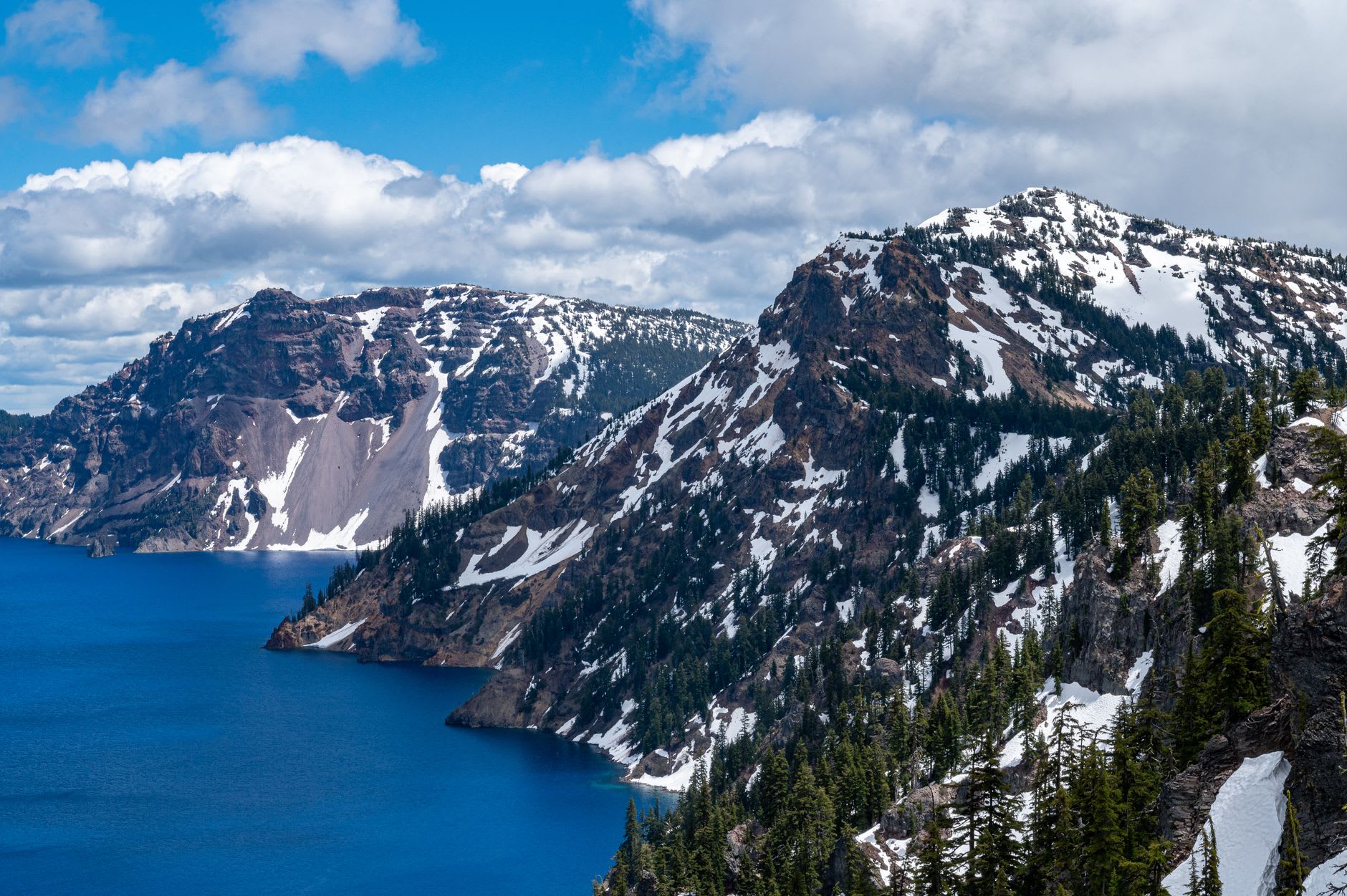
Wizard Island sits in the center of the caldera — a perfect cinder cone about three hundred meters high, forested in Whitebark pine, accessible only by a boat tour that leaves from Cleetwood Cove (the one trail that descends from the rim to the water, a steep and honest 2.2 kilometers that will remind your knees it exists). The boat tour isn’t really about the island; it’s about being on the water, being inside the caldera, understanding the scale from a different angle. From the rim, the lake looks vast but somehow contained. From the water looking up at the walls rising four hundred meters, you feel the scale properly.
The hiking around the rim is genuinely excellent if you do it right. Garfield Peak, on the south rim, takes about two hours round trip and delivers views that flatten you — the entire caldera visible, Mount Scott visible to the east, the Cascades reaching north and south. I ate my lunch on the summit rock with three other hikers who’d all arrived independently and none of us said much because there wasn’t much to add to what the view was already saying.
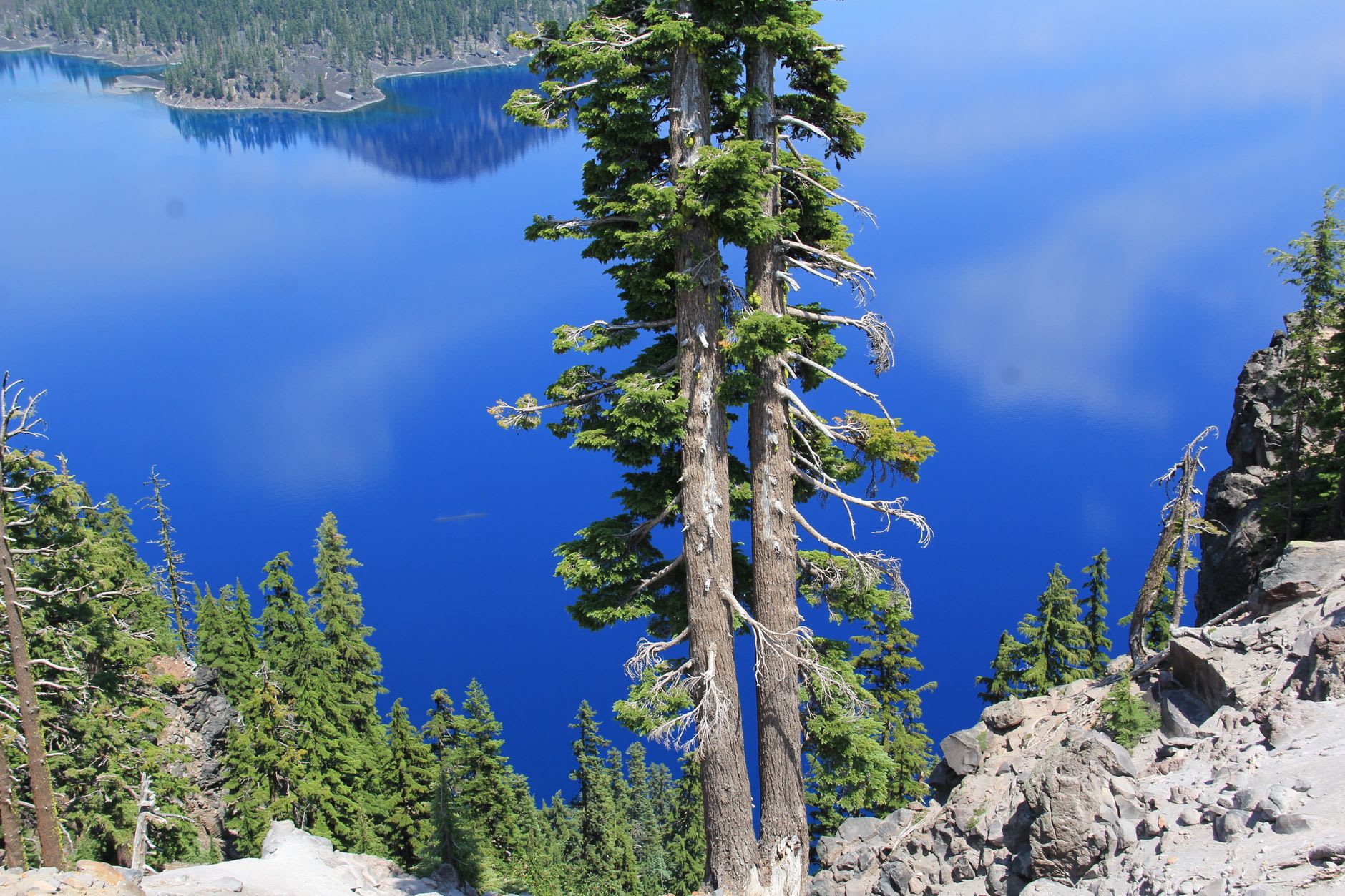
The lodge — Crater Lake Lodge, built in 1915 and restored decades later — sits right on the rim, and if you can get a room facing the lake, the view from your bed when you wake up is something you will think about for years. I had dinner there once during a rainstorm, watching the clouds move across the caldera and the lake turn gray and then silver and then briefly, when a break in the clouds let in a shaft of late light, that improbable blue again.
When to go: July through mid-October, when the rim road is fully open — the park receives three to five meters of snow annually and access before July can be limited. For the fewest people and the best light, aim for early September through early October. The lodge and most facilities close after mid-October.