Astoria
"A town where the fog arrives every night like rent, and the Victorian houses look like they're waiting for something that already passed."
Astoria sits at the northernmost tip of the Oregon coast where the Columbia River, after its three-thousand-kilometer journey from the Canadian Rockies, finally widens into something approaching a bay and exhales into the Pacific. The town is built on steep hills above the river and its Victorian-era houses — the legacy of the salmon cannery wealth of the late 1800s — step down toward the waterfront in a way that makes the whole place look like an illustration in a book about the American past. The fog rolls in off the water most mornings. The horns on the bridge sound through the night. The Columbia, at this point about five kilometers wide, looks less like a river than like an event.
I first stopped in Astoria because I’d been driving Highway 101 north from Cannon Beach and needed coffee, and then I stayed two days because the town had a particular quality I couldn’t quite name and kept wanting to investigate. It’s a place where something large happened — the fur trade, the salmon industry, the early settlement of the Pacific Northwest — and then continued to exist in the aftermath of that thing, declining in slow dignified fashion while the world found other centers of gravity. That kind of town either becomes a tourist simulacrum of itself or it stays genuinely itself but more frayed, and Astoria has mostly stayed itself.

The Astoria Column sits on Coxcomb Hill above the town — a 38-meter painted concrete tower built in 1926, covered in a spiraling frieze depicting Pacific Northwest history in the manner of a Roman victory column. You can climb its interior spiral staircase to a tiny platform at the top and look out over the bar where the Columbia meets the Pacific, one of the most dangerous river crossings in North America, where the waves break in patterns that have sunk ships for two hundred years. I bought a small wooden toy airplane from the gift shop, carried it to the top, and threw it off the platform into the wind, which is apparently the traditional thing to do. It glided for a surprisingly long time before landing in the fir trees below.
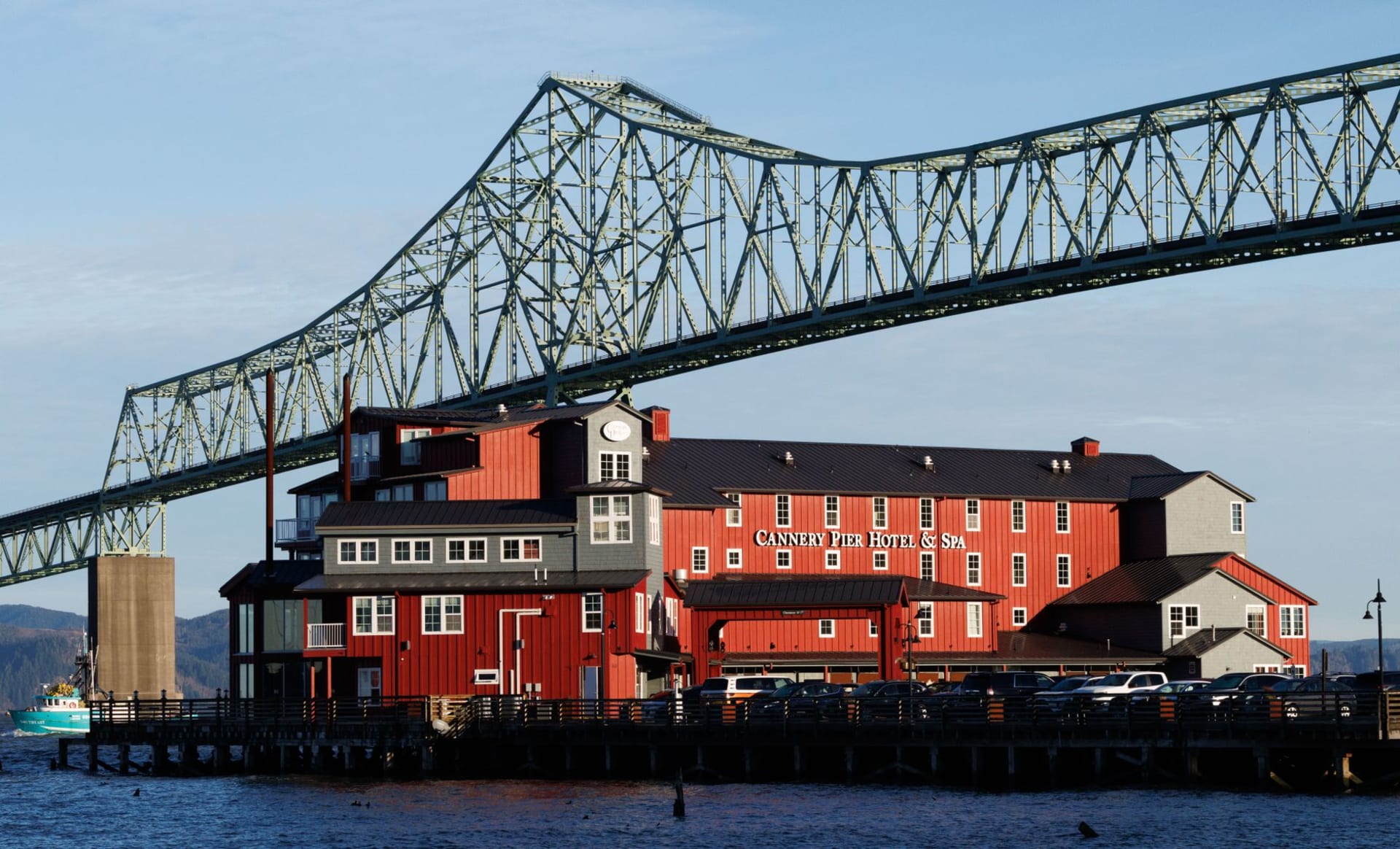
The Columbia Maritime Museum on the waterfront is one of those regional museums that vastly exceeds its setting — genuinely excellent exhibits about the bar crossing, the salmon industry, the Coast Guard rescues on the bar. The lightship Columbia, permanently moored outside, can be toured. The Cannery Pier Hotel, built on pilings over the river, has rooms where you can watch the cargo ships heading upriver in the morning, their wakes rolling slowly toward the bank twenty minutes after they’ve passed.

The Finn heritage runs deep here — Finnish immigrants came in the cannery era and stayed, and there’s a sauna culture and a frankness to the local character that feels Scandinavian in ways you don’t entirely expect from an Oregon coastal town. Columbian Coffee Roasters on Commercial Street does good things with local beans. For dinner, the Bridgewater Bistro — built into an old cannery building on the waterfront — does local Dungeness crab and oysters with the reliability of a restaurant that has been doing it long enough to stop trying to be clever about it.
When to go: May through September for manageable weather, though Astoria is genuinely atmospheric in winter too — the storms rolling up the Columbia, the fog sitting thick, the town hunkered down. Avoid peak summer weekends when Portland day-trippers arrive. The Astoria-Warrenton Crab and Seafood Festival in late April is worth timing your trip around if crab is relevant to your priorities, which it should be.