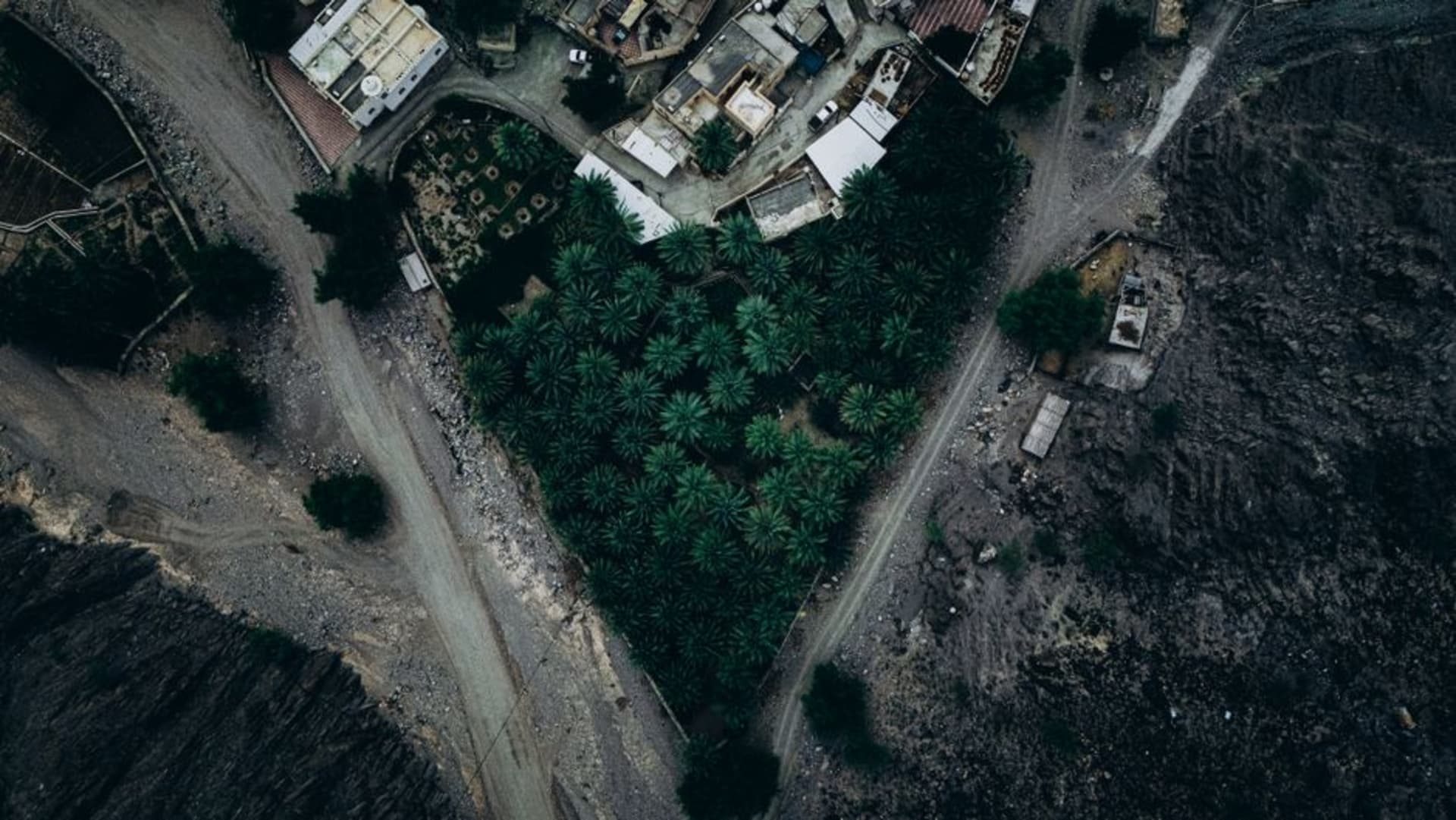
A remote mountain wadi in the western Hajar range, its terraced pools and stone villages barely touched by the tourism that reshaped Jebel Akhdar next door.
We’d already done Jebel Akhdar — the rose gardens, the viewpoint hotels, the whole well-trodden circuit — and Lia found Wadi As Sahtan almost by accident, a pin on a hiking forum with three comments, one of them just the word “stunning” and nothing else. It sits in the same general range, on the western side of the Hajar Mountains, but the contrast in how developed the two places felt could not have been sharper.
Up Through the Terraces
The road into Wadi As Sahtan climbs from the interior plains in a series of switchbacks that put Jebel Akhdar’s paved highway to shame — a rough track that our rental agency had explicitly told us not to attempt, which is exactly the kind of warning that gets Lia interested. We went anyway, in a borrowed 4x4 with a friend from Muscat driving, and the ascent revealed terrace after terrace of stone-walled fields clinging to slopes that seemed too steep for agriculture to make any sense.
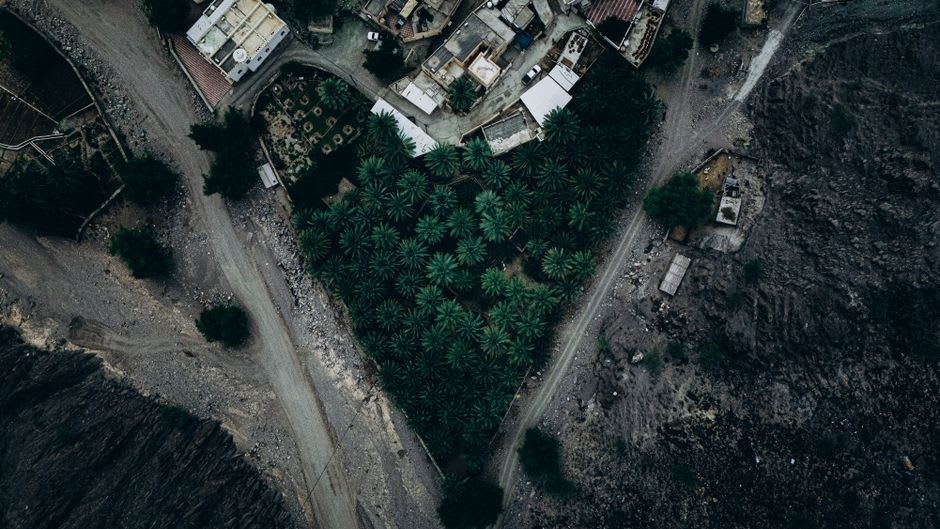
The villages here — small clusters of stone houses built directly into the mountainside, roofs flat and the color of the rock around them — looked barely inhabited at first glance, until an old man appeared from a doorway to wave us toward a wider spot to park, entirely unbothered by three strangers arriving unannounced. He told our driver, in Arabic none of us fully followed, that we were the first visitors he’d seen in weeks who weren’t from a nearby village.
Pools Between the Rock
Below the main settlement, a series of pools sit tucked into the folds of the wadi, fed by mountain springs and shaded by a scattering of old fig trees that somehow survive on this exposed a slope. We swam in the largest one, the water shockingly cold even in the heat of the day, while our friend chatted with two boys who’d wandered down to watch — more curious about our phones than about anything we were doing in the water. Nothing about the pools was groomed or signposted, and the walk down to them from the parking spot was steep enough that I regretted my shoe choice within the first five minutes.
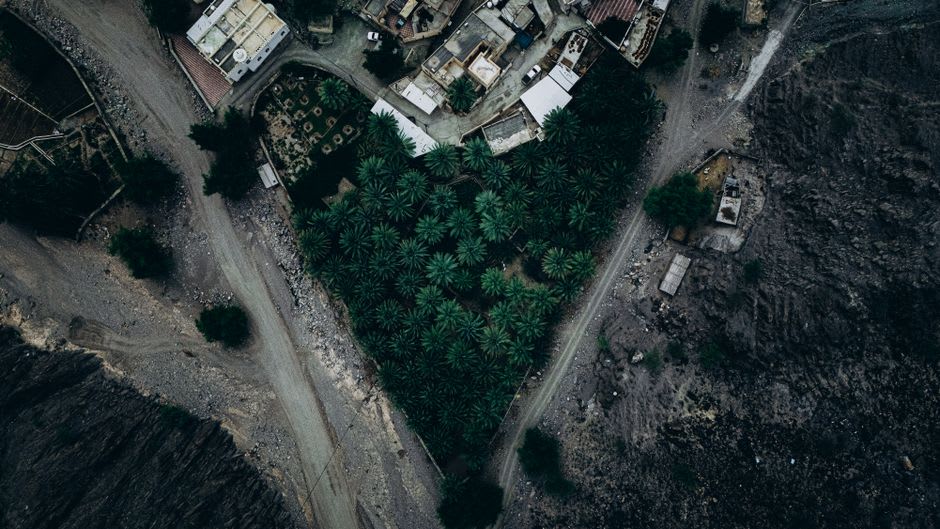
We stayed until the light started slipping down the far ridge, turning the terraces a deep gold, and drove back down switchbacks that felt considerably more alarming in the dark than they had on the way up.
When to go: October through April. The mountain track demands a 4x4, local driving experience, and a full tank — there is nowhere to refuel once you leave the main road.