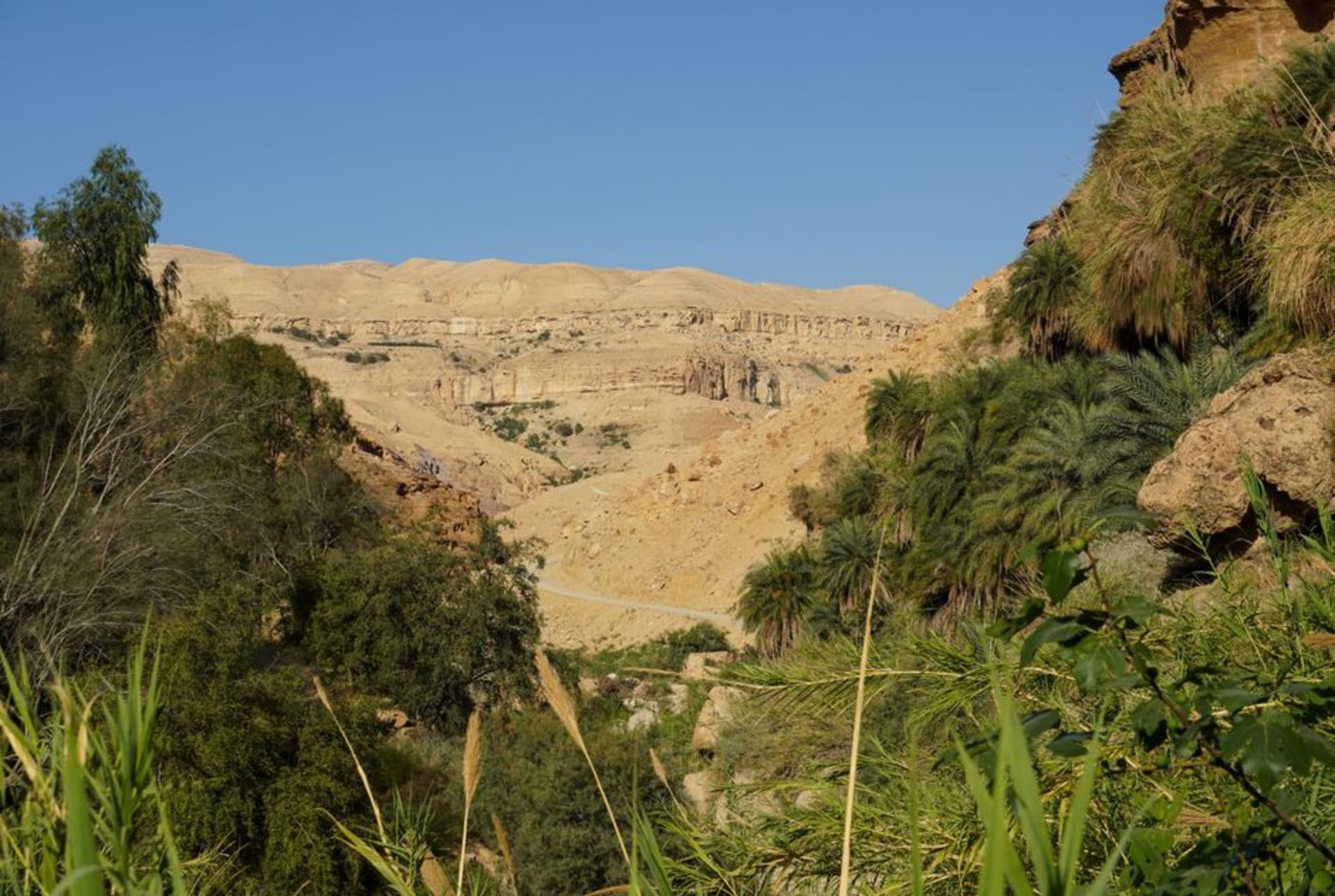
A wide highland plateau behind Jebel Akhdar's back ridge, its old stone village of Al Ghafat perched above terraced fields fed by an ancient falaj.
Wadi Mistal sits on the back side of the Al Hajar range, reached by a track that climbs out of Al Awabi and just keeps climbing, switchback after switchback, until the canyon walls suddenly pull apart and you’re looking at something closer to a highland basin than a wadi — a wide, flat plateau ringed by peaks, green with terraced fields, entirely unlike anything the drive up prepared me for.
Al Ghafat, Perched and Waiting
The old village of Al Ghafat sits on a rock outcrop at the plateau’s edge, its stone houses stacked against the cliff in the same defensive logic I’d seen elsewhere in the Al Hajar — build high, build tight, let the terrain do the work a wall would otherwise have to do. Most of the village is empty now, residents relocated to newer housing on the plateau floor, but the old stone structures remain intact enough to wander through freely. I climbed a crumbling staircase to what had once been a rooftop and found a clean view straight down the length of the wadi, terraces stepping away toward the valley mouth in shades of green that seemed almost implausible against the surrounding grey rock.
The Falaj That Feeds the Plateau
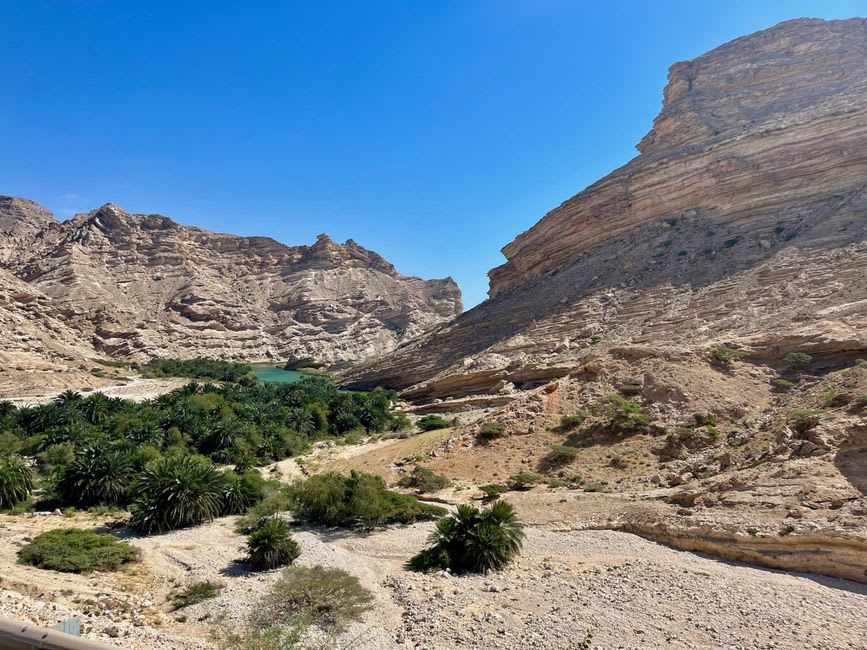
A falaj channel runs the length of the inhabited plateau, splitting into smaller feeder channels that irrigate wheat, alfalfa, and small orchards of pomegranate and fig. I followed one branch on foot for the better part of an hour, past a farmer clearing silt from a junction gate with a wooden paddle, the water diverted for a few minutes into his section before he closed the gate and let it continue toward his neighbor’s plot. Lia asked him, through a mix of gesture and the handful of Arabic words we’d picked up by that point in the trip, how the schedule was decided. He tapped his wrist, miming a clock, then shook his head and pointed at the sun instead — an older, simpler system than the one his gesture had first implied.
A Plateau, Not a Postcard
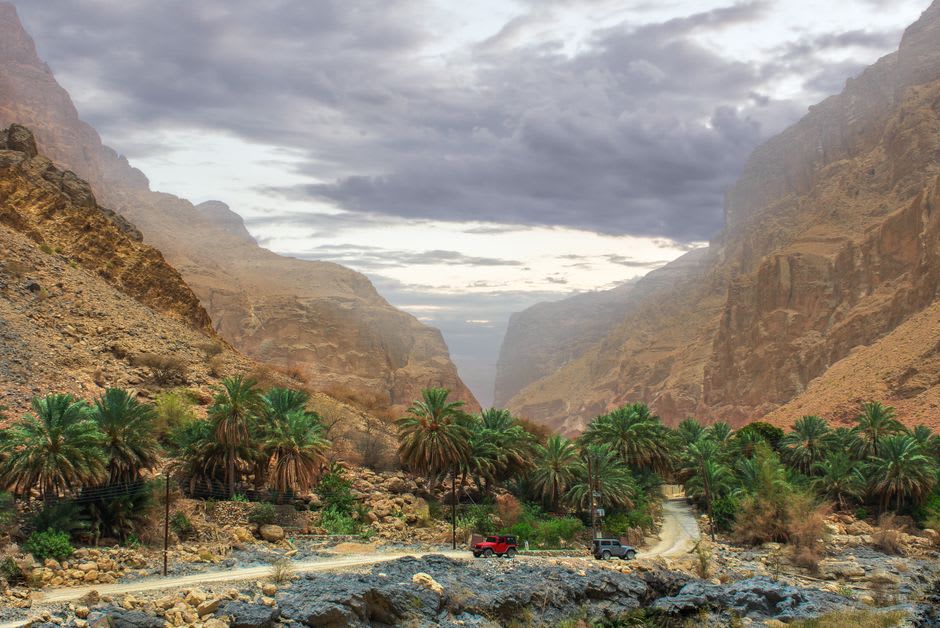
Wadi Mistal doesn’t have a single defining monument the way some of its neighbors do — no canyon rim, no famous cave, no village quite as photogenic as Balad Sayt. What it has is scale: a genuinely large, cultivated highland plateau, still working, still irrigated the old way, still populated in pockets even as the main village empties out. We spent most of an afternoon there without encountering another visitor, which after two weeks in increasingly well-trodden corners of the Al Hajar felt like its own kind of reward.
When to go: October through March, when the plateau’s elevation keeps daytime temperatures comfortable for walking the terraces. The access track requires a 4x4; low-clearance vehicles struggle well before the village itself comes into view.