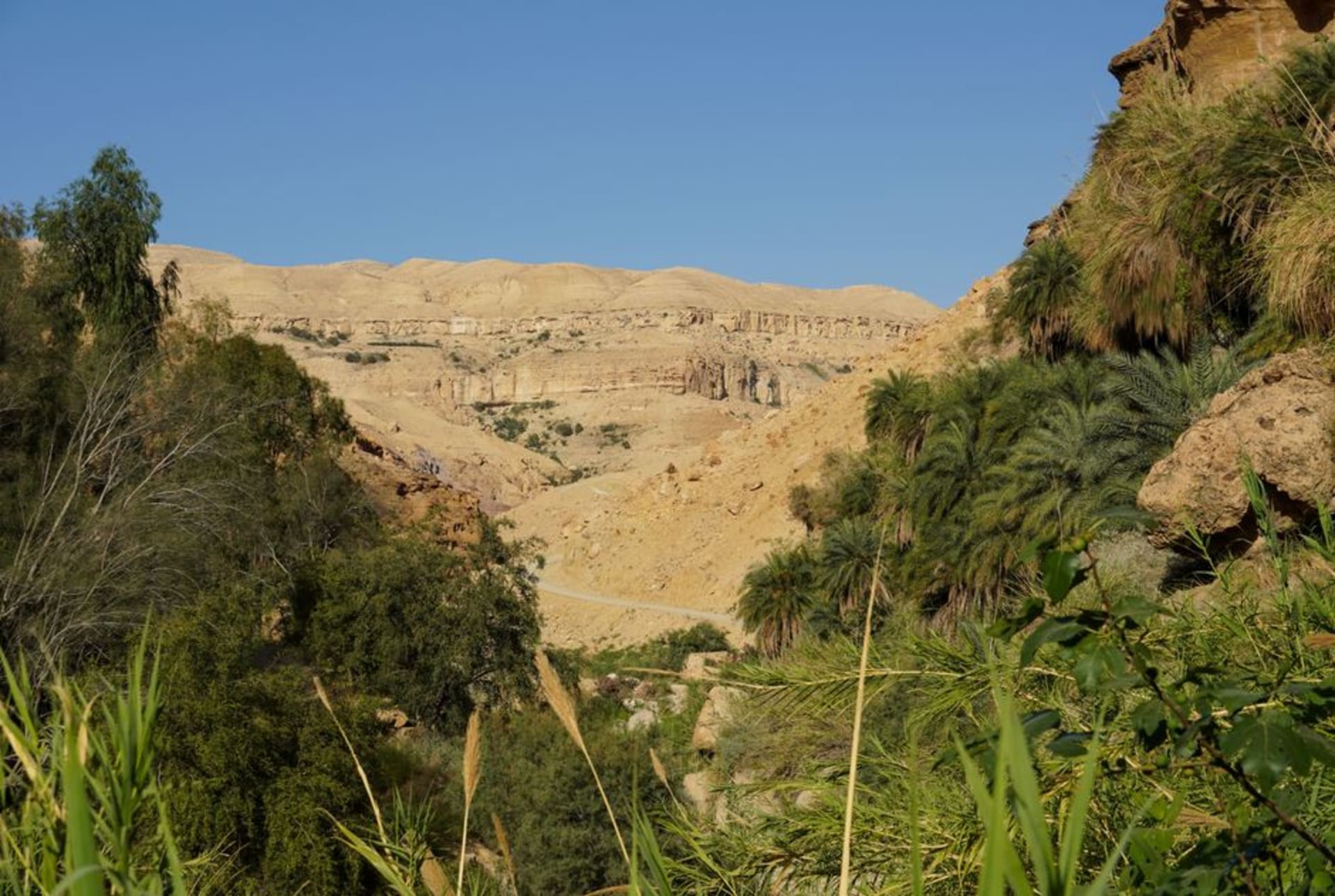
A moon-like canyon of striped rock and abandoned villages twenty minutes from Muscat, popular with off-roaders and almost nobody else.
A friend of a friend in Muscat had a Jeep and a Saturday free, and that’s how Lia and I ended up in Wadi Mayh instead of doing what every other visitor to the capital does on their last weekend — one more walk along the Mutrah corniche, one more visit to the Grand Mosque. Karim picked us up at seven, coffee thermos wedged between the seats, and said only that we should bring closed shoes and not eat too much breakfast.
Rock That Doesn’t Look Like Rock
The turnoff from the road toward Quriyat comes without warning, a gravel track branching off into hills that from the highway look like ordinary desert scrub. Within ten minutes of following the wadi bed, the landscape changes entirely — the canyon walls turn into folded, striated bands of ochre, grey, and deep rust, twisted at angles that make the rock look almost liquid, frozen mid-motion millions of years ago. Karim, who has driven this route more times than he could count, still slowed the Jeep to point at formations he clearly still found remarkable.
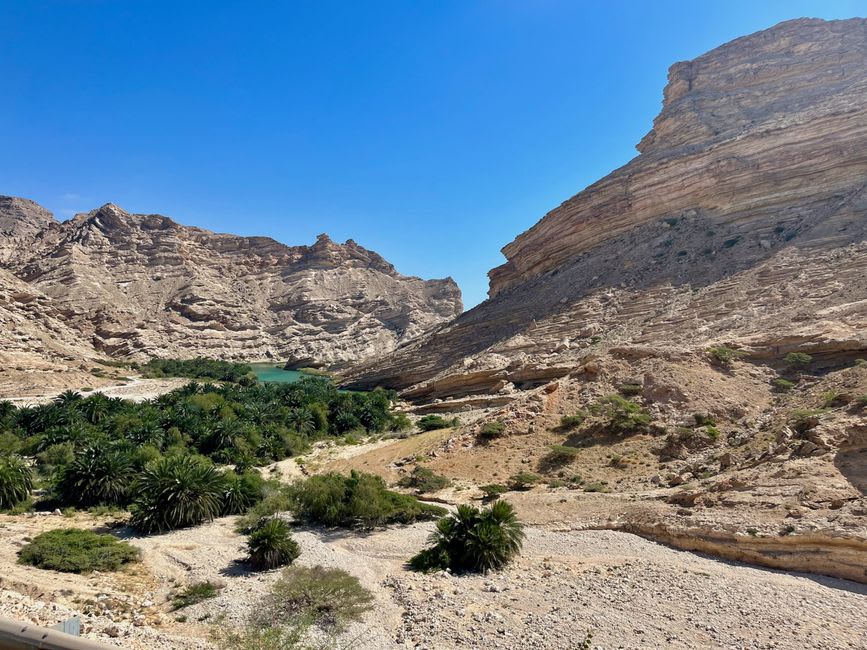
The track threads deeper into the wadi past scattered acacia and the occasional grazing goat, the surrounding hills growing steeper and more contorted, until the whole scene starts to feel less like a coastal Omani canyon and more like something out of a geology textbook — which, as it turns out, is close to the truth. Wadi Mayh cuts through some of the oldest exposed rock formations in the country, tectonic layers pushed up and folded over each other long before there was a Gulf to speak of.
The Village the Wadi Left Behind
Deeper still, we came across the remains of an abandoned settlement — stone houses roofless and crumbling, built into a bend in the canyon where a spring once made the location viable. Nobody could tell us exactly when it emptied out, only that it happened the way it usually does in rural Oman: younger generations moved to Muscat for work, and eventually there was no one left to maintain the falaj. Lia wandered through what was left of one house while I sat on a low wall and tried to imagine the sound of it occupied.
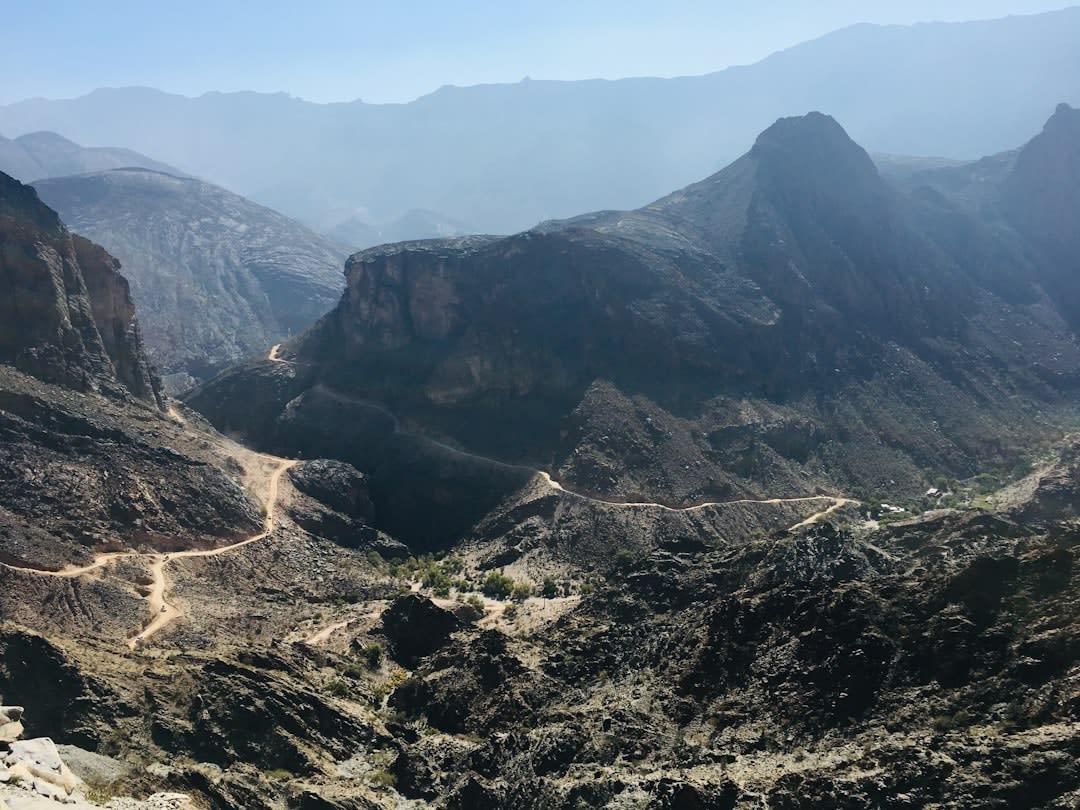
We ate lunch — Karim’s wife’s cooking, packed in tins — sitting on the tailgate with the strange striped hills all around us, and I remember thinking it was one of the few times in Oman I’d felt genuinely disoriented in a good way, like the country had one more landscape in reserve that nobody had told me about.
When to go: November through March, and only with a 4x4 — the wadi bed track requires clearance and some driving confidence, and there’s no cell signal for much of the route.