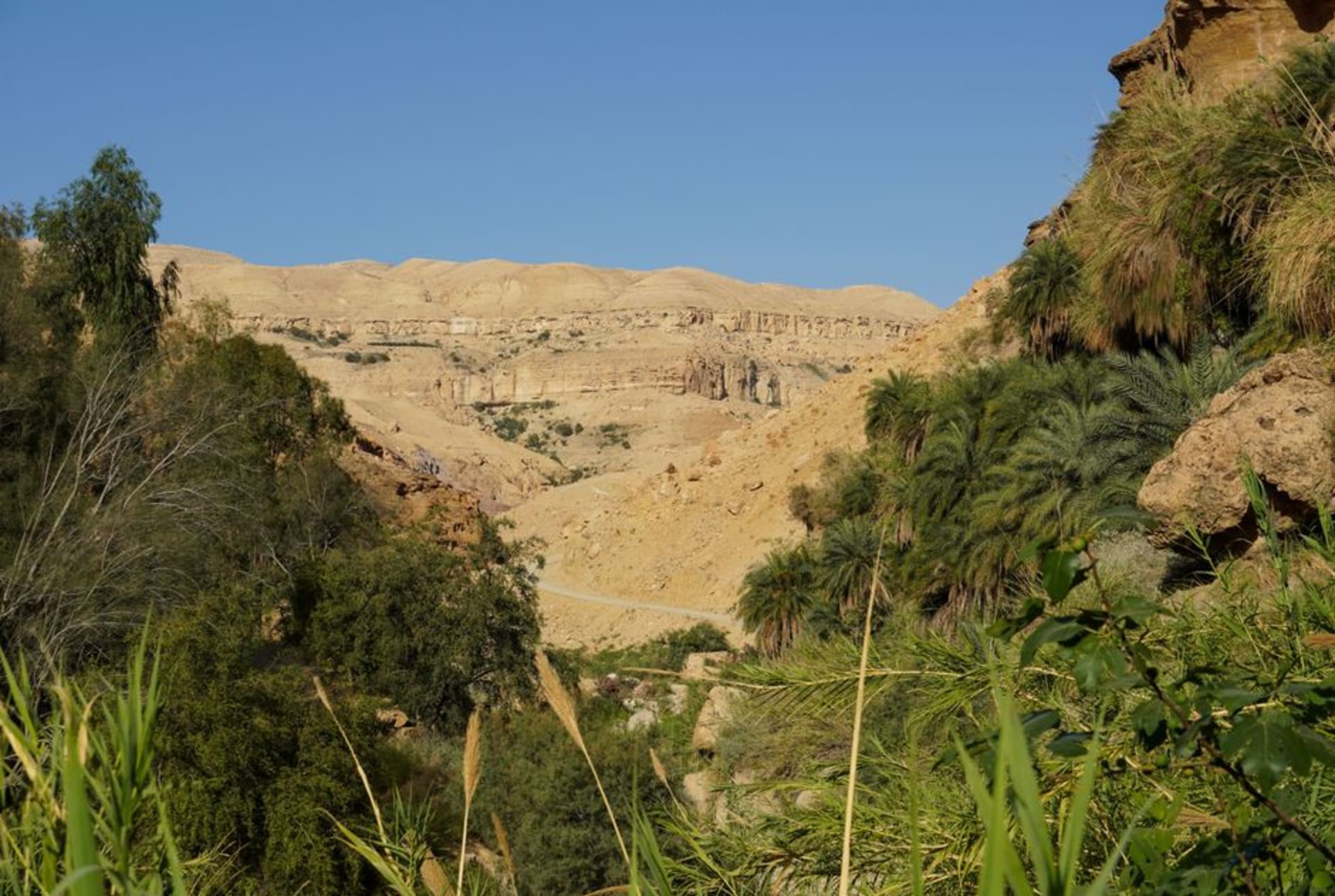
The village and canyon at the foot of the Grand Canyon of Arabia, where the scale of Jebel Shams finally becomes real.
Everyone who goes to Jebel Shams goes for the rim walk — the Balcony Walk along the plateau’s edge, the viewpoint hotels perched improbably close to a drop that some estimates put at over a kilometer. We did that too, on our first afternoon, and it was as vertiginous and photogenic as promised. But it was the drive down into Wadi Ghul itself, the village and canyon at the mountain’s base, that stayed with me longer.
The Village Under the Rim
Wadi Ghul sits where the road up to Jebel Shams begins, a scatter of stone and concrete houses tucked against the base of the escarpment that towers so directly overhead it changes the light in the village by early afternoon, the sun disappearing behind the ridge hours before actual sunset. We stopped there on the way up, more out of curiosity than plan, and found an old abandoned settlement built into the cliff face just above the modern village — mud-brick houses stacked in tiers, apparently occupied within living memory before residents moved down to the valley floor.
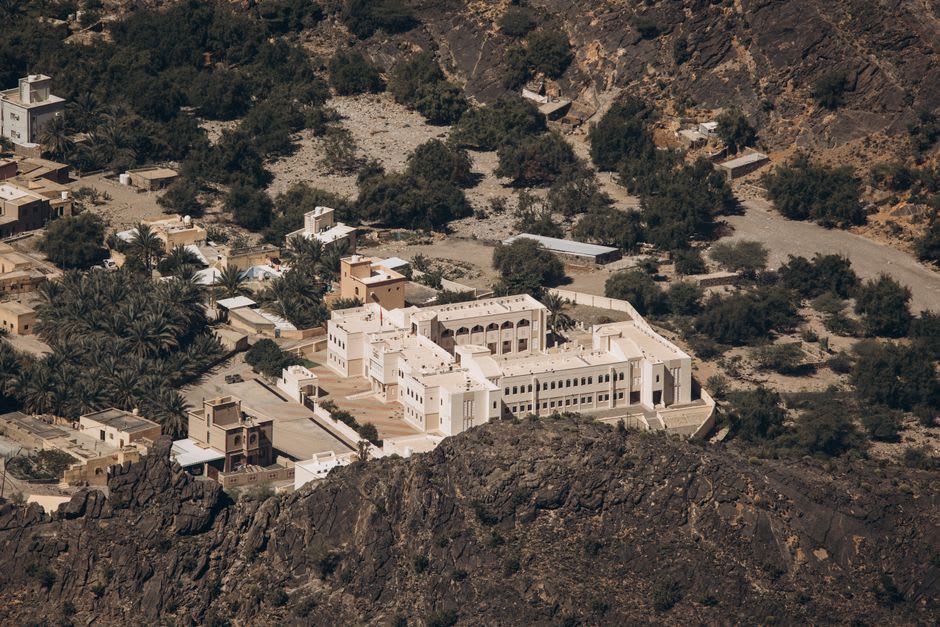
An old man tending a small vegetable plot near the ruins told us, through a mix of gestures and the little English he had, that his own grandfather had been born in one of those cliffside houses. It was one of those moments in Oman where the scale of the landscape — the sheer canyon wall rising behind him — made a small personal fact feel enormous by comparison.
Looking Up From the Bottom
What the rim viewpoints don’t give you is the reverse perspective: standing in Wadi Ghul and looking straight up at the canyon walls that from above look like a smooth drop but from below reveal themselves as tiered, folded, and immense, layers of pale rock stacked higher than anything else we saw in the country. Lia climbed a short way up a goat track behind the village for a wider angle while I stayed near the car talking with the same old man about the terraces his family still farmed lower in the wadi, irrigated by a falaj that predates the modern road by generations.
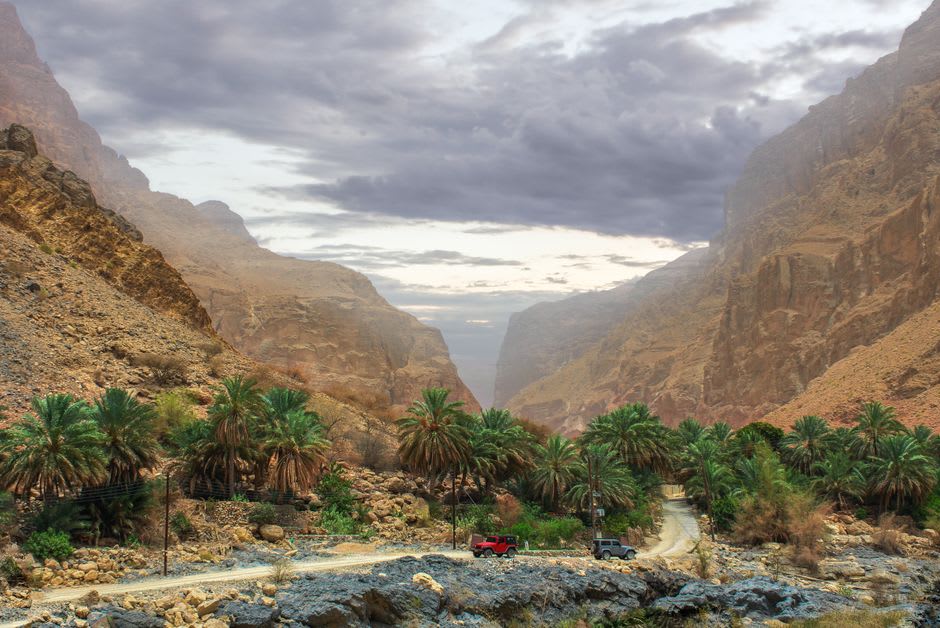
We drove up to the rim afterward for the famous view, and it was extraordinary, but I kept comparing it in my head to the village below — the two halves of the same canyon telling completely different stories depending on which end you started from.
When to go: October through April. The village and lower canyon are accessible without a 4x4, though the continuing road up to the Jebel Shams rim requires one and gets cold enough at night for a jacket even in spring.