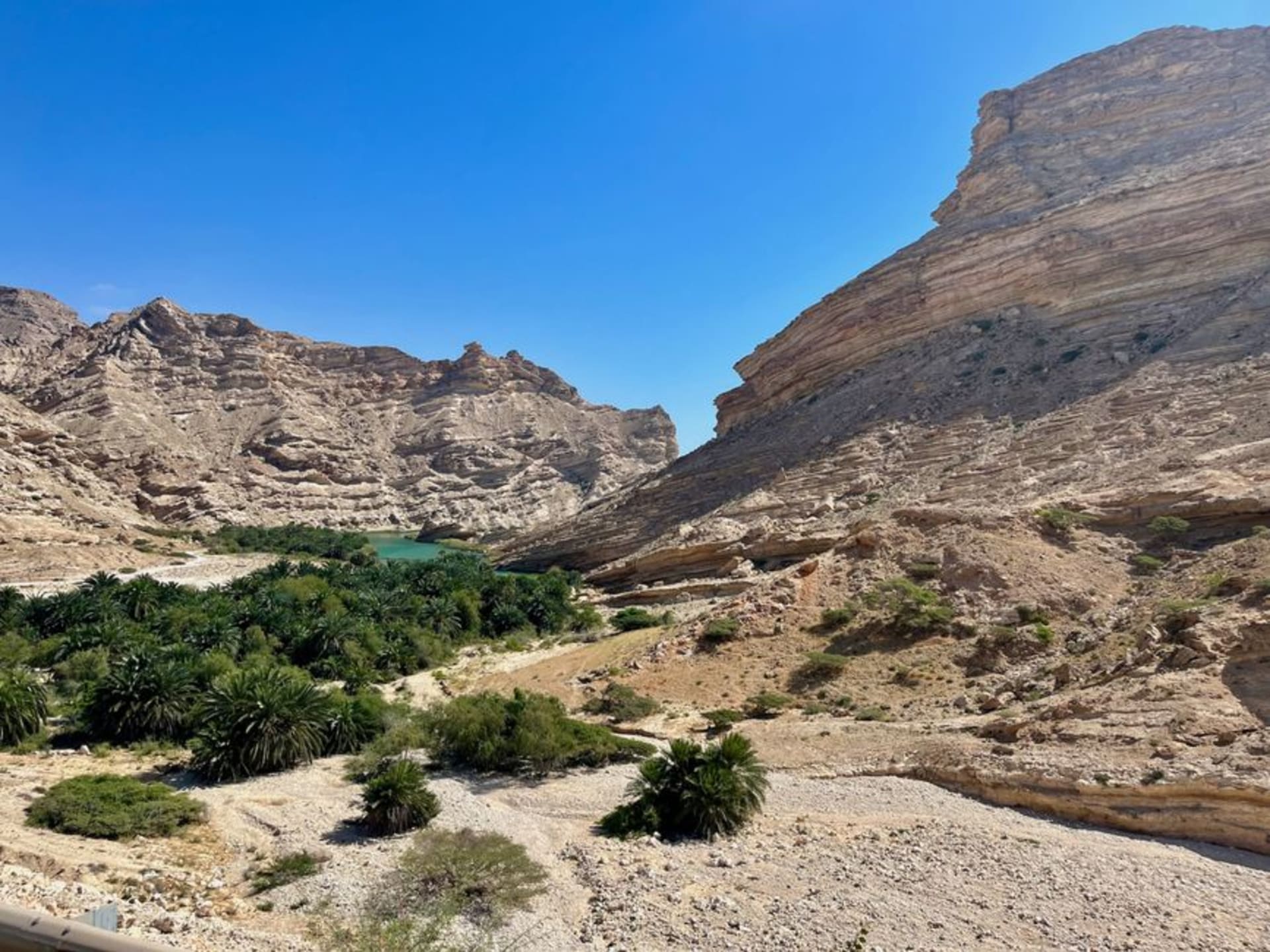
Wadi Darbat
"A lake that only exists for three months a year, and only if the clouds cooperate."
A limestone canyon lake that turns into a chain of roaring waterfalls the moment the khareef arrives.
I’d seen the photos before we went — a flat green lake pinned between limestone cliffs, cows grazing at the waterline like it was the Alps and not fifteen minutes from the Arabian Sea — and I assumed they’d been color-graded into something unrecognizable. Lia was convinced too. We drove up from Salalah on a gray, drizzling morning in early August, parked next to a row of plastic canoes for rent, and stood there in silence for a solid minute doing the same mental recalibration. The water really was that green. The cliffs really were that green. Nothing about it made sense on a peninsula famous for sand.
The Lake That Isn’t Always a Lake
Wadi Darbat only fills like this during the khareef, when the monsoon mist condenses on the Dhofar plateau above and runs down through a network of caves and channels into the canyon floor. Outside those months it’s mostly a dry riverbed with a few stubborn pools. We rented a canoe from a teenager who paddled it out to us with more confidence than either of us had in our own balance, and spent forty minutes drifting past cliffs dripping with moisture, egrets picking through the shallows, and — genuinely — a small herd of cows standing knee-deep in the lake, drinking, entirely unbothered by tourists.
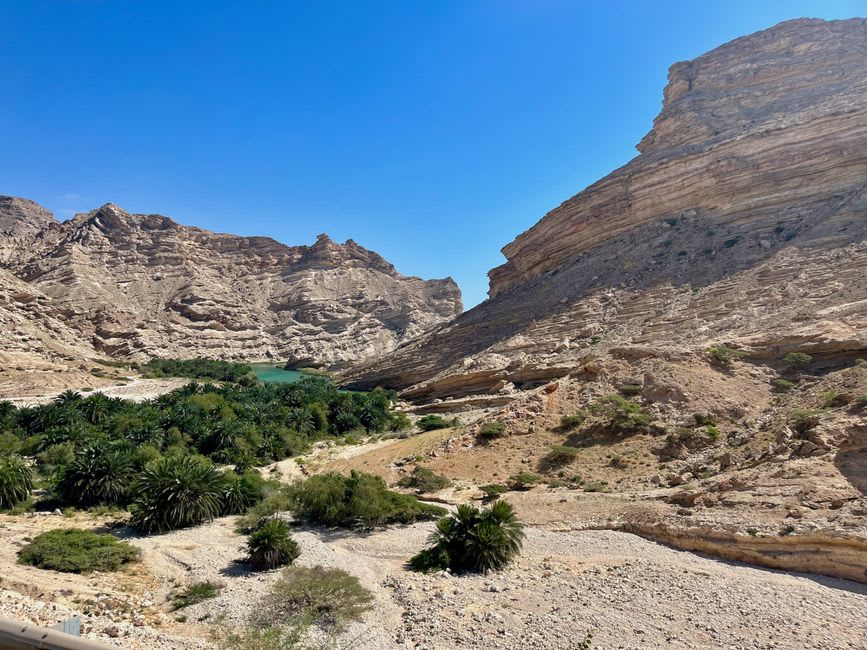
Where the Lake Becomes a Waterfall
The real spectacle is downstream, where the lake’s overflow pours over the canyon lip and drops into a series of waterfalls that, depending on rainfall, range from a modest curtain to a genuine roar. We hiked down a muddy track to the base of the lower falls, past a dozen Omani families who’d set up carpets and thermoses of karak tea directly in the spray, unfazed by getting soaked. A group of teenagers was cannonballing into the plunge pool below with the kind of joy that made me wish I’d brought a swimsuit instead of hiking boots. Lia did not have that problem and was in the water within five minutes, laughing at me standing on the bank with my camera.
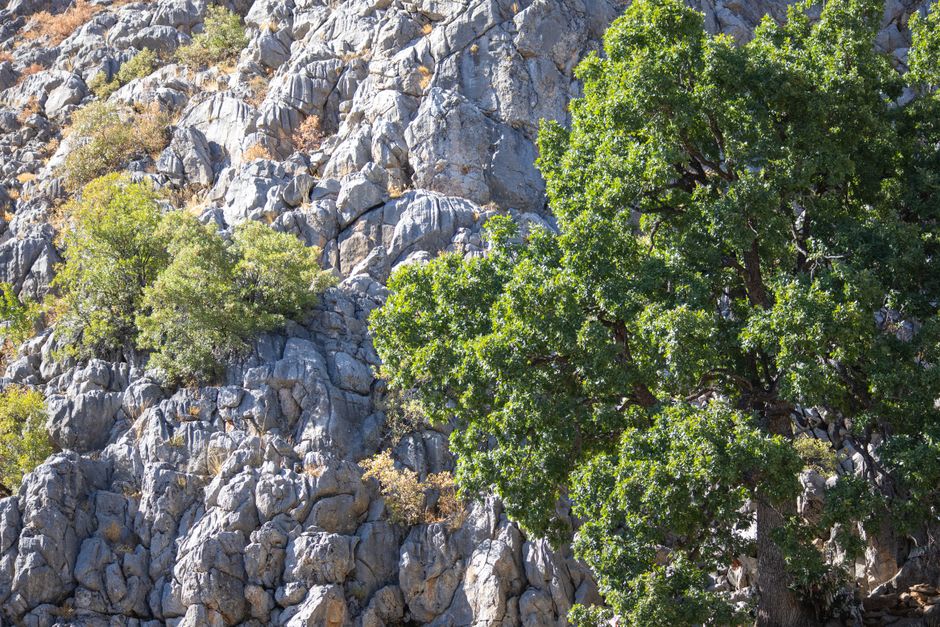
What struck me most was how thoroughly local the whole scene felt. This isn’t a spot performing for foreign visitors — it’s where Omani families from Muscat and beyond come to escape the summer heat, exactly like we would. We ended up sharing our thermos of coffee with a family from Sohar who’d driven twelve hours for this exact lake, this exact green, and told us they came back every single khareef without fail.
When to go: Late June through early September, during the khareef. The lake needs a few weeks of monsoon rain to fill properly, so early-to-mid August tends to give the fullest water and the loudest waterfalls. Outside the monsoon, the wadi is dry and there’s little reason to detour here.