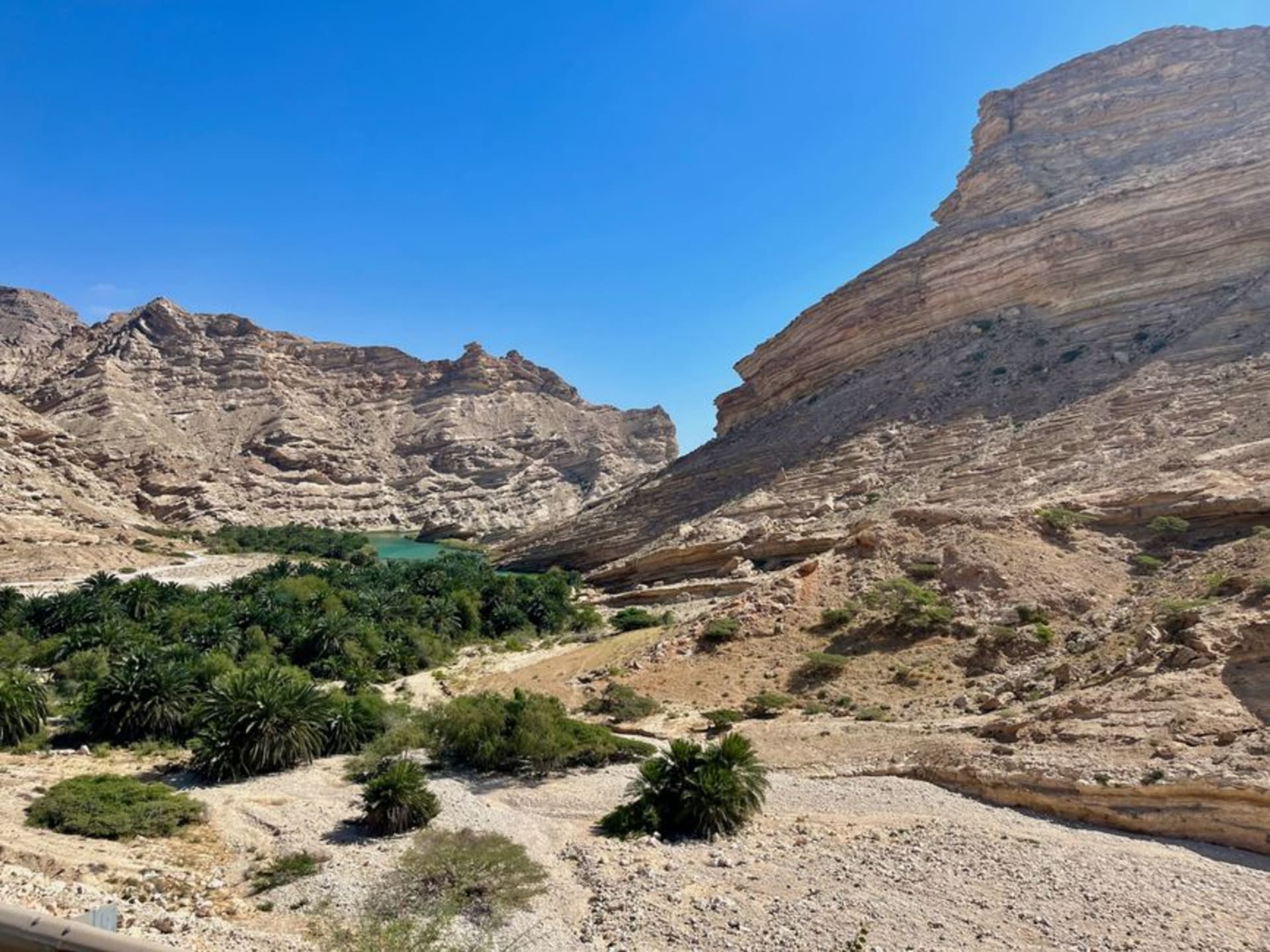
One of the Al Hajar's longest and least-visited canyons, threading past ancient tombs, orchard villages, and a spring-fed pool at its source.
Wadi Bani Kharus doesn’t appear on most Oman itineraries, and after driving its length I think that’s mostly a matter of marketing rather than merit. It runs deep into the Al Hajar range from the town of Al Awabi, one of the longest wadi systems in the mountains, and unlike its more famous neighbors it offers no single postcard moment to anchor a tour brochure around. What it offers instead is scale — kilometer after kilometer of canyon, village, and terrace, with almost nobody else in it.
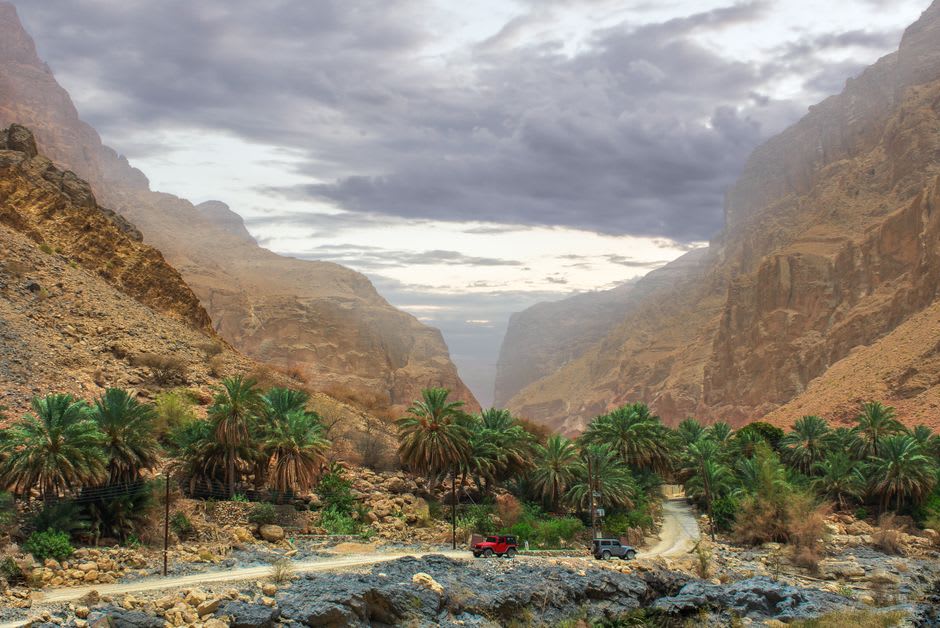
Villages Strung Along the Water
The road follows the wadi bed past a string of small settlements — Al Hijar, Wakan, and others whose names I never fully sorted out — each one a cluster of stone and mud-brick houses set against terraced gardens of date palm, pomegranate, and lime. We stopped at one village where an elderly man was repairing a section of falaj channel with wet clay, patient and unhurried, and watched for a while without either of us interrupting him. Lia asked, through gestures more than words, how old the channel was. He gestured back, both hands spread, a shrug that seemed to mean older than anyone currently living could say for certain.
The Beehive Tombs Above the Canyon
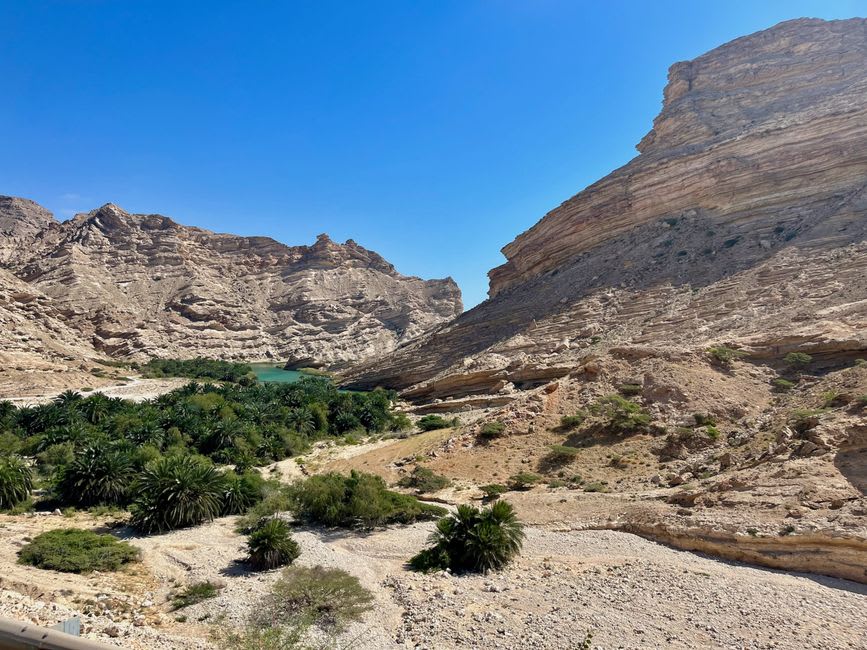
Scattered on the ridgelines above the wadi are Bronze Age beehive tombs — small stone burial structures, some five thousand years old, scattered across this stretch of the Al Hajar in numbers that still aren’t fully catalogued. We hiked up a loose scree slope to reach a cluster of six, weathered down to low stone mounds now but unmistakably deliberate, arranged with a view back down over the canyon that felt too good to be accidental even after five millennia. Archaeologists still debate exactly who built them. Standing up there, canyon wind picking up dust around our boots, the debate felt appropriately unresolved.
The Spring at the Canyon’s End
Driving as far as the track allows brings you to a spring-fed pool near the wadi’s source, fed by water emerging directly from the rock, cold enough to make you gasp on entry even in the mountain heat. We had it entirely to ourselves on a Tuesday afternoon — no other cars, no other footprints in the sand around the pool, just the sound of water dripping off an overhang and a pair of Egyptian vultures circling somewhere above the canyon rim. It was, without qualification, the quietest place I found anywhere in the Al Hajar range.
When to go: October through April for manageable driving temperatures. A high-clearance vehicle is recommended past the first few villages — the track deteriorates the further you go, and there is no phone signal for much of the canyon’s length.