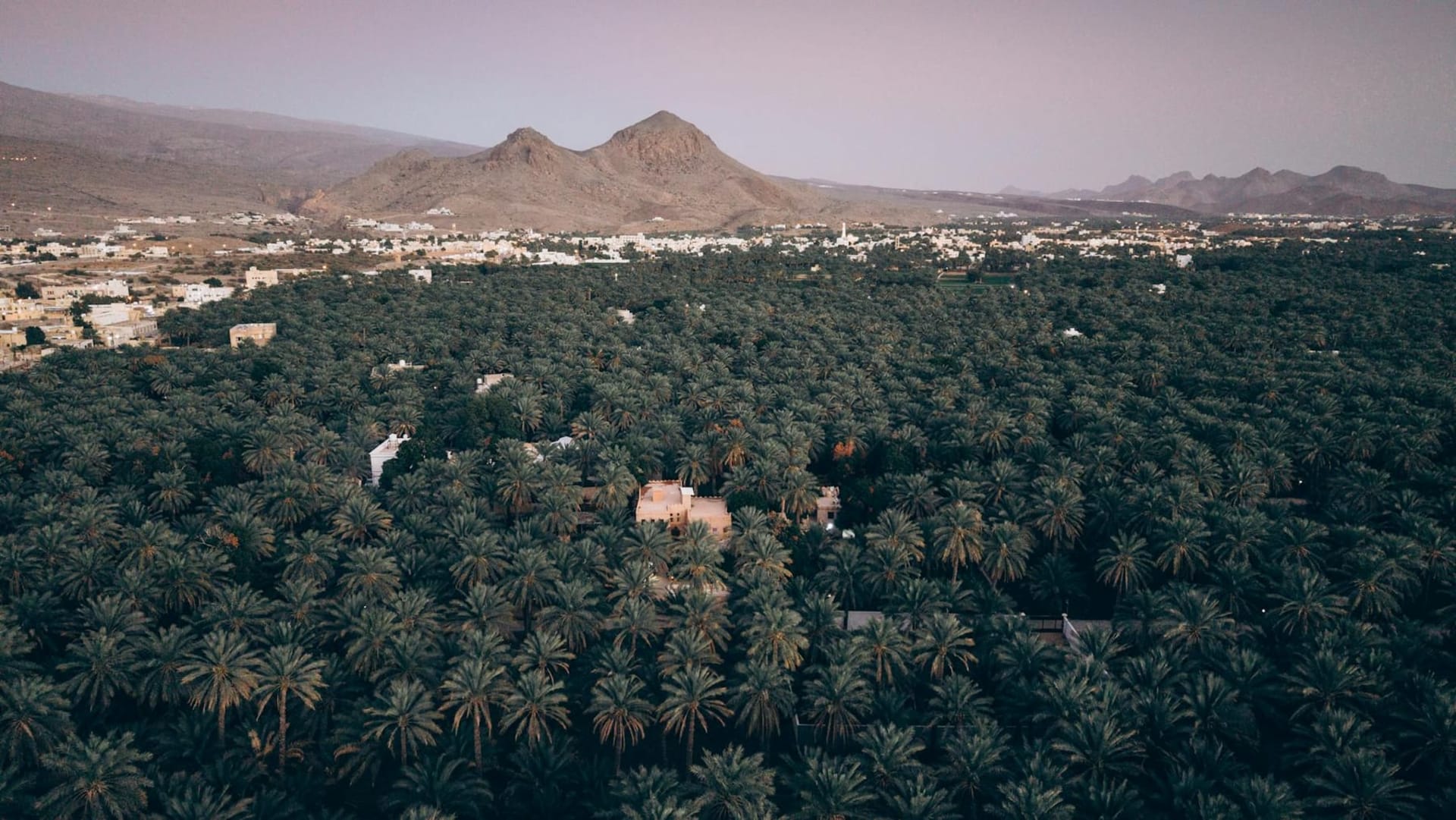
The city that turns tropical during the khareef — green hills, thundering waterfalls, and ancient frankincense routes.
I arrived in Salalah in early August expecting a dusty southern Omani town — somewhere functional, a waypoint before the Empty Quarter. What I found instead was fog pressing against my window at six in the morning, the smell of wet earth and something resinous I couldn’t name yet, and coconut palms lining Al Nahdha Street in a long, improbable row. The rest of Oman was baking. Here, the khareef had come.
A City That Reinvents Itself Each Year
The monsoon that reaches Salalah is not the same creature that soaks India or Southeast Asia. It arrives oblique and cool, a low mist rather than a downpour, and it turns the Dhofar mountains behind the city an almost violent shade of green. I drove the Ittin road up into those hills on the second day, the car climbing through cloud, waterfalls emerging from the rock face every few hundred meters — Ayn Athum, Ayn Razat — each one a small world of ferns and dripping stone. Lia sat with the window down the entire way, hand trailing through the mist, saying nothing for long stretches, which is how I know a place has landed on her.
Down in the city itself, the fish souq near the corniche opened before dawn. I went alone one morning while it was still dark, and the smell hit first: brine and iodine, crates of hammour and kingfish, men in white dishdasha moving efficiently through the blue fluorescent light. I bought a bag of dried shark from a vendor who seemed surprised I knew what it was, and ate it later that evening with khubz and a bowl of shuwa-spiced rice from a small restaurant on 23rd July Street that had no English menu and no apparent interest in acquiring one.
The Frankincense Trees Change Everything
What I hadn’t prepared for was how the frankincense would feel in context. I’d bought the resin in souqs from Muscat to Marrakech, but standing at Wadi Dawkah — a UNESCO-protected grove an hour north of the city — in front of trees that have been bled for their sap for five thousand years, the substance acquired a different weight. The trees are small, gnarled, almost apologetic-looking. The resin pearls from cuts in the bark and hardens in the dry air. The Dhofar plateau smells of it faintly even when no one is burning anything, a background note under the grass and the wet stone.
The unexpected discovery came on the last day, driving back from Mirbat along the coastal road: a stretch where the mountains met the sea at a perfectly vertical cliff face, clouds sitting exactly at their summit, the ocean below it a hard turquoise. No sign, no overlook, nothing marked on the map. We stopped on the shoulder and stood there for twenty minutes without speaking.
When to go: The khareef runs from late June through early September — come in July or August for the fullest green and the waterfalls at their most dramatic. Outside this window, Salalah reverts to hot and arid, and the magic is largely absent.