A hilltop park crowned by a giant incense burner monument, with the best free view of Muttrah harbour in the city.
Nobody told me about Riyam Park before I got to Muscat — I spotted the giant white structure from the corniche one evening, assumed it was some kind of water tower, and only later learned it was a deliberately oversized sculpture of an Omani incense burner, standing watch over Muttrah from a hill on the eastern edge of the harbour.
The Burner on the Hill
The monument itself is simple in concept — a scaled-up mabkhara, the traditional frankincense burner found in nearly every Omani home — but its scale changes the meaning entirely. From certain angles along the corniche it looks almost architectural, a fifth landmark alongside the two forts and the palace. Climbing up to it in the late afternoon, past a small amusement park that’s seen better decades, I found almost no other tourists, just a handful of Omani teenagers taking selfies against the railing.
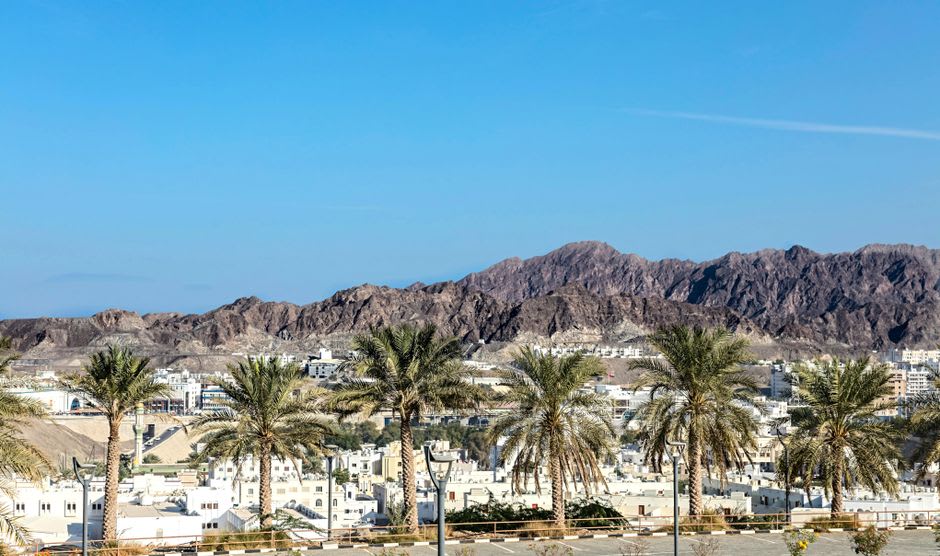
The View That Makes the Climb Worth It
What sells Riyam Park isn’t really the monument — it’s the view from beside it. Muttrah harbour unfolds below in full: the dhows at anchor, the curve of the whitewashed corniche, Al Mirani fort at the far headland, and behind it all the jagged brown hills that hem Muscat in on every side. I’ve paid for rooftop bars in other cities for a worse version of this exact view.
Getting There
The park sits a short taxi or determined walk from the Muttrah souq, up a winding road that gains height quickly. There’s no entrance fee for the upper viewpoint, though the small funfair below charges for rides that looked, charitably, retro. Go for the walk and the view, skip the rides.
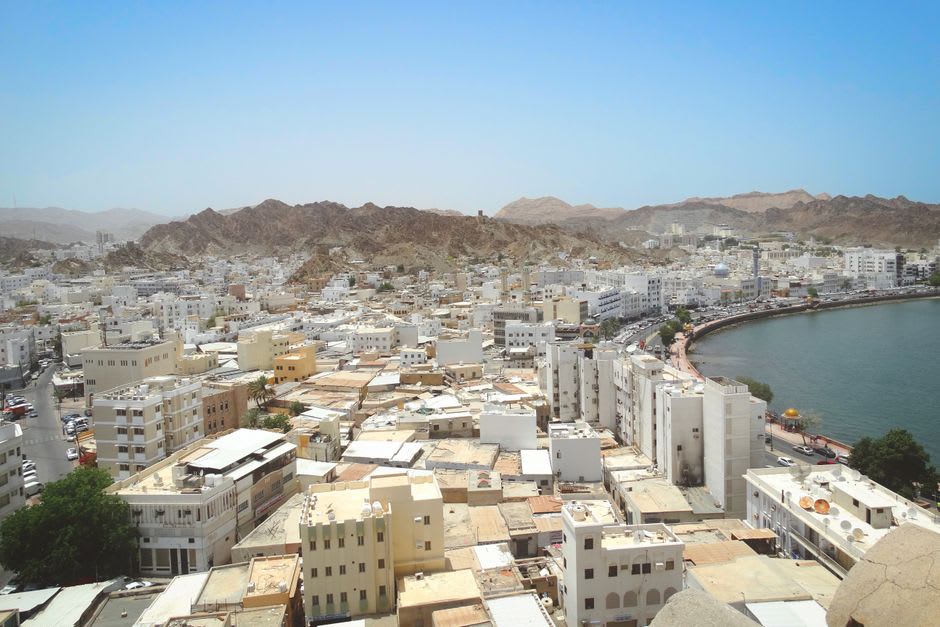
When to go: Late afternoon into early evening, when the climb is bearable and the harbour view below turns gold before sunset.
Keep exploring
More from Oman
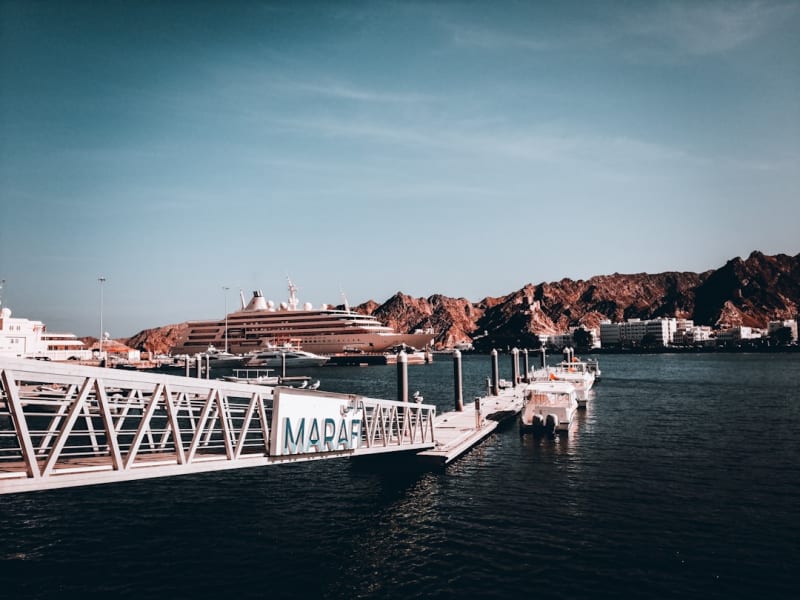 oman
oman Royal Opera House Muscat
Sultan Qaboos's marble monument to music, where Omani craftsmanship meets an international opera season.
Explore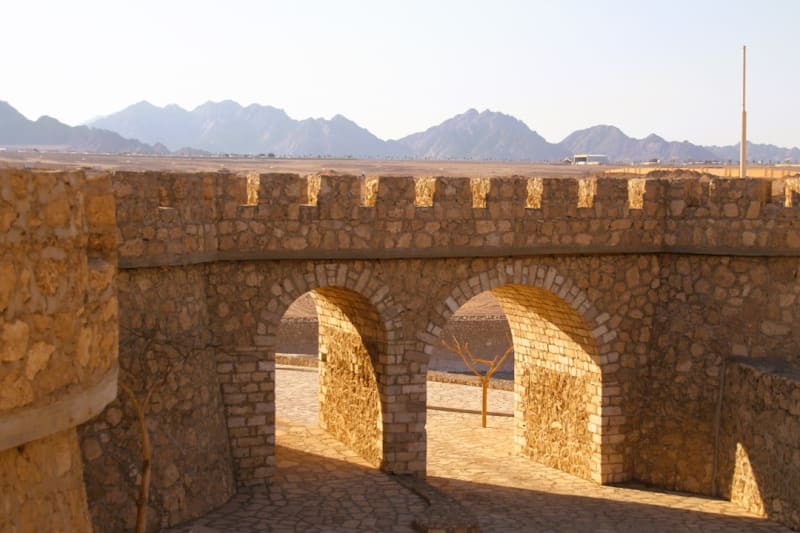 oman
oman Rustaq Fort
A former Ya'arubi capital's fortress with a working blacksmith inside its walls, and hot mineral springs bubbling out of the ground a short walk away.
Explore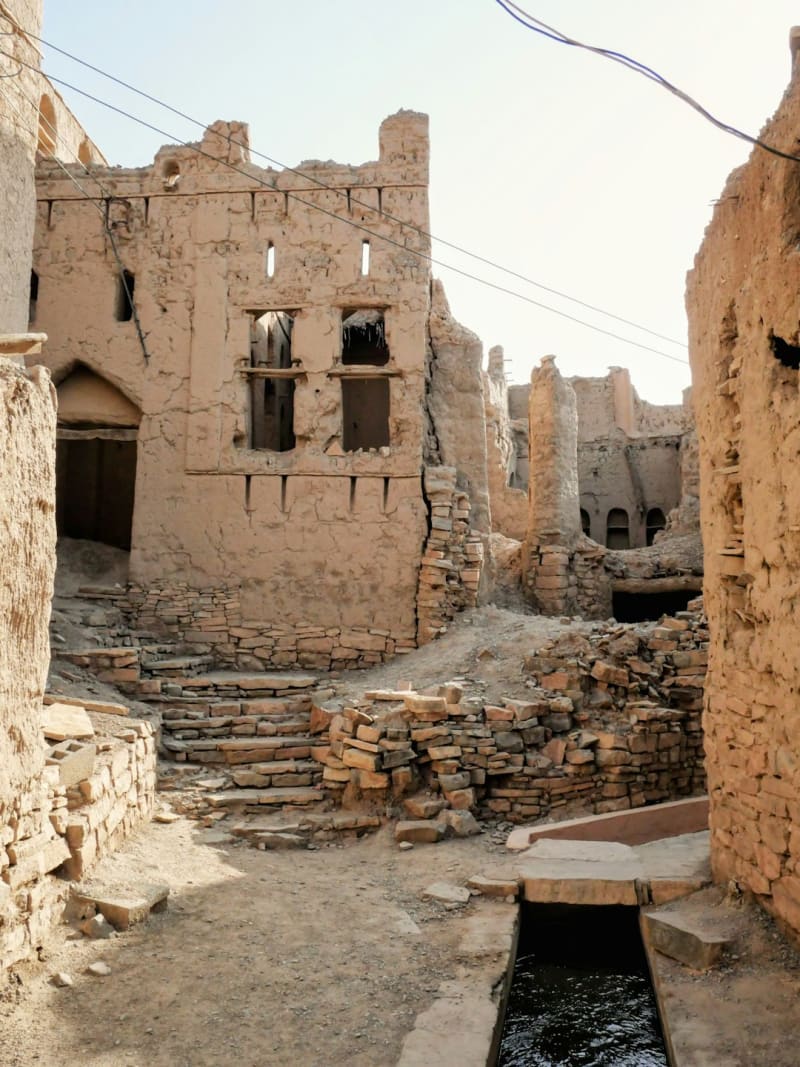 oman
oman Sadah
A working fishing port on the far Dhofar coast, and the last real outpost before the open water crossing to the Hallaniyat Islands.
Explore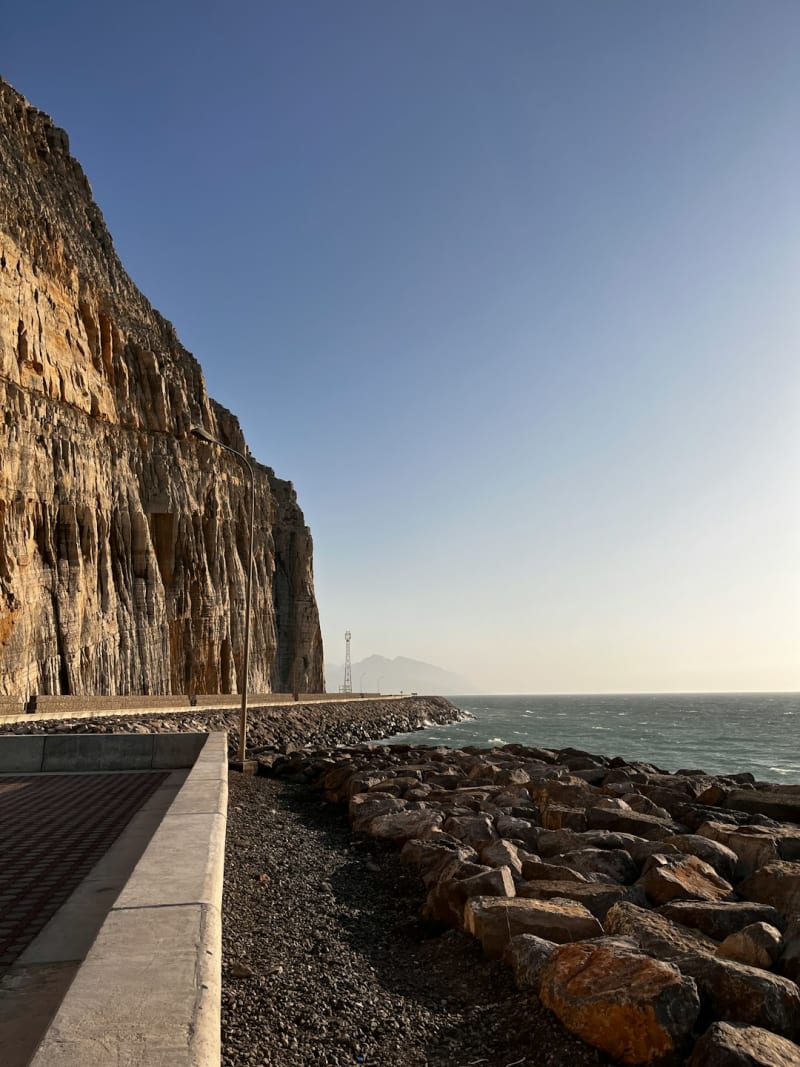 oman
oman Saham
A working Batinah fishing town with a seaside fort ruin and one of the coast's largest fish auctions, running with zero concessions to tourism.
Explore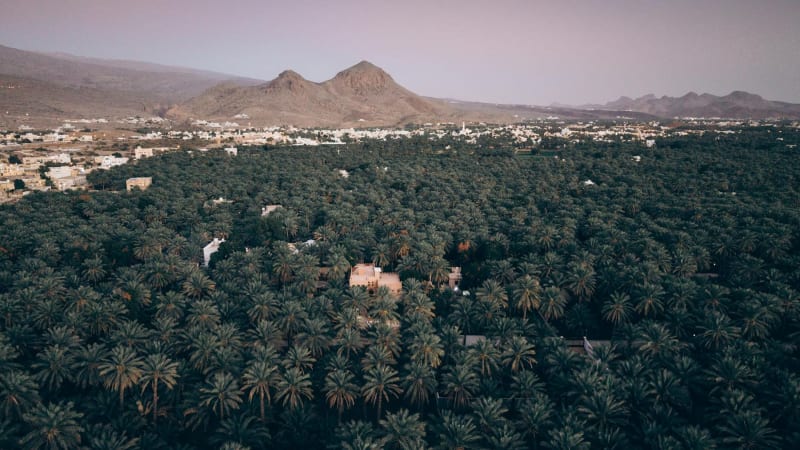 oman
oman Salalah
The city that turns tropical during the khareef — green hills, thundering waterfalls, and ancient frankincense routes.
Explore oman
oman Samail
The mountain gap town that has controlled passage between coastal Oman and the interior for over a thousand years, its fort and falaj still marking the choke point.
Explore