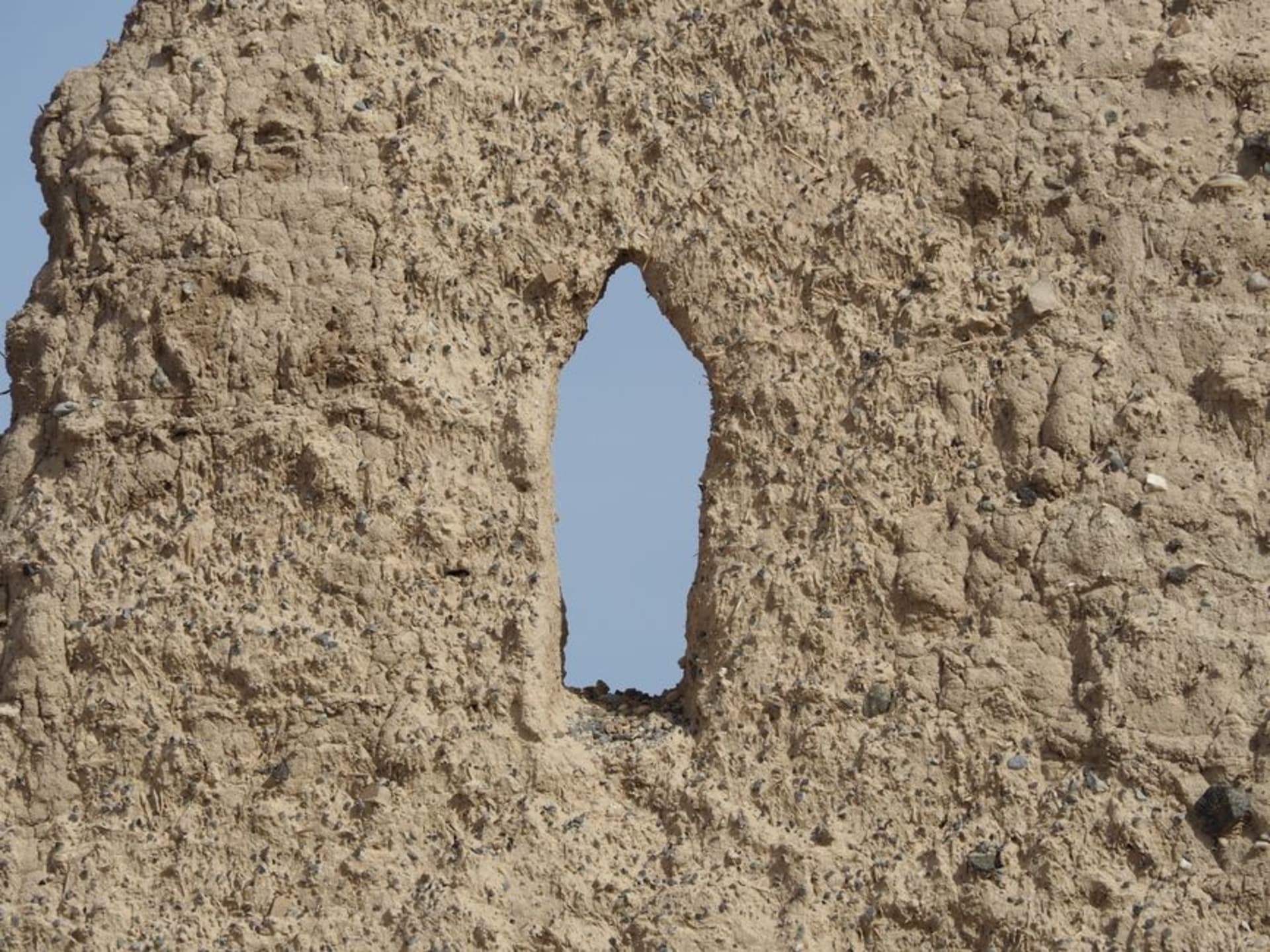
A UNESCO ruin field on the coast road, once a medieval trading port praised by Marco Polo and now just a lone tomb and a scatter of stone.
We nearly didn’t stop. Qalhat sits right off the highway between Sur and Muscat, marked by a small brown sign easy to miss doing a hundred kilometres an hour, and there’s nothing from the road to suggest that what’s behind the fence was once one of the most important ports on the Indian Ocean trade route.
Marco Polo passed through Qalhat in the thirteenth century and wrote it up as a wealthy, well-fortified city living off the horse trade to India. Ibn Battuta visited too, and thought enough of it to record impressions of its mosque and its ruler’s justice. Then in the sixteenth century the Portuguese sacked it, and a later earthquake finished what they started. What’s left today is a UNESCO World Heritage site consisting mostly of foundations, a restored city wall, and one genuinely striking structure that survived everything: the mausoleum of Bibi Maryam.
Bibi Maryam’s Tomb
The mausoleum is a squat, ribbed dome built in a style you don’t see replicated anywhere else in Oman, its exterior scored with vertical grooves that give it an almost pleated look against the flat coastal light. Nobody is entirely certain who Bibi Maryam was — a ruler’s wife, most accounts agree, from the Hormuz dynasty that controlled Qalhat in its final prosperous century — but the tomb has outlasted every record of her actual life.
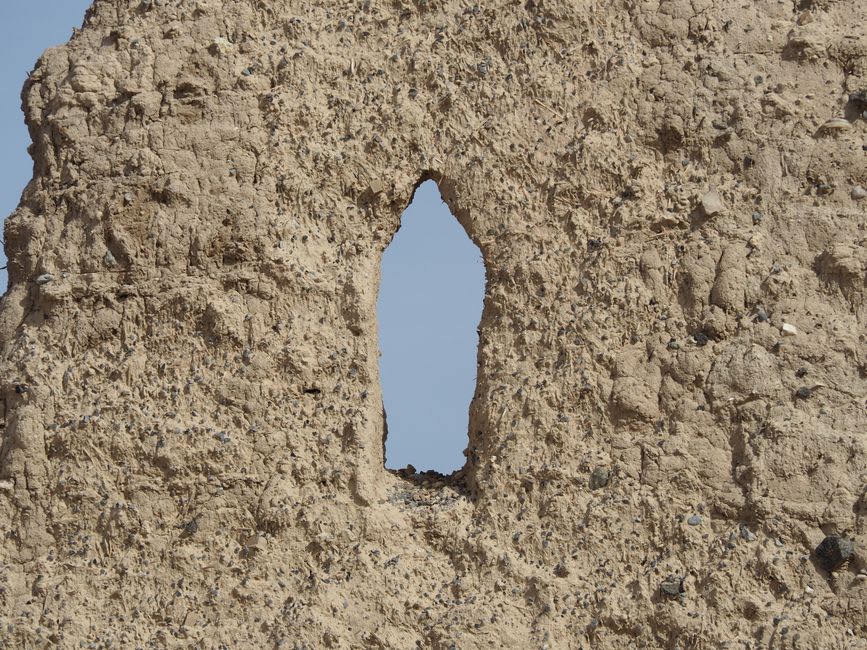
We had the site to ourselves on a weekday morning apart from a groundskeeper trimming something in the shade. Walking the low stone walls that mark out where houses and a mosque once stood, with the sea on one side and the Hajar mountains rising sharp on the other, gave me the closest thing to a genuine time-collapse feeling I had anywhere in Oman.
Standing Where a City Used to Be
There’s an interpretive boardwalk now, part of a restoration project completed in the last decade, with signage explaining what little is confirmed about the layout. Most of the city itself remains unexcavated beneath the sand — what you see is a fraction of what was once here.
It pairs easily with Sur, fifteen minutes further south, or as a quiet, five-minute detour if you’re driving the coast road and want fifteen minutes of medieval trading history between wadis.
When to go: October to April for tolerable midday heat — there’s very little shade across the site. Early morning light is best for photographing the mausoleum’s dome.