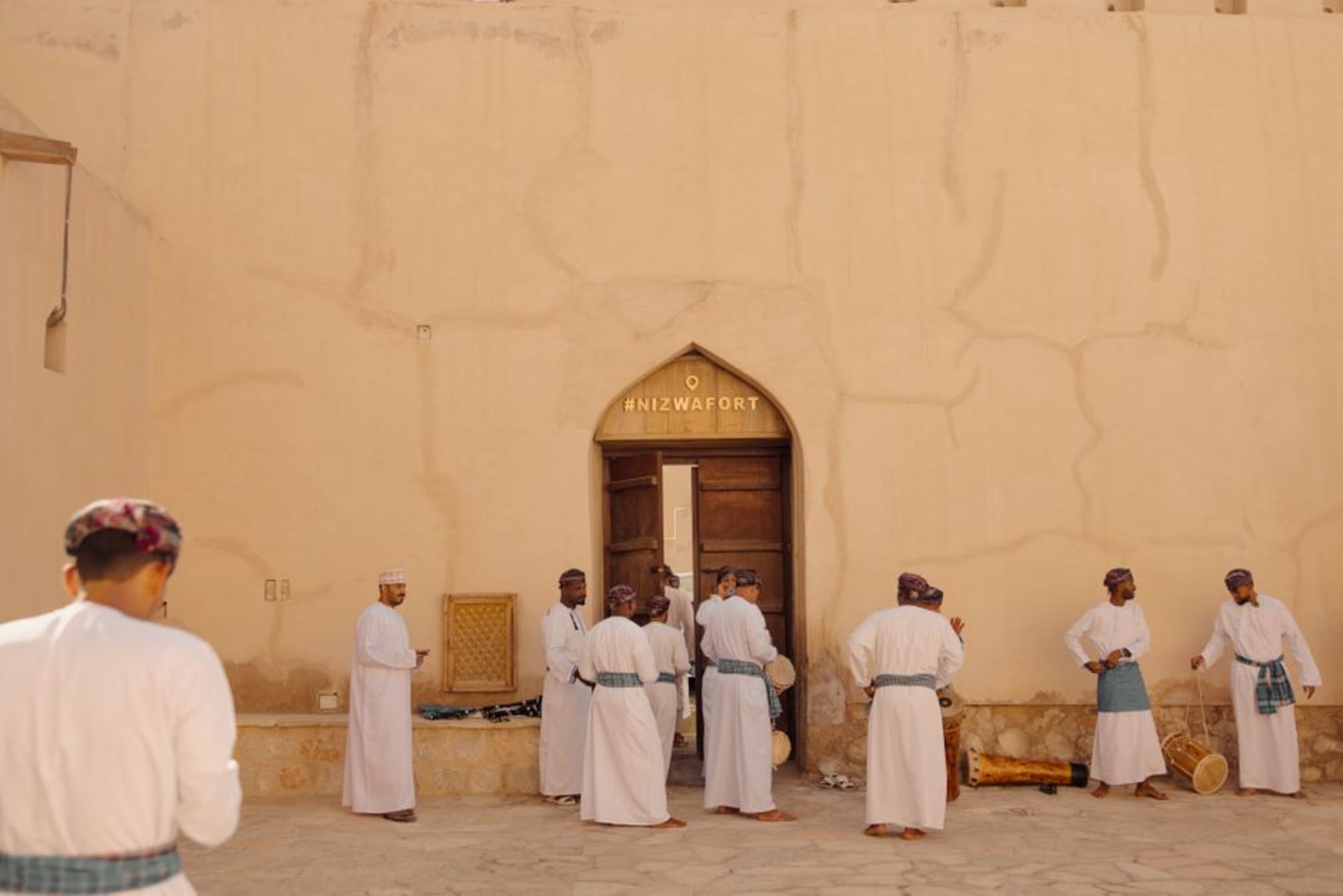
A quiet interior town built around Al Fiqain, a twin-towered fort standing guard over a labyrinth of abandoned mud-brick lanes nobody bothers to visit.
Manah sits close enough to Nizwa that most people driving between Muscat and the interior pass its turnoff without a second thought, assuming whatever it has to offer must be a lesser version of the fort and souq twenty minutes up the road. That assumption cost us almost nothing to test and turned out to be entirely wrong.
Two Towers, One Fort
Al Fiqain Fort — the name means “the two towers” — is Manah’s centerpiece, a fortress distinguished by twin cylindrical towers connected by a shared wall rather than the single dominant keep most Omani forts favor. The structure has been restored well enough to walk through freely, its interior a sequence of storage rooms, a mosque, and stairwells connecting the towers at different levels. Standing on the wall between the two towers, I had a clean view down into the old town’s rooftops, flat mud-brick surfaces stepping down toward a dry wadi bed.
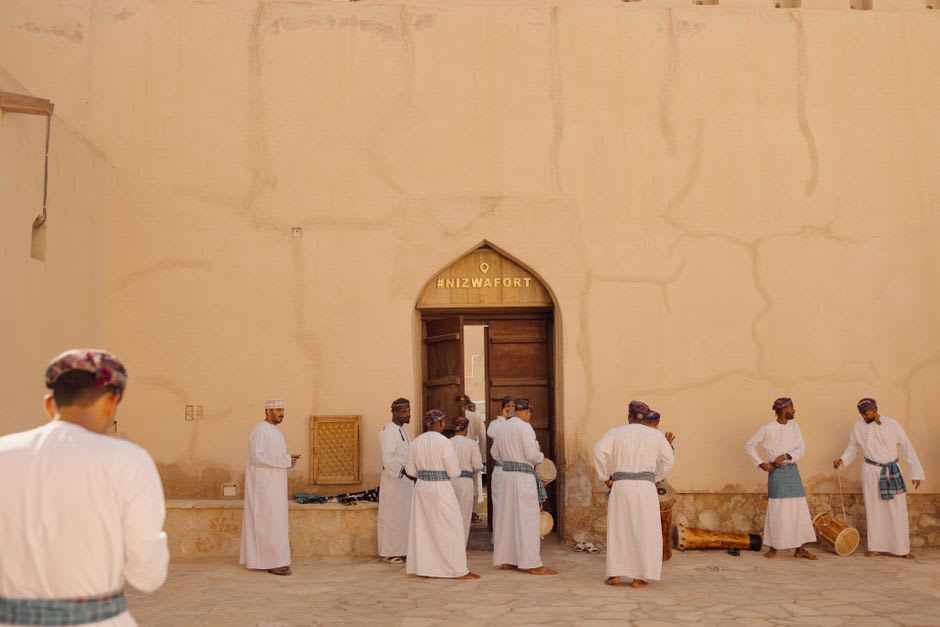
What the fort doesn’t prepare you for is the scale of the old town surrounding it. Manah’s original quarter sprawls out from the fort in a genuine maze of narrow lanes and collapsed houses, larger and less curated than most of the abandoned towns I’d seen elsewhere in the interior.
Getting Lost on Purpose
We spent close to two hours wandering without any real plan, ducking through gaps between buildings that may or may not have once been proper streets. Lia found a doorway with a carved wooden lintel so ornate it looked transplanted from a wealthier house, still attached to a wall that had otherwise collapsed entirely around it. Nobody else was there to ask about it, and no plaque offered an explanation — just the detail itself, sitting in the rubble like a leftover thought.
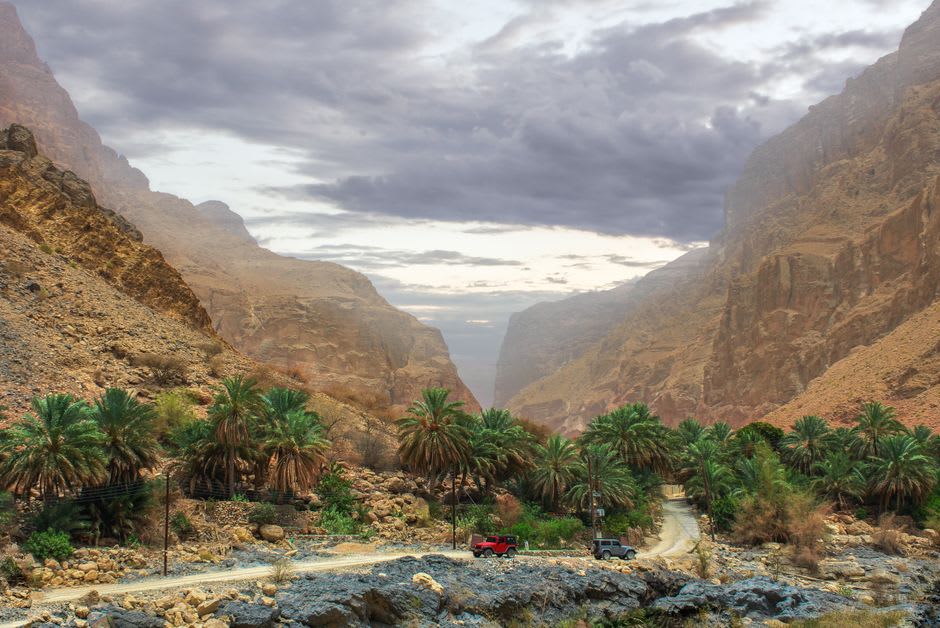
By the time we found our way back to the car, the old town had done exactly what I’ve come to expect from Oman’s quieter interior settlements — offered up more than its reputation suggested, and asked nothing of us in return.
When to go: October through March, in the morning before the sun climbs high enough to turn the mud-brick lanes into a low-grade oven. There’s no signage or paid access, so allow extra time to simply wander and find your own way through.