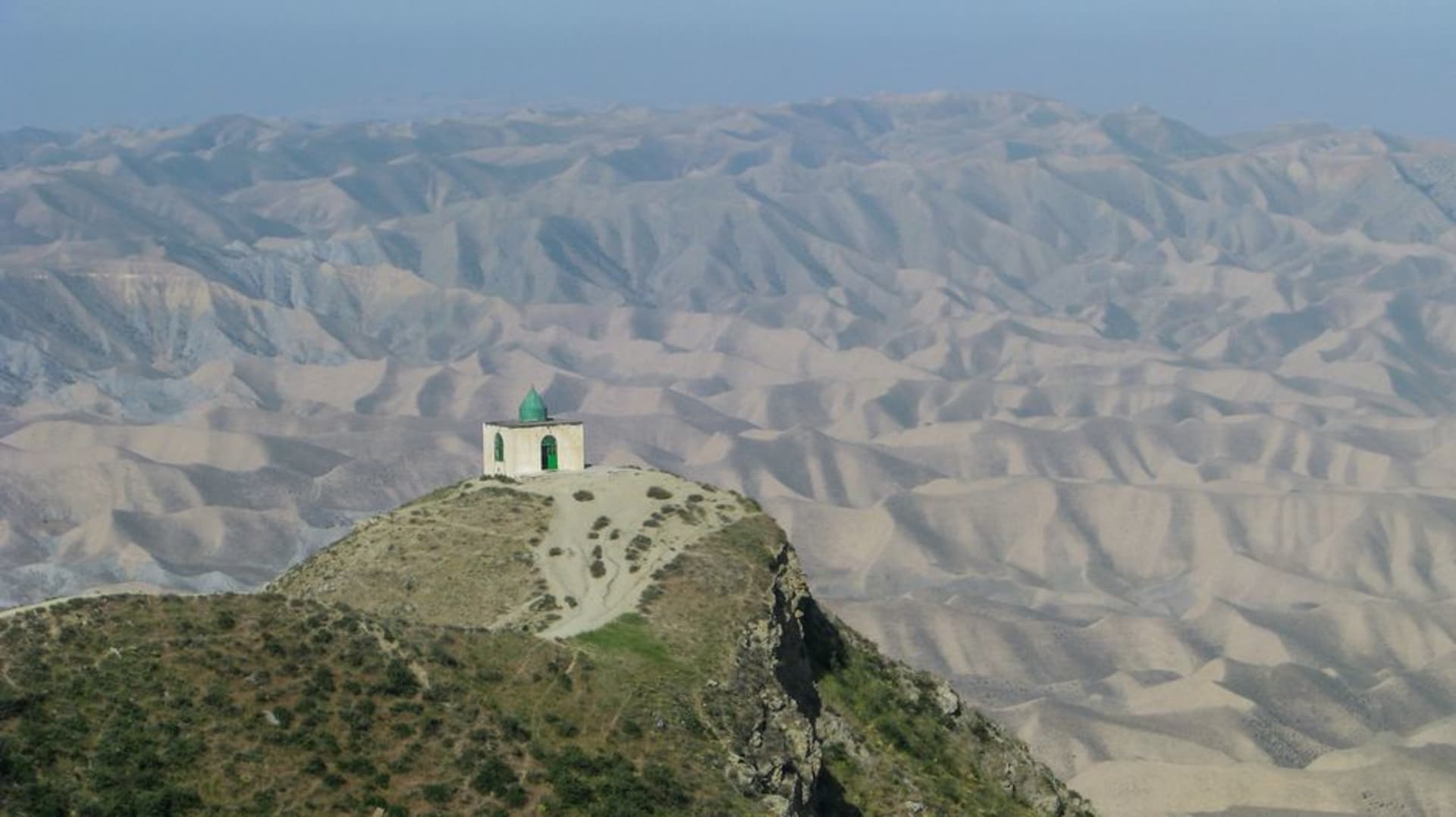
Job's Tomb (Nabi Ayoub)
"A three-meter tomb for a man whose story is entirely about patience."
A hilltop shrine to the biblical and Quranic prophet Job, wrapped in cloud and one of the best views in Dhofar.
The road up Jebel Itin switches back so many times that I lost count somewhere around the sixth turn, the car climbing out of Salalah’s khareef mist into thicker mist, then briefly out of it entirely into a strange, sunlit gap between cloud layers before diving back in near the summit. I’d read that Nabi Ayoub — Job’s Tomb — sat up here, and I’ll admit my expectations were modest: a small shrine, a parking lot, a view if we were lucky. What I hadn’t expected was how the climb itself would put me in the right frame of mind for it.
A Tomb Longer Than the Man Who’s In It
The shrine building is unassuming — white, domed, recently renovated with green trim — but the tomb inside is the detail that stops people. It’s roughly three meters long, well beyond any ordinary human proportion, which is either explained by regional burial traditions that elongate graves for reverence, or — depending on who you ask in Salalah — taken as evidence of something more literal. I took my shoes off at the door, as required, and stood inside a room that was cooler than the mountain air outside, a few other visitors moving quietly around the tomb, no ceremony, no crowd control, just a shared hush.
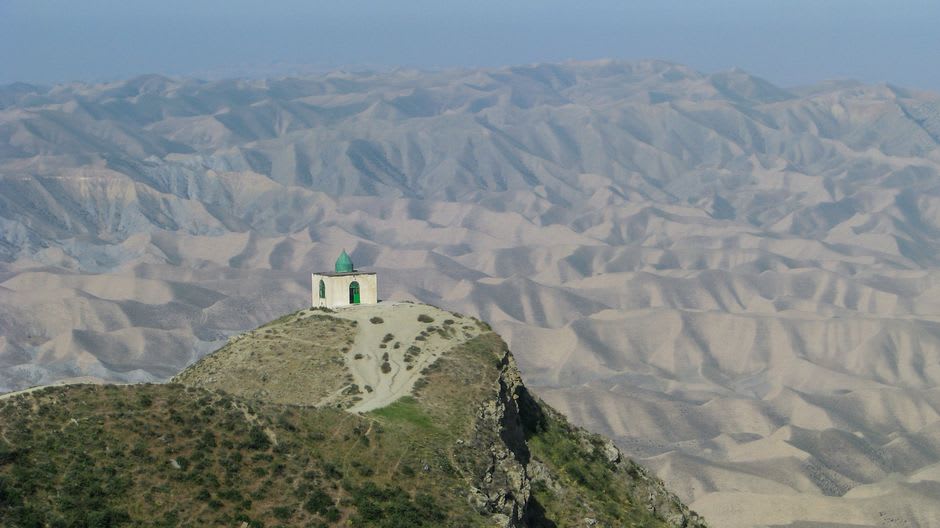
Job appears in the Quran as Ayoub, a man tested by the loss of everything he had and praised specifically for the patience with which he bore it. Standing at his tomb after a summer of my own smaller frustrations — visa paperwork, a cracked phone screen, the usual travel friction — felt like an oddly well-timed piece of perspective. Lia pointed out, not unkindly, that I probably needed the reminder more than most people who climb up here.
The View Nobody Mentions
What the guidebooks undersell is the summit itself. On a clear gap between clouds, Jebel Itin gives you the entire Dhofar coastline in one sweep — Salalah’s grid of streets and coconut palms below, the Arabian Sea beyond it, and behind you, a footprint in a rock slab that local tradition attributes to the prophet himself. We sat on a low wall near the edge for twenty minutes, watching the mist roll in and out like a tide, swallowing Salalah completely and then releasing it again.
When to go: Year-round, but during the khareef (June to September) the mountain sits inside the cloud layer for a genuinely surreal atmosphere. Outside monsoon season, visit early morning or late afternoon for clearer views and cooler air on the exposed summit.
Keep exploring
More from Oman
 oman
oman Khasab Fjords
The 'Norway of Arabia' — dramatic sea inlets cutting through barren limestone mountains of the Musandam.
Explore oman
oman Khor Najd
A cliff-top viewpoint above the Musandam fjords, reached by a rough 4x4 track, where the khors look less like Norway and more like the moon.
Explore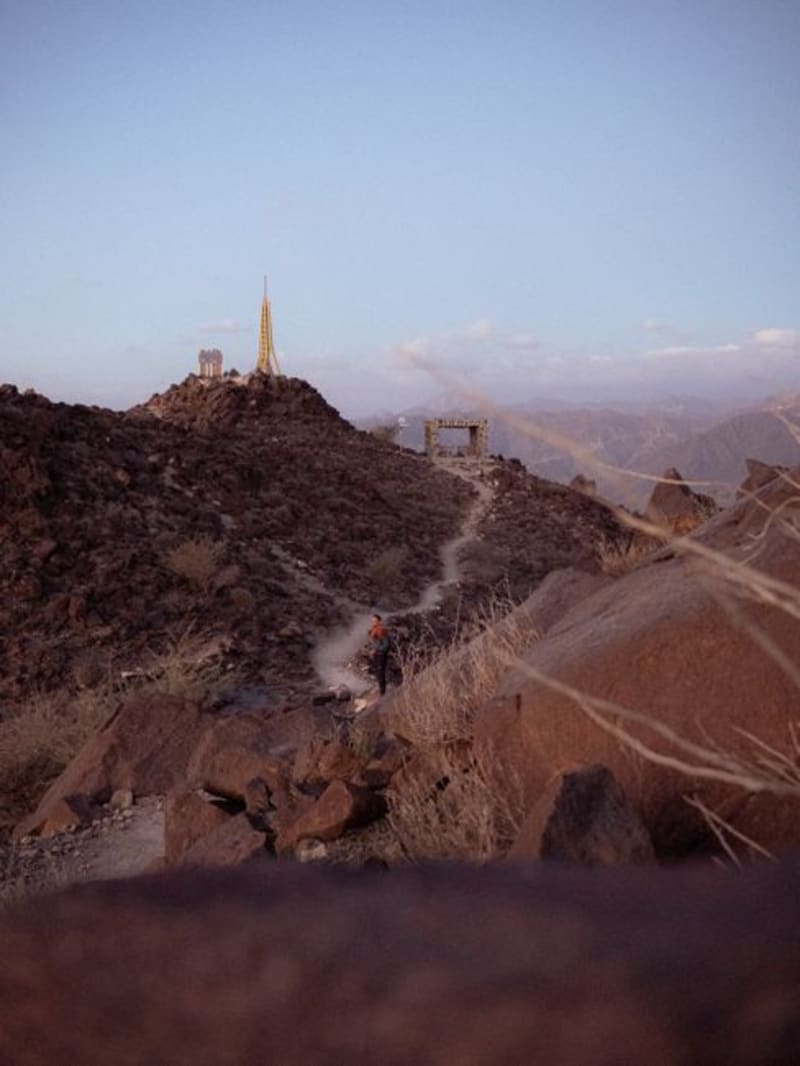 oman
oman Khor Rori (Ancient Sumhuram)
Ruins of a 2,000-year-old frankincense port overlooking a lagoon, where the trade routes to Rome and India actually began.
Explore oman
oman Kumzar
An isolated fishing village at the northern tip of Arabia, reachable only by boat, where people still speak a language found nowhere else.
Explore oman
oman Lima
A quiet coastal village at the mouth of its own private khor, and one of the best off-road detours in the entire Musandam.
Explore oman
oman Liwa (Al Batinah)
A quiet fishing wilayat on the Batinah coast, not the famous Emirati oasis — mangrove channels, a crumbling fort, and beaches nobody has discovered yet.
Explore